
Sign up to save your podcasts
Or

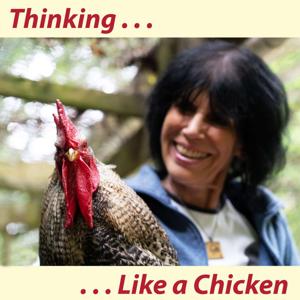


In today’s podcast episode, I discuss the plight of chickens and all farmed animals condemned to the world of genetic manipulation, a global industry devoid of ethics and empathy for animals whose bodies are being manipulated for specific culinary traits and who are being experimentally bred to appear not to mind the environmental “stressors” of filth, excessive heat, lack of personal space, disease organisms, brutal handling, and whatever else generates unlimited funding. Please join me. – Karen Davis
In today’s podcast I discuss the advantages versus the disadvantages of Single-Issue Campaigns for animals, including the difference between Focused Campaigns and Closed-Circle Campaigns and why this difference matters.
Please join me.
Of all the cruelties inflicted on hens forced to live in battery cages, one of the worst, perhaps even the worst of all, is preventing them from standing up on their legs and feet and walking. Unconfined, chickens walk constantly and often pretty fast. And they run! Today I will tell you about a hen rescued from a battery cage who we feared would never be able to stand up let alone take steps and walk. But she had a mind to do just that. Tune in to hear Sarah’s story.
Today’s podcast episode, Letter to a New Vegan, is based on an essay I wrote for an anthology of this name, addressing the person who has chosen to abandon a diet of carnage in favor of an animal-free, slaughter-free diet. While so many of the products we buy incorporate hidden animal suffering, the most blatant is food. Food is also more than anything else we consume the most personal and intimate. Determination to throw off years of culinary conditioning can be daunting at first, but it can be done and I urge that it must be done and discuss in this podcast a few of the challenges and, best of all, the lasting rewards from my own experience of being vegan. Tune in!
Absurd as it may sound to anyone familiar with chickens, some people, including one high-profile animal pontificator who shall be nameless, have claimed based on false and unquestioned assertions, that chickens do not mind seeing and hearing other chickens being slaughtered in their presence. This would include seeing one or more members of their flock being tortured by humans or harmed by a natural predator such as a hawk or a fox. In this podcast episode I address the question of traumatic empathy in chickens. Please join me.
Leafleting for animals in a public place is a way to reach out to people, individually and directly, by giving them concise information to take away and read when they have time to contemplate the information. Leafleting is both an easy and a challenging way to extend our message – by challenging, I mean to the leafleter. Why? Because it requires approaching strangers with a brochure the strangers are not asking for and may not wish to receive. We are putting ourselves – and the animals we desperately want people to care about and help– in a position of being rejected, even taunted. In this episode, I discuss the challenges and rewards of leafleting for animals.
Have you ever, when speaking up for animals, been accused of “anthropomorphism”? This accusation is often a handy way for animal exploiters to intimidate and silence objections to the mistreatment for animals as well as to ridicule insistence that nonhuman animals have feelings and awareness just as we do. In this podcast I distinguish between false anthropomorphism and empathic anthropomorphism as quite different ways of inferring what other animals are communicating about themselves through their self-expressions. Please join me.
The media practice of ignoring, trivializing and demeaning farmed animals is well characterized by the phrase “Dominance Through Mentioning.” In Dominance Through Mentioning, disturbing truths and unorthodox viewpoints are “mentioned” so that the press can claim “balanced” coverage, but is it? Tune in to learn more.
Most people who share their home with one or more companion animals take it for granted that their companions have feelings including emotions of happiness and wellbeing. Although the behaviors they observe support their presumption, there are those in the scientific establishment who continue to disparage the belief that other animals have emotions or even consciousness, claiming it is “unscientific,” “sentimental,” and “anthropomorphic” to ascribe emotions to a Hen or a Hamster or a Horse. Tune in for more on today’s topic.
From the publisher's feed