
Sign up to save your podcasts
Or

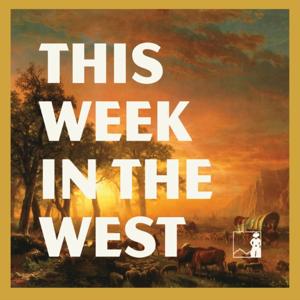

🤠This Week in the West
📢 Episode Summary:
Although not a chief, Geronimo emerged as an influential Apache spiritual leader, warrior and strategist during the Apache Wars. As American expansion accelerated following the Mexican-American War, the Apache faced increasing pressure from settlers, soldiers and government policies that confined Indigenous peoples to reservations. Refusing to accept life on the San Carlos Reservation, Geronimo repeatedly led small groups of Apache followers into the mountains of the Southwest, evading capture and conducting raids for years. His ability to escape much larger military forces made him both feared and legendary throughout the region.
Geronimo finally surrendered in 1886, marking the end of major Apache resistance campaigns in the Southwest. He and the Chiricahua Apache spent the rest of their lives as prisoners of war, eventually being relocated to Fort Sill in Oklahoma Territory. In later years, Geronimo became a national celebrity, appearing at fairs, expositions and even President Theodore Roosevelt's inaugural parade. Yet he never stopped seeking permission to return to his homeland. His 1905 autobiography remains one of the most important firsthand accounts by an Indigenous leader of the American West. He died at Fort Sill in 1909, still a prisoner of war, leaving behind a legacy that continues to shape conversations about resistance, survival and the history of the American West.
🔍 What You’ll Learn:
👥 Behind the Scenes
🔗 Further research:
📬 Connect With Us:
🗺️ Visit Us: The National Cowboy & Western Heritage Museum, 1700 NE 63rd Street, Oklahoma City, OK, 73111. See us on the map
🎟️: You can now buy tickets to The Cowboy online, go to https://nationalcowboymuseum.org/tickets/
🎧 Listen & Subscribe:
⭐ If you enjoyed this episode, don’t forget to rate & review!
 View all episodes
 By The National Cowboy & Western Heritage Museum

4.7
1919 ratings
🤠This Week in the West
📢 Episode Summary:
Although not a chief, Geronimo emerged as an influential Apache spiritual leader, warrior and strategist during the Apache Wars. As American expansion accelerated following the Mexican-American War, the Apache faced increasing pressure from settlers, soldiers and government policies that confined Indigenous peoples to reservations. Refusing to accept life on the San Carlos Reservation, Geronimo repeatedly led small groups of Apache followers into the mountains of the Southwest, evading capture and conducting raids for years. His ability to escape much larger military forces made him both feared and legendary throughout the region.
Geronimo finally surrendered in 1886, marking the end of major Apache resistance campaigns in the Southwest. He and the Chiricahua Apache spent the rest of their lives as prisoners of war, eventually being relocated to Fort Sill in Oklahoma Territory. In later years, Geronimo became a national celebrity, appearing at fairs, expositions and even President Theodore Roosevelt's inaugural parade. Yet he never stopped seeking permission to return to his homeland. His 1905 autobiography remains one of the most important firsthand accounts by an Indigenous leader of the American West. He died at Fort Sill in 1909, still a prisoner of war, leaving behind a legacy that continues to shape conversations about resistance, survival and the history of the American West.
🔍 What You’ll Learn:
👥 Behind the Scenes
🔗 Further research:
📬 Connect With Us:
🗺️ Visit Us: The National Cowboy & Western Heritage Museum, 1700 NE 63rd Street, Oklahoma City, OK, 73111. See us on the map
🎟️: You can now buy tickets to The Cowboy online, go to https://nationalcowboymuseum.org/tickets/
🎧 Listen & Subscribe:
⭐ If you enjoyed this episode, don’t forget to rate & review!

228,383 Listeners

7,622 Listeners

9,198 Listeners

1,043 Listeners

1,719 Listeners
3,650 Listeners

2,944 Listeners

458 Listeners

47,654 Listeners
1,329 Listeners
61,892 Listeners
7,455 Listeners

274 Listeners

1,374 Listeners
421 Listeners