
Sign up to save your podcasts
Or

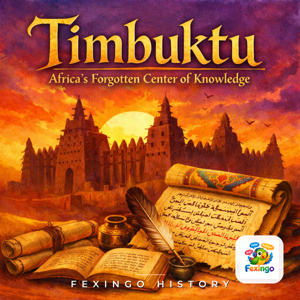


Long before the printing press reached the Sahara, Timbuktu's scholars relied on an army of scribes who hand-copied manuscripts across the centuries. This episode uncovers the trade of the warraq — the paper sellers, bookbinders, and copyists who made Timbuktu a city of books. We follow the journey of a single manuscript, from the paper makers of Medieval Europe and the Islamic world to the bustling markets of the Niger Bend. We meet the men and women who sat for hours with quills and ink, preserving works of astronomy, law, and poetry. Through the archives of the Ahmed Baba Institute and the private libraries of the Kunta and other families, we piece together how these scribes operated: their apprenticeships, their wages, their rivalries, and the fragility of their craft. We also explore the economics of the book trade — how a single volume could cost more than a camel — and the threats from fire, flood, and war that made each copy precious. This episode celebrates the unsung heroes who kept Timbuktu's flame of learning burning, one painstaking page at a time.
#Timbuktu #Manuscripts #Warraq #Scribes #BookTrade #AhmedBabaInstitute #KuntaLibrary #NigerBend #Sankore #MedievalAfrica #Sahel #Scholarship #Copyists #PaperMaking #IslamicHistory #OralTradition #History #FexingoHistory
Keep every episode free: buymeacoffee.com/fexingo
In 1591, the Saadian army crushed the Songhai Empire at Tondibi, and Timbuktu fell under Moroccan rule. But one man, Ahmad Baba al-Timbukti, refused to be silenced. This episode follows his forced exile to Marrakech, where he became a celebrated qadi and scholar, and his triumphant return to Timbuktu, where he rebuilt a shattered intellectual community. We explore his fatwas on slavery, his defense of African scholarship against European condescension, and the enduring legacy of his library. Through letters, legal opinions, and the Tarikh al-Sudan, we reconstruct the life of a man who made his city's intellectual flame burn brighter even in exile. A story of resistance, resilience, and the power of knowledge to outlast conquest.
#AhmadBaba #Timbuktu #SonghaiEmpire #SaadianDynasty #Tondibi #Marrakech #TarikhAlSudan #Scholarship #Fatwa #Slavery #AfricanHistory #WestAfrica #16thCentury #Exile #Library #Knowledge #History #FexingoHistory
Keep every episode free: buymeacoffee.com/fexingo
In this episode, Lucas and Luna dive into the network of diplomatic letters that connected Timbuktu to the wider world—from the Saadian sultans of Morocco to the rulers of the Songhai Empire. We explore how written correspondence, carried by trusted messengers across the Sahara, functioned as a vital tool of statecraft and scholarly exchange. We meet the scribes who crafted these letters, the couriers who braved the desert, and the subtle codes of protocol that governed them. We look at a specific cache of letters from the late 1500s that reveal the tense negotiations between Timbuktu's scholars and the Moroccan occupiers after the Battle of Tondibi. We also examine how these letters balanced religious authority, commercial interests, and political survival—and how the tradition of diplomatic writing shaped Timbuktu's identity as a center of knowledge. Along the way, we consider the physical journey of a letter: the materials, the routes, and the risks. This episode brings to life the voices of Ahmad Baba al-Timbukti and other figures whose words crossed the desert and changed history.
#Timbuktu #Diplomacy #Sahara #SonghaiEmpire #Saadian #AhmadBaba #TarikhAlSudan #Manuscripts #WestAfrica #Mali #Morocco #BattleOfTondibi #DesertCouriers #16thCentury #AfricanHistory #History #FexingoHistory #DiplomaticLetters
Keep every episode free: buymeacoffee.com/fexingo
In the dusty archives of Timbuktu, a legal opinion written in 1599 by the exiled scholar Ahmad Baba al-Timbukti would become a shield for his city's intellectual heritage. After the Moroccan invasion of 1591, when manuscripts were burned or carted off to Marrakech, Baba issued a fatwa declaring that books, like people, could not be lawfully taken as war booty. This episode follows the journey of that ruling—from the qadi's courtroom in Marrakech to the family archives of Timbuktu, where descendants of the great scholarly houses preserved their ancestors' works against future threats. We look at how the fatwa was applied in the centuries after, from the Fulani jihad of Seku Amadu to the French colonial era, and how modern archivists like Abdel Kader Haidara invoked it to rally communities during the 2012 occupation. We also examine the practical side: the hidn (deposit) system that allowed families to hide manuscripts in caves and under floors, and the role of oral tradition in keeping the location of hidden caches alive. With Lucas and Luna, we unpack the legal reasoning, the historical context, and the enduring power of a piece of paper to protect an entire culture.
#Fatwa #AhmadBaba #Timbuktu #Manuscripts #Sahel #Mali #SonghaiEmpire #Marrakech #IslamicLaw #Maliki #Qadi #HidnSystem #SekuAmadu #FrenchColonial #AbdelKaderHaidara #2012Occupation #History #FexingoHistory
Keep every episode free: buymeacoffee.com/fexingo
This episode of Fexingo History digs into the life and influence of Ahmad al-Kunti, the 16th-century scholar whose family and students formed the backbone of Timbuktu's intellectual community. We explore how his networks stretched across the Sahara — from Timbuktu to Walata to the Maghrib — and how his legal opinions and diplomatic letters shaped politics and scholarship for generations. We look at his role in the Qadiriyya Sufi order, his conflicts with the Moroccan occupiers after 1591, and his part in the movement of books and ideas that kept Timbuktu a center of learning even as empires rose and fell. Listen as Lucas and Luna trace his legacy through the Tarikh al-Sudan, his letters, and the libraries that still bear his family's name, and ask what it meant to be a scholar in a city that lived on trade, faith, and paper.
#Timbuktu #AhmadalKunti #Qadiriyya #SaharanNetworks #TarikhAlSudan #Scholarship #WestAfricanHistory #SonghaiEmpire #SufiOrder #Manuscripts #SankoreMadrasa #SaharaTrade #AfricanIntellectuals #16thCentury #IslamicScholarship #History #FexingoHistory #Podcast
Keep every episode free: buymeacoffee.com/fexingo
In this episode, Lucas and Luna explore the life and legacy of Ahmed Baba al-Timbukti, the last great scholar of Timbuktu's golden age. Born in 1556, Ahmed Baba was a prolific author, a fierce defender of intellectual integrity, and a man who refused to bow to the Saadian invaders who sacked his city in 1591. His library, said to contain over 1,600 volumes, was a treasure trove of law, astronomy, and theology. When he was exiled to Marrakech, he didn't just endure — he taught, debated, and wrote, even challenging the Saadian Sultan's claim to legitimacy. After his return, he rebuilt his life and work, leaving behind a corpus of over 70 books and a model of scholarship that inspired generations. The episode also touches on the Mamam Haidara library, a modern descendant of his legacy, and the ongoing efforts to preserve Timbuktu's manuscripts. Join Lucas and Luna as they untangle the man from the myth and celebrate a scholar who refused to let his city's flame die.
#AhmedBaba #Timbuktu #SaadianInvasion #Manuscripts #Scholarship #MarrakechExile #TarikhAlSudan #SankoreMadrasa #Djinguereber #MammaHaidara #WestAfrica #History #FexingoHistory #Podcast #AfricanHistory #Islam #IntellectualHistory #Resilience
Keep every episode free: buymeacoffee.com/fexingo
In this episode, Lucas and Luna explore the forgotten legal world of Timbuktu. More than a city of scholars and manuscripts, Timbuktu was a center of Islamic jurisprudence that shaped the Sahel for centuries. We meet the qadis—judges who balanced sharia, local custom, and the practical needs of a desert trading hub. From the famous Ahmad Baba, who issued fatwas from exile in Marrakech, to the lesser-known Muhammad al-Kabir, we see how these legal minds handled cases of debt, marriage, and trade. We also uncover a fascinating 16th-century contract that shows how Timbuktu's courts dealt with the tricky issue of slave redemption. This episode reveals how law held a multicultural city together, blending Maliki scholarship with the realities of the Sahara. It's a story of rule and order in a place often misunderstood as lawless, and it changes how we think about justice in African history.
#Timbuktu #IslamicLaw #Qadi #Maliki #AhmadBaba #Sahel #SonghaiEmpire #Sharia #LegalHistory #AfricanHistory #Sahara #IbnBattuta #TarikhAlSudan #Fatwa #Slavery #Trade #History #FexingoHistory
Keep every episode free: buymeacoffee.com/fexingo
In this episode of Fexingo History, Lucas and Luna explore the architectural marvels of Timbuktu, focusing on the city's iconic mud-brick mosques. They discuss the legendary builder Abu Ishaq al-Sahili, who is credited with designing Djinguereber, a UNESCO World Heritage site, and the unique construction techniques that have allowed these structures to endure for centuries. The conversation covers the role of the annual festival of 'crépissage' (replastering), the social organization behind the maintenance of the mosques, and the challenges they face today, including climate change and preservation efforts. They also touch on the 2012 conflict and the role of local masons in safeguarding these cultural treasures. Join Lucas and Luna as they uncover the secrets of Timbuktu's remarkable mud architecture and its significance in the Sahel's cultural heritage.
#Timbuktu #MudArchitecture #Djinguereber #Sankore #SidiYahya #AbuIshaqalSahili #Sahel #UNESCO #WorldHeritage #Mali #WestAfrica #IslamicHistory #Crepissage #Masons #Preservation #History #FexingoHistory #AfricanHeritage
Keep every episode free: buymeacoffee.com/fexingo
Timbuktu sits on the edge of the Sahara, yet it became a city of scholars and traders. In this episode, Lucas and Luna explore the environmental foundation of Timbuktu's rise: the Niger River's annual flood, the man-made water tanks called 'fundi', and the deep wells that sustained a city of learning. They revisit the 1498 fire to see how water shaped rebuilding, and follow Ibn Battuta's account of a river journey that could take months. The episode also considers the dry years that hit the Sahel in the 1700s and how Timbuktu's libraries adapted to climate stress. A story of wells, rain, and resilience — the often-forgotten hydro-history of a desert city.
#Timbuktu #NigerRiver #Sahel #IbnBattuta #Djinguereber #Sankore #WestAfrica #ClimateHistory #1498Fire #WaterHistory #DesertCity #TarikhAlSudan #MahmudKati #AhmadBaba #Songhai #SahelDrought #History #FexingoHistory
Keep every episode free: buymeacoffee.com/fexingo
In 1324, Mansa Musa of Mali set out on the hajj to Mecca with an entourage so vast it reportedly included eighty thousand people and a hundred camels carrying gold. His stop in Cairo created a monetary crisis that lasted over a decade, and his generosity was so legendary that even today his name conjures images of staggering wealth. But behind the glitter lies a more complex story—of diplomacy, religious devotion, and the political calculations that made Mali one of the greatest empires of the medieval world. In this episode, Lucas and Luna walk through Mansa Musa's journey step by step, from the gold mines of Wangara to the streets of Cairo, where he met the Mamluk sultan al-Malik al-Nasir, and on to Mecca, where his spending spree became the stuff of legend. They explore the historical sources, from the Arab chronicler al-Umari to the Tarikh al-Sudan, and separate fact from embellishment. Along the way, they consider what the pilgrimage tells us about Mansa Musa's authority, the economic ripple effects of his spending, and how his journey helped put West Africa on the map for the wider Islamic world. It's a tale of gold, faith, and the power of a single journey to change the course of history.
#MansaMusa #Hajj1324 #MaliEmpire #Timbuktu #WestAfrica #GoldTrade #Cairo #Mecca #AlUmari #TarikhAlSudan #MedievalHistory #IslamicHistory #MamlukSultanate #Wangara #Sahel #WorldHistory #FexingoHistory #History
Keep every episode free: buymeacoffee.com/fexingo
From the publisher's feed