
Sign up to save your podcasts
Or

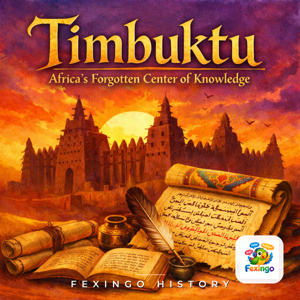


While earlier episodes have explored Timbuktu’s architecture, trade routes, and famous scholars like Ahmad Baba, this episode examines the institutional heart of the city: the Sankore Madrasah. We look at how this decentralized network of teachers and students functioned as a true university system in the 15th and 16th centuries, distinct from state-controlled mosques. Lucas and Luna trace the rise of the Tijaniyya brotherhood, the specific curriculum that blended Islamic jurisprudence with astronomy and mathematics, and the oral examination traditions that defined scholarly prestige. We also discuss the role of the warraq (booksellers) not just as merchants but as the essential infrastructure of this intellectual economy, revealing how knowledge was bought, sold, and memorized in the Sahel without a single centralized administration.
#SankoreMadrasah #TimbuktuHistory #WestAfricanScholars #IslamicEducation #Tijaniyya #Warraq #SahelIntellectuals #MalikiJurisprudence #AhmadBaba #MahmudKati #ManuscriptCulture #OralExaminations #SonghaiEmpire #AfricanUniversities #TransSaharanTrade #IslamicAstronomy #FexingoHistory #History
Keep every episode free: buymeacoffee.com/fexingo
While Western history often reduces Timbuktu to a mythical treasure trove or a brief moment of Mansa Musa’s wealth, the reality was far more complex and deeply human. This episode explores the lives of the actual scholars, scribes, and students who built one of the world’s greatest intellectual centers. We move beyond the gold and mud-brick architecture to examine the daily rhythms of learning in the Sankore Madrasah. Lucas and Luna discuss how these West African intellectuals engaged with global Islamic scholarship while maintaining distinct local traditions. From the rigorous study of Maliki jurisprudence to the preservation of astronomical texts, we uncover how Timbuktu functioned as a critical node in the trans-Saharan network of knowledge. The conversation highlights figures like Mahmud Kati and Ahmad Baba not just as historical names, but as teachers and mentors who shaped the intellectual landscape of the Sahel for centuries. We also look at the social dynamics of the city, including the role of women in manuscript production and the economic structures that supported this massive library trade. By focusing on the people rather than the places, we reveal a vibrant community of learners whose contributions have been too often overshadowed by colonial narratives and romanticized legends.
#Timbuktu #WestAfricanHistory #SankoreMadrasah #IslamicScholarship #AhmadBaba #MahmudKati #ManuscriptCulture #TransSaharanTrade #MalikiJurisprudence #SahelCivilization #AfricanIntellectualHistory #MansaMusa #SonghaiEmpire #TimbuktuManuscripts #IbnKhaldun #NorthAfricanStudies #MedievalAfrica #FexingoHistory
Keep every episode free: buymeacoffee.com/fexingo
While we often discuss Timbuktu’s great mosques and its famous scholars, we rarely step into the dusty workshops where the actual knowledge was preserved. This episode explores the world of the warraq, the paper merchants and scribes who formed the invisible backbone of the city’s intellectual life. We trace how these artisans sourced paper from across the Sahara and Mediterranean, mastered complex scripts like Naskh and Kufic, and navigated a rigorous guild system to keep the Tarikh al-Sudan and countless other texts alive. Through the stories of specific families in the Djinguereber quarter and their relationships with patrons like Ahmad Baba, we uncover the economic and social mechanics behind Africa’s greatest library. You will learn about the daily rhythm of the scriptorium, the value of ink and parchment, and how a simple scroll became a vessel for diplomacy, law, and science in the heart of the Sahel.
#TimbuktuManuscripts #Warraq #WestAfricanHistory #SankoreUniversity #IslamicScholarship #PaperTrade #SaharanCommerce #AhmadBaba #DjinguereberMosque #NaskhScript #KuficCalligraphy #FondoKati #MaliEmpire #SonghaiEmpire #AfrocentricHistory #MedievalAfrica #ManuscriptPreservation #FexingoHistory
Keep every episode free: buymeacoffee.com/fexingo
In 1591, the Saadian army crushed the Songhai at Tondibi, but the real transformation of Timbuktu came in the decades that followed. This episode focuses on the Arma — the mixed Moroccan-Songhai military caste that came to rule the Niger Bend. We follow the rise of the Arma under the pashas of Timbuktu, their fragile alliances with the Tuareg and the Kunta, and the gradual erosion of scholarly power. We look at how the city's intellectual life shifted from the great jurists of Sankore to the new political realities, using the Tarikh al-Sudan and the writings of Ahmad Baba to show the changing world. Key figures include Judar Pasha, who won at Tondibi but couldn't control the city; the pasha Mahmud ibn Zarqun, who taxed the scholars; and the last great scholar, Ahmad Baba, who returned from Marrakech to find his city transformed. We also explore the Arma's use of gunpowder, their control of the salt trade, and the slow decline that made Timbuktu a frontier town rather than a center of knowledge. It's a story of conquest, adaptation, and the resilience of a city that kept writing even as its world collapsed.
#Timbuktu #Arma #Saadian #Songhai #Tondibi #JudarPasha #AhmadBaba #TarikhAlSudan #NigerBend #WestAfrica #Sahara #17thCentury #MaliHistory #IntellectualHistory #SaltTrade #Gunpowder #History #FexingoHistory
Keep every episode free: buymeacoffee.com/fexingo
In 1559, the sultan of Morocco tried to poach one of Timbuktu's greatest minds. Ahmed Baba al-Timbukti refused. This episode follows the scholar's career from his studies at Sankore to his controversial fatwas, his years of exile in Marrakech, and his return home. We explore how his legal rulings shaped the Sahel's intellectual life, why he clashed with both Songhai rulers and Moroccan invaders, and what his story tells us about the reach of Islamic scholarship in West Africa. Lucas and Luna unpack the man behind the manuscripts, the world he navigated, and the legacy that survived him.
#AhmedBaba #Timbuktu #Sankore #Songhai #Saadian #WestAfrica #IslamicScholarship #Qadi #Fatwa #TarikhAlSudan #Marrakech #Sahel #History #FexingoHistory #AfricanHistory #MaliEmpire #Morocco #Scholarship
Keep every episode free: buymeacoffee.com/fexingo
In 1591, the Saadian army of Morocco crossed the Sahara to crush the Songhai Empire. But what if the sultan of Istanbul had answered the Songhai emperor's plea for help? This episode digs into the diplomatic puzzle at the heart of the Niger Bend: the letters, the spies, and the missed connection that might have changed the Sahel's fate. Hosts Lucas and Luna examine the role of the Ottoman corsair, the shifting alliances of the Sahara, and the reports that reached the Ottoman court. They also explore the legends that grew up around the fall of Songhai — and what the historical record actually shows. From Timbuktu's scholar exiles to the Saadian sultan's ambitions, this is a story of what-ifs, misheard messages, and the hard realities of African geopolitics in the age of empires.
#FexingoHistory #Timbuktu #SonghaiEmpire #Saadian #OttomanEmpire #1591 #BattleOfTondibi #NigerBend #Sahara #Diplomacy #AskiaIshaqII #AhmadAlMansur #IbnBatuta #TarikhAlSudan #Corsair #WestAfrica #Geopolitics #History
Keep every episode free: buymeacoffee.com/fexingo
In 1468, the Tuareg rulers of Timbuktu were overthrown by the rising Songhai Empire under Sunni Ali, a conquest that transformed the city from a Berber trading outpost into the intellectual heart of a new empire. This episode explores the political and social upheaval of that year, drawing on the Tarikh al-Sudan and other chronicles to reveal the complex factions—Tuareg, Songhai, and the scholars of Sankore—who shaped the city's fate. We discuss the fragile alliances, the siege, the massacre that followed, and the long-term consequences for Timbuktu's scholarly community. How did Sunni Ali, often remembered as a ruthless conqueror, manage to win over the city's elites? And what does the 1468 conquest tell us about the shifting power dynamics of the Sahel? Join Lucas and Luna as they unravel this pivotal moment, a story of resilience, bloodshed, and the birth of a golden age.
#Timbuktu #SonghaiEmpire #SunniAli #Tuareg #TarikhAlSudan #Sahel #1468 #WestAfrica #Sankore #MaliEmpire #NigerRiver #AfricanHistory #Scholarship #Conquest #MedievalAfrica #History #FexingoHistory #TimbuktuHistory
Keep every episode free: buymeacoffee.com/fexingo
In 1585, Timbuktu found itself at the center of a brutal conflict over the salt mines of Taghaza—a resource so valuable it was traded ounce for ounce for gold. This episode unpacks the Moroccan invasion of the Songhai Empire, the pivotal Battle of Tondibi, and the fall of Askia Ishaq II. We explore how the Saadian sultan Ahmad al-Mansur, flush with victory and gunpowder, toppled one of Africa's greatest empires, and how the subsequent occupation reshaped Timbuktu's intellectual life. Through the lens of the Tarikh al-Sudan and the writings of Ahmad Baba al-Timbukti, we trace the city's resilience under foreign rule, the rise of the Arma military caste, and the slow erosion of its scholarly golden age. Discover the surprising ways salt, not gold, drove empires to war—and how a desert town became a prize worth crossing the Sahara for. This is the story of Timbuktu's last great political upheaval, a turning point that echoes through the Sahel today.
#Timbuktu #Taghaza #SonghaiEmpire #BattleOfTondibi #AhmadAlMansur #Saadian #Arma #SaltTrade #Sahara #TarikhAlSudan #AhmadBaba #WestAfrica #16thCentury #MaliEmpire #AskiaIshaq #Morocco #History #FexingoHistory
Keep every episode free: buymeacoffee.com/fexingo
In this episode of Fexingo History, Lucas and Luna explore the salt trade that made Timbuktu a crossroads of the Sahara. From the mines of Taghaza, where salt was cut into slabs and loaded onto camels, to the bustling markets of the Niger Bend, salt was more than a seasoning—it was a currency, a measure of wealth, and a driver of empires. Discover how this humble mineral shaped the city's economy, influenced its politics, and even attracted the attention of distant rulers like the Saadian sultans. Along the way, we meet the Azalai caravans, the Tuareg middlemen, and the merchants of Djenné, and we hear the words of Ibn Battuta, who marveled at the riches of the region. This episode weaves together geography, economics, and human endurance, showing how a simple commodity built a civilization in the heart of the desert.
#Timbuktu #SaltTrade #Sahara #Taghaza #Caravans #Azalai #Tuareg #IbnBattuta #NigerBend #Djenne #MaliEmpire #Songhai #Saadian #WestAfrica #History #FexingoHistory #TradeRoutes #Commerce
Keep every episode free: buymeacoffee.com/fexingo
In 1324, Mansa Musa of Mali set out on a pilgrimage that would become the stuff of legend. The emperor's caravan—said to include tens of thousands of soldiers, slaves, and camels laden with gold—moved across the Sahara and through Cairo, leaving a trail of dazzling wealth and economic chaos in its wake. But behind the myth lies a more complex story: a ruler who used his pilgrimage to cement diplomatic ties, commission architecture, and put his empire on the map. This episode digs into the historical records—from Arab chroniclers like al-Umari to the Tarikh al-Sudan—to separate fact from exaggeration. We'll trace the journey, the famous gold giveaways that crashed Cairo's economy for over a decade, and the lasting impact on Timbuktu, which became a center of learning and trade partly thanks to Mansa Musa's investments. Join us as we reconsider the hajj that shook the world, and see how one man's spiritual journey reshaped the economic and cultural landscape of West Africa and beyond.
#MansaMusa #Hajj1324 #MaliEmpire #Timbuktu #Gold #Cairo #AlUmari #IbnBattuta #TarikhAlSudan #WestAfrica #Sahel #TransSaharanTrade #MedievalAfrica #EconomicHistory #Pilgrimage #History #FexingoHistory #AfricanHistory
Keep every episode free: buymeacoffee.com/fexingo
From the publisher's feed