
Sign up to save your podcasts
Or

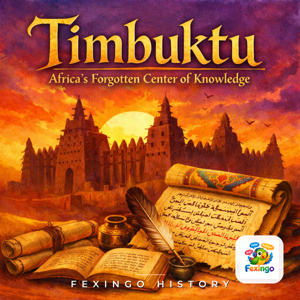


While we often hear about Timbuktu’s scholars and its mosques, the physical foundation of that intellectual empire was paper — not parchment, but high-quality paper made from cotton fibers imported from Egypt. This episode explores the intricate trade network that brought raw materials across the Sahara to Timbuktu’s workshops, where local artisans developed unique binding techniques and ink formulas suited to the Sahel’s dry climate. We meet the warraq, or paper merchants, who were as vital to the city’s economy as the salt traders of Taghaza. Through the lens of surviving manuscripts, we trace how the demand for books drove innovation in logistics, finance, and even early industrial production. From the import of Egyptian rags to the export of finished texts across West Africa, this is the story of the supply chain that made Timbuktu a center of knowledge.
#Timbuktu #WestAfricaHistory #ManuscriptCulture #PaperTrade #SaharanCommerce #Warraq #CottonPaper #SonghaiEmpire #AhmadBaba #MahmudKati #IslamicScholarship #SankoreMadrasah #TransSaharanTrade #NigerBend #BookBinding #InkProduction #FexingoHistory #History
Keep every episode free: buymeacoffee.com/fexingo
In this episode of Fexingo History, we turn away from the famous libraries and scholars to examine the political engine that made Timbuktu’s intellectual golden age possible: the Songhai Empire under Askia Muhammad. While previous episodes have explored the manuscripts themselves and the families who preserved them, here we look at how Askia transformed a merchant city into an administrative capital through legal reform and state patronage. We discuss his controversial but effective use of Maliki jurisprudence to centralize power, the appointment of key figures like Mahmud Kati as qadi, and the complex relationship between religious authority and imperial rule. You will hear about the specific policies that protected trade routes, the role of the Gaoje in city defense, and how Askia’s own pilgrimage to Mecca reshaped his domestic policy. This conversation reveals the human cost and the bureaucratic reality behind the myth of Timbuktu as merely a retreat for scholars, showing it instead as a bustling center of statecraft where every manuscript was also a tax record or a legal decree.
#SonghaiEmpire #AskiaMuhammad #TimbuktuHistory #WestAfricanHistory #MalikiJurisprudence #MahmudKati #QadiSystem #TransSaharanTrade #IslamicLaw #MaliEmpire #ManuscriptCulture #SankoreMadrasah #NorthAfricanHistory #AhmadBaba #DjinguereberMosque #NigerBend #HistoryPodcast #FexingoHistory
Keep every episode free: buymeacoffee.com/fexingo
We often talk about Timbuktu’s libraries and its astronomers, but rarely do we discuss the legal frameworks that kept the city functioning under extreme pressure. This episode focuses on Ahmad al-Maghirani, a qadi who served during the brutal Arma occupation in the early seventeenth century. While Judar Pasha’s soldiers were dismantling the scholarly elite, Maghirani was quietly negotiating the boundaries of Islamic law to protect civilian life and property rights. We explore his fatwas, his relationship with the Ottoman commanders, and how he used Maliki jurisprudence as a shield for the population. You will hear about specific disputes over inheritance, market regulations, and the complex dance of survival in the Pashalik of Timbuktu. It is a story of quiet resistance through bureaucratic precision, showing how one man’s legal mind helped preserve the social fabric when everything else was crumbling.
#AhmadAlMaghirani #TimbuktuHistory #ArmaOccupation #MalikiJurisprudence #WestAfricanScholars #IslamicLaw #Qadi #OttomanEmpire #SahelHistory #17thCenturyAfrica #JudarPasha #Fatwa #SonghaiLegacy #NigerBend #LegalHistory #Manuscripts #FexingoHistory #History
Keep every episode free: buymeacoffee.com/fexingo
This episode explores the intellectual golden age of Timbuktu during the 15th and 16th centuries, focusing on the Songhai Empire's patronage of learning. We examine how Askia Muhammad transformed the city into a premier center for Islamic jurisprudence, astronomy, and trade law. The narrative highlights key figures like Mahmud Kati and Ahmad Baba al-Timbukti, whose manuscripts defined Maliki legal thought in West Africa. Through the lens of the Sankore Madrasah, we uncover how trans-Saharan trade routes funded a sophisticated academic ecosystem that rivaled contemporary European institutions. Listeners will learn about the specific curricula taught, the role of the warraq scribes, and the enduring legacy of these texts in modern African history.
#Timbuktu #SonghaiEmpire #AskiaMuhammad #SankoreMadrasah #MahmudKati #AhmadBaba #MalikiJurisprudence #TransSaharanTrade #WestAfricanHistory #IslamicScholarship #ManuscriptCulture #NigerBend #AfricanIntellectualHistory #MedievalAfrica #WarraqScribes #FexingoHistory #HistoryPodcast #Education
Keep every episode free: buymeacoffee.com/fexingo
In 1893, the Niger River didn't just rise; it rewrote Timbuktu. This episode explores the catastrophic flood that submerged the city for months, destroying the physical infrastructure of the Sankore Madrasah and the Djinguereber Mosque while sparing the thousands of manuscripts hidden in family homes. We examine how this environmental disaster shifted the center of scholarly power from the public mosques to private libraries, accelerated the decline of the traditional qadi system, and forced families like the Kunta and the Kati to adapt their preservation methods. Lucas and Luna trace the water’s path through the desert streets, detailing the desperate repairs led by Ibrahim ibn al-Mukhtar and the long-term socio-economic consequences that reshaped West African intellectual history.
#Timbuktu #WestAfrica #History #FexingoHistory #NigerRiver #GreatFloodOf1893 #SankoreMadrasah #DjinguereberMosque #IbrahimibnMukhtar #KuntiFamily #KatiFamily #ManuscriptPreservation #IslamicScholarship #ClimateHistory #MaliRegion #Sahel #QadiSystem #PrivateLibraries
Keep every episode free: buymeacoffee.com/fexingo
In 1893, the Niger River didn't just rise; it swallowed Timbuktu whole. This episode explores the catastrophic flooding that reshaped the city's geography, economy, and social hierarchy in a matter of weeks. We examine how the inundation destroyed the famous libraries of the Sankore district, forced the Kunta merchants to flee, and permanently altered the trade routes that had sustained West African scholarship for centuries. Lucas and Luna trace the journey from the monsoon rains in the highlands to the devastating breach of the dikes near Djinguereber mosque. You'll meet the local leaders who tried to organize relief amidst chaos, the European explorers who witnessed the aftermath with detached curiosity, and the long-term cultural impact on the surviving manuscript traditions. This isn't just a story about water damage; it's about how a single natural disaster accelerated the decline of Timbuktu as an independent intellectual center under rising French colonial pressure. Discover the specific dates, the names of the affected families, and the physical evidence left behind in the silt-choked ruins.
#Timbuktu #WestAfrica #NigerRiver #GreatFlood1893 #Sankore #KuntaFamily #Djinguereber #Manuscripts #History #FexingoHistory #MaliEmpire #Songhai #Colonialism #ClimateHistory #Archives #Scholars #TradeRoutes #WaterManagement
Keep every episode free: buymeacoffee.com/fexingo
While Timbuktu is often remembered for its vast libraries and the famous Ahmad Baba, the true architects of its intellectual identity were the Kati family. In this episode, we explore how Mahmud Kati and his son Muhammad al-Kati constructed the Tarikh al-Sudan and Tarikh al-Fattash, two foundational texts that defined West African historiography. We look at their unique position as both scholars and state officials under the Songhai Empire, navigating the complex relationship between Islamic law and indigenous tradition. From drafting legal fatwas to chronicling the rise and fall of Askia Muhammad, the Katis didn't just record history—they shaped the political landscape of the Sahel through the written word.
#TimbuktuHistory #MahmudKati #MuhammadalKati #TarikhAlSudan #TarikhAlFattash #SonghaiEmpire #WestAfricanScholars #IslamicManuscripts #SahelHistory #AskiaMuhammad #MalikiJurisprudence #AfricanHistoriography #ManuscriptCulture #TimbuktuLibraries #PreColonialAfrica #NorthAfricanTrade #HistoryPodcast #FexingoHistory
Keep every episode free: buymeacoffee.com/fexingo
While Mahmud Kati and Ahmad Baba have secured their place in history, the broader Kati family of Timbuktu wielded influence through a different medium: genealogy and oral transmission. This episode explores how the Kunta clan and their scholarly relatives maintained political sway during the Saadian and Arma occupations by controlling the isnad chains of religious authority. We look at the specific role of women scholars like Amina Ould Baba in preserving these lineages, and how the written word was often secondary to the spoken word in maintaining social cohesion in the Sahel. From the 17th century to the modern day, we trace how a single family name became synonymous with legitimacy in West African Islamic scholarship.
#Timbuktu #WestAfrica #KatiFamily #AhmadBaba #MahmudKati #SahelHistory #IslamicScholarship #ManuscriptCulture #AminaOuldBaba #KuntaClan #Genealogy #OralTradition #MaliEmpire #Songhai #SaadianDynasty #ArmaOccupation #FexingoHistory #History
Keep every episode free: buymeacoffee.com/fexingo
While Timbuktu is often remembered for its trade routes and Islamic scholarship, a deeper look reveals a sophisticated scientific tradition rooted in astronomy and timekeeping. In this episode, we explore how scholars like Mahmud ibn Zarqun used the stars to navigate the Sahara and structure daily life. We examine the role of the hilal, or crescent moon, in determining religious and commercial calendars, and discuss the precise methods used to calculate qibla directions for prayer across vast distances. Lucas and Luna dive into the manuscripts that detail these calculations, highlighting the intersection of faith, commerce, and celestial observation. Discover how the azimut, or azimuth, was measured using simple but effective instruments, and how the kiswa, or covering of the Kaaba, became a point of scholarly debate regarding astronomical accuracy. This conversation moves beyond the myths of 'lost libraries' to show the practical, everyday application of science in a medieval African city.
#Timbuktu #Mahmud_ibn_Zarqun #West_African_History #Islamic_Science #Astronomy #Manuscripts #Sankore_Madrasah #Tarikh_al_Sudan #Hilal #Qibla #Azimuth #Astrolabe #Kiswa #Songhai_Empire #Maliki_Jurisprudence #Niger_Bend #History #FexingoHistory #Afrofuturism
Keep every episode free: buymeacoffee.com/fexingo
While we have explored the manuscripts and the trade routes that enriched Timbuktu, this episode examines the intellectual engine room: the formal scholarly debates known as munazarat. We look at how these public disputations functioned not as hostile arguments, but as rigorous exercises in logic and jurisprudence, governed by strict etiquette. We follow the career of Mahmud Kati, who navigated these intellectual arenas during the Songhai Empire, and explore how the famous Tarikh al-Sudan records these verbal sparring matches. You will hear about the specific rules of engagement, the role of the qadi as referee, and how a scholar’s reputation was built on their ability to dismantle an opponent’s argument with grace rather than volume. This is a look at the social mechanics of knowledge in medieval West Africa.
#TimbuktuHistory #Munazarat #MahmudKati #TarikhAlSudan #SonghaiEmpire #IslamicScholarship #WestAfricaHistory #ManuscriptCulture #LegalDebates #MalikiJurisprudence #IntellectualHistory #SahelStudies #AhmedBaba #MedievalAfrica #FexingoHistory #HistoryPodcast #AfricanUniversities #HistoricalLogic
Keep every episode free: buymeacoffee.com/fexingo
From the publisher's feed