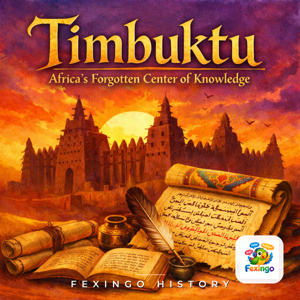
While earlier episodes have explored Timbuktu’s legal minds and astronomical tables, Episode 251 turns to the material foundation of this intellectual empire: the paper trade. We trace the journey of raw materials from Fez and Tlemcen in North Africa through the Sahara to the scribes of the Niger Bend. The conversation focuses on the warraq, the specialized class of book dealers and paper merchants who controlled the flow of knowledge. We examine how the high demand for parchment and handmade paper drove economic policy, influenced diplomatic relations with the Songhai Empire, and created a unique market economy where books were currency. Lucas details the specific techniques of papermaking, the role of the qalam (pen) makers, and the intricate network of caravan routes that brought these essential supplies into the city. Luna questions the logistical challenges of transporting such heavy goods across desert dunes and the impact of European printing presses later on. This episode reveals that Timbuktu’s reputation as a center of learning was built not just on ideas, but on the physical infrastructure of ink, paper, and the merchants who traded them.