
Sign up to save your podcasts
Or

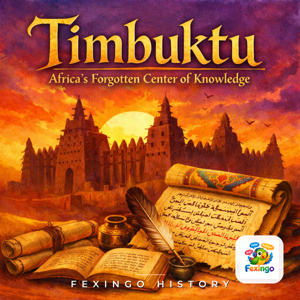


While Timbuktu is often remembered for its male scholars and grand mosques, a quieter economy thrived in the shadows: the women who produced the paper that made the libraries possible. In this episode, Lucas and Luna explore the lives of the warraq families, focusing on the often-overlooked role of female scribes and paper-makers in late 19th-century Timbuktu. We look at how Amina Ould Baba and other unnamed women navigated the complex social structures of the Niger Bend, turning raw cotton and imported pulp into the precious commodity that fueled Islamic scholarship. This isn't just about history; it's about the invisible labor that built one of Africa's greatest centers of knowledge, revealing a gendered division of intellectual and economic power that modern historians are only beginning to uncover.
#TimbuktuHistory #WestAfricanScholars #WomenInHistory #ManuscriptCulture #PaperTrade #SankoreMadrasah #NigerBend #IslamicScholarship #AminaOuldBaba #WarraqTrade #ColonialAfrica #AfrocentricHistory #ManuscriptStudies #TimbuktuManuscripts #PrecolonialAfrica #GenderAndHistory #FexingoHistory #HistoryPodcast
Keep every episode free: buymeacoffee.com/fexingo
While earlier episodes explored the scholars and legal minds of Timbuktu, this episode uncovers the invisible infrastructure that made their scholarship possible: the paper trade. We follow the journey of raw cotton rag from Tlemcen in Algeria to the bustling markets of Timbuktu, examining how the warraq or paper merchants transformed a luxury import into the backbone of West African intellectual life. Lucas and Luna discuss the economics of the trans-Saharan trade, the specific techniques of watermarking manuscripts, and how the demand for paper actually shaped the political alliances between Songhai emperors and North African merchants. You will learn about Ahmad al-Maghirani’s role in regulating these trades and discover why the quality of one’s paper often dictated the perceived authority of one’s arguments in scholarly disputes. This is a deep dive into the material culture of knowledge, revealing that the ink on the page was only as powerful as the caravan that carried it across the desert.
#TimbuktuHistory #WestAfrica #PaperTrade #Manuscripts #TransSaharanTrade #SonghaiEmpire #AhmadMaghirani #Warraq #Tlemcen #NorthAfrica #IslamicScholarship #MedievalEconomics #Bookbinding #HistoricalResearch #AfricanHistory #ManuscriptCulture #FexingoHistory #History
Keep every episode free: buymeacoffee.com/fexingo
While earlier episodes have explored Timbuktu’s legal minds and astronomical tables, Episode 251 turns to the material foundation of this intellectual empire: the paper trade. We trace the journey of raw materials from Fez and Tlemcen in North Africa through the Sahara to the scribes of the Niger Bend. The conversation focuses on the warraq, the specialized class of book dealers and paper merchants who controlled the flow of knowledge. We examine how the high demand for parchment and handmade paper drove economic policy, influenced diplomatic relations with the Songhai Empire, and created a unique market economy where books were currency. Lucas details the specific techniques of papermaking, the role of the qalam (pen) makers, and the intricate network of caravan routes that brought these essential supplies into the city. Luna questions the logistical challenges of transporting such heavy goods across desert dunes and the impact of European printing presses later on. This episode reveals that Timbuktu’s reputation as a center of learning was built not just on ideas, but on the physical infrastructure of ink, paper, and the merchants who traded them.
#Timbuktu #WestAfricaHistory #SankoreMadrasah #Warraq #ManuscriptTrade #SonghaiEmpire #PaperMaking #IslamicScholarship #TransSaharanTrade #AhmadBaba #MahmudKati #Fez #Tlemcen #Qalam #Rasm #NigerBend #FexingoHistory #History
Keep every episode free: buymeacoffee.com/fexingo
While history often remembers Timbuktu through its male jurists and merchants, this episode explores the vital role of women in the city’s intellectual life. We look at figures like Amina Ould Baba and the broader tradition of female scholarship that flourished alongside the famous Sankore Madrasah. The conversation examines how women preserved knowledge not just as students, but as teachers, poets, and guardians of family libraries. We also discuss the specific genres they mastered, including poetry and genealogy, and how their work complemented the legal texts produced by their male counterparts. This is a look at the invisible hands that kept the manuscripts alive, offering a fresh perspective on West Africa’s golden age of learning beyond the standard narratives of trade and empire.
#Timbuktu #WestAfricanHistory #Manuscripts #WomenInHistory #Sankore #IslamicScholarship #MaliEmpire #SonghaiEmpire #AminaOuldBaba #ManuscriptCulture #AfricanHistory #FemaleScholars #LiteraryTradition #FexingoHistory #HistoryPodcast #BookHistory #NorthAfrica #IntellectualHistory
Keep every episode free: buymeacoffee.com/fexingo
This episode explores the intellectual lineage of the Kati family, focusing on Mahmud Kati and his nephew Muhammad al-Kati. It examines how these scholars documented the Songhai Empire under Askia Muhammad, creating the Tarikh al-Sudan and Tarikh al-Fattash. We look at their role as qadis and advisors, their use of isnad for verification, and the specific legal and historical records they preserved. The discussion covers their interactions with the Saadi invasion and the preservation of Maliki jurisprudence in Timbuktu during a time of political upheaval.
#Timbuktu #MahmudKati #MuhammadalKati #SonghaiEmpire #AskiaMuhammad #TarikhalSudan #TarikhalFattash #WestAfricanHistory #IslamicScholarship #MalikiJurisprudence #ManuscriptCulture #SankoreMadrasah #Isnad #Qadi #SaadiInvasion #FexingoHistory #HistoryPodcast #AfricanHistory
Keep every episode free: buymeacoffee.com/fexingo
While we often celebrate Timbuktu’s scholars and its libraries, the physical infrastructure that sustained this intellectual boom was a complex, high-stakes supply chain. In Episode 248, Lucas and Luna explore the warraq — the master scribes and paper traders who turned Timbuktu into Africa’s premier center for book production. We trace how imported paper from Tlemcen and Fez was transformed by local artisans into exquisite manuscripts, covering the economics of ink, the guilds of calligraphers, and the intense competition between families like the Kati and the Kunta. This episode moves beyond the content of the books to examine the material culture of knowledge itself, revealing how a city in the Sahel became a global hub for literacy through trade, craftsmanship, and an unyielding demand for written law and history.
#Timbuktu #WestAfricaHistory #ManuscriptTrade #Warraq #SahelLiteracy #PaperIndustry #Tlemcen #FezMorocco #Calligraphy #IslamicScholarship #SonghaiEmpire #Bookbinding #InkCraft #MedievalTrade #AfricanHistory #FexingoHistory #HistoryPodcast #KnowledgeEconomy
Keep every episode free: buymeacoffee.com/fexingo
While Timbuktu is famous for its manuscripts and scholars, the city’s survival depended on a formidable military machine that few outside West Africa understand. This episode explores the Askia Dynasty’s standing army, the Gaoje, which served as both the empire’s shield and the city’s silent protector. We look at how Askia Muhammad reorganized warfare in the late 15th century, introducing gunpowder units and professional infantry that changed the balance of power in the Sahel. Lucas and Luna discuss the logistics of maintaining a standing force in a desert environment, the role of the Arma nobility in commanding troops, and the complex relationship between the scholarly elite and the warrior class. From the battlefields of Tondibi to the nightly patrols along the Niger Bend, we uncover how Timbuktu remained a center of peace not because it was isolated, but because it was fiercely defended by one of Africa’s most sophisticated pre-colonial militaries.
#TimbuktuHistory #AskiaMuhammad #SonghaiEmpire #GaojeMilitary #WestAfricanHistory #SahelConflict #NigerBend #IslamicScholarsAfrica #PreColonialAfrica #GunpowderEmpires #ArmaNobility #BattleOfTondibi #MaliManuscripts #TimbuktuLibraries #AfricanMilitary #HistoryPodcast #FexingoHistory #WestAfrica
Keep every episode free: buymeacoffee.com/fexingo
While we have explored the scholars and libraries of Timbuktu, this episode examines the material infrastructure that made such scholarship possible: the paper trade. Lucas and Luna discuss how North African and European paper entered the Sahel via the trans-Saharan caravan routes, transforming local intellectual life. They focus on the warraq, or paper merchants, who were not just traders but cultural intermediaries. The conversation details the economic value of paper in the sixteenth century, comparing it to gold dust, and explores how the influx of high-quality rag paper from Fez and Tlemcen allowed for the explosion of manuscript production seen in the era of Mahmud Kati and Ahmad Baba al-Timbukti. We also look at the specific tools of the trade, including the qalam reed pen and rasm calligraphic style, and how the standardization of paper sizes influenced the layout of legal and religious texts.
#TimbuktuHistory #SaharanTradeRoutes #PaperTrade #Warraq #ManuscriptCulture #WestAfricanHistory #MahmudKati #AhmadBaba #IslamicScholarship #TransSaharanCaravans #FezPaper #Tlemcen #Qalam #Rasm #SankoreMadrasah #SahelHistory #BookHistory #FexingoHistory
Keep every episode free: buymeacoffee.com/fexingo
We often think of Timbuktu as a city of scholars, but it was equally a city of scribes. In this episode, Lucas and Luna explore the vital, often overlooked role of the warraq—the professional manuscript copyists who formed the backbone of Timbuktu’s intellectual economy. We trace how these artisans, many from humble backgrounds, transformed raw paper into priceless knowledge through rigorous apprenticeship and the sacred chain of transmission known as isnad. You will meet specific figures like Muhammad al-Kati and learn about the physical reality of the scriptorium: the grinding of ink, the stretching of parchment, and the intense discipline required to produce a single volume. This is a story about the labor behind the library, revealing how Timbuktu’s reputation for learning was built not just by thinkers, but by the hands that wrote their words down.
#Timbuktu #WestAfricanHistory #ManuscriptCulture #Warraq #KatiFamily #MuhammadAlKati #SankoreMadrasah #IslamicScholarship #PaperTrade #Isnad #Scriptorium #InkMaking #ParchmentCraft #SonghaiEmpire #AhmadBaba #HistoricalPreservation #FexingoHistory #History
Keep every episode free: buymeacoffee.com/fexingo
While we often hear about Timbuktu’s scholars and its mosques, the physical foundation of that intellectual empire was paper — not parchment, but high-quality paper made from cotton fibers imported from Egypt. This episode explores the intricate trade network that brought raw materials across the Sahara to Timbuktu’s workshops, where local artisans developed unique binding techniques and ink formulas suited to the Sahel’s dry climate. We meet the warraq, or paper merchants, who were as vital to the city’s economy as the salt traders of Taghaza. Through the lens of surviving manuscripts, we trace how the demand for books drove innovation in logistics, finance, and even early industrial production. From the import of Egyptian rags to the export of finished texts across West Africa, this is the story of the supply chain that made Timbuktu a center of knowledge.
#Timbuktu #WestAfricaHistory #ManuscriptCulture #PaperTrade #SaharanCommerce #Warraq #CottonPaper #SonghaiEmpire #AhmadBaba #MahmudKati #IslamicScholarship #SankoreMadrasah #TransSaharanTrade #NigerBend #BookBinding #InkProduction #FexingoHistory #History
Keep every episode free: buymeacoffee.com/fexingo
From the publisher's feed