
Sign up to save your podcasts
Or

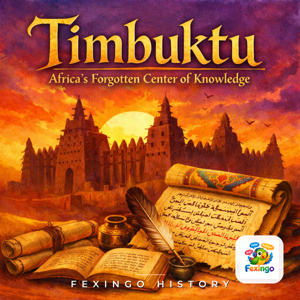


In 1352, the Moroccan scholar and world traveler Ibn Battuta crossed the Sahara to visit the Mali Empire. His detailed account offers a rare, firsthand glimpse into Timbuktu at the height of its early prosperity—decades before the city became a renowned center of learning. From the brutal salt mines of Taghaza to the bustling streets of Walata and the Niger River crossing, Battuta recorded everything: the customs of the court of Mansa Suleyman, the astonishing courtesy of the women, the food (millet and dried fish), and the legendary gold wealth. Yet he also noted tensions: the suspicion of strangers, the harsh climate, and the limits of royal power. This episode follows his entire West African leg, examining what Battuta's travelogue reveals about the Sahel in the 14th century—its trade networks, social hierarchies, and cultural practices. We also explore the controversies in his account and how modern historians piece together the Mali Empire from his words. A journey through sand, salt, and scholarship.
#IbnBattuta #MaliEmpire #Timbuktu #MansaSuleyman #Taghaza #Walata #NigerRiver #SaharanTrade #Travelogue #WestAfrica #14thCentury #SaltMines #GoldTrade #AfricanHistory #MedievalTravel #Sahel #FexingoHistory #History
Keep every episode free: buymeacoffee.com/fexingo
When we think of Timbuktu, we picture its golden age under the Mali and Songhai empires, a beacon of scholarship and trade. But the city faced a devastating turning point in the 19th century, when the Fulani jihad led by Seku Amadu swept through the Sahel. In 1826, Seku Amadu's forces captured Timbuktu, imposing a strict interpretation of Islam that clashed with the city's scholarly traditions. This episode explores the ideological conflict between the Kunta Sufi leaders and the Fulani reformers, the destruction of manuscripts, the resistance of scholars like Ahmad al-Kunti, and the long decline that followed. We also touch on the legacy of these events for modern manuscript preservation efforts, including the work of Abdel Kader Haidara. Join Lucas and Luna as they uncover this lesser-known chapter of Timbuktu's story.
#Timbuktu #FulaniJihad #SekuAmadu #MasinaEmpire #Kunta #AhmadLobbo #SahelHistory #19thCentury #ManuscriptPreservation #IslamicReform #WestAfrica #AhmadAlKunti #Tuareg #Sankore #Djinguereber #NigerBend #History #FexingoHistory
Keep every episode free: buymeacoffee.com/fexingo
This episode pulls back the curtain on the Sankore Madrasa, the intellectual heart of Timbuktu that flourished from the 14th to the 16th centuries. Lucas and Luna explore how Sankore functioned as a full-fledged university, long before similar institutions in Europe. They discuss the rigorous curriculum—spanning Maliki fiqh, Arabic grammar, astronomy, medicine, and logic—taught by renowned scholars like Ahmad Baba al-Timbukti. The conversation covers the ijaza degree system, the role of endowments (waqf) in supporting students and teachers, and the cosmopolitan atmosphere that drew scholars from across North Africa and the Middle East. The episode also examines the university's decline after the 1591 Saadian invasion and the scattering of its manuscript collections. Specific figures include the visiting jurist al-Maghili, the chronicler Abd al-Rahman al-Sadi of the Tarikh al-Sudan, and the poet-philosopher Ali ibn Ziyad al-Tunisi. Listeners will gain a vivid picture of an African center of learning that rivaled Cairo and Fez, and whose legacy is still preserved in the city's manuscript families.
#Sankore #Timbuktu #MedievalUniversity #History #FexingoHistory #WestAfrica #MaliEmpire #Scholarship #Ijaza #AhmadBaba #TarikhAlSudan #Education #Sahel #Djinguereber #Songhai #Manuscripts #IslamicGoldenAge #AfricanHistory
Keep every episode free: buymeacoffee.com/fexingo
Long before the great libraries heist of 2012, another clan quietly shaped Timbuktu's intellectual legacy. The Kunta, a Sufi dynasty of scholars and diplomats, controlled the Qadiriyya order across the Sahel for centuries. This episode follows Sidi al-Mukhtar al-Kunti, the 18th-century jurist whose library rivaled Sankore's, and his descendants who mediated conflicts between Tuareg nomads and Songhai farmers. We explore how the Kunta balanced scholarship with politics, preserved thousands of manuscripts during the Moroccan invasion, and kept Timbuktu's knowledge networks alive long after the gold trade faded. From the zawiya of Arouan to the Niger Bend, discover the lost story of Africa's Sufi power brokers.
#Timbuktu #KuntaClan #Sidi_al-Mukhtar #Qadiriyya #Sufism #SahelHistory #Manuscripts #Sankore #Tuareg #Songhai #NigerBend #Arouan #IslamicScholarship #WestAfrica #MaliEmpire #Almoravids #History #FexingoHistory
Keep every episode free: buymeacoffee.com/fexingo
Long before Timbuktu became a legendary center of learning, it was just a seasonal Tuareg camp built around a well called Buktu. In this episode, Lucas and Luna trace the city's early history: how Sanhaja Berber nomads used the Niger Bend's edge for grazing, how the well attracted traders and scholars, and how a tiny settlement grew into the intellectual powerhouse of the Sahel. They cover the traditional founding story from the Tarikh al-Sudan, the role of the Tuareg clans, the early religious teachers who set up schools under acacia trees, and the first permanent mud-brick structures that eventually became Sankore and Djinguereber. Along the way, they explore the geography of the Niger River, the salt-route that shaped Timbuktu's economy, and the quiet transformation from nomadic waystation to a city where manuscripts were worth more than gold. The episode closes on a reflective note about how fragile knowledge centers can be — and how a single well can hold the memory of an empire.
#Timbuktu #WellOfBuktu #Tuareg #Sanhaja #SankoreMadrasa #Djinguereber #Sahel #NigerBend #TransSaharanTrade #BerberHistory #WestAfrica #TarikhAlSudan #IbnBattuta #MaliEmpire #History #FexingoHistory #Origins #Scholarship
Keep every episode free: buymeacoffee.com/fexingo
This episode explores the 'Tarikh al-Sudan', a 17th-century chronicle written by Abd al-Rahman al-Sadi that remains a cornerstone of West African historiography. We follow al-Sadi's life as a scholar in Timbuktu after the devastating Moroccan invasion of 1591, and how he compiled the history of the Songhai Empire, Mali, and the city's golden age. The chronicle survives in multiple manuscripts, offering details on rulers, scholars, and everyday life along the Niger Bend. We discuss how it was used by later historians, its biases, and why it's treasured today as a window into a lost world of African scholarship.
#Tarikh al-Sudan #Abd al-Rahman al-Sadi #SonghaiEmpire #Timbuktu #Sahel #AfricanHistory #Historiography #Manuscripts #AhmadBaba #Sankore #Djinguereber #MaliEmpire #NigerBend #IslamicScholarship #WestAfrica #FexingoHistory #History #Chronicle
Keep every episode free: buymeacoffee.com/fexingo
In 15th-century Timbuktu, scholars used astrolabes and hand-crafted instruments to chart the heavens. This episode follows the story of a single brass astrolabe — likely brought from Muslim Spain — that ended up in the Sankore Madrasa library. We explore how Ahmad al-Wangari and other Sahelian astronomers calculated prayer times, predicted lunar eclipses, and navigated the Sahara by starlight. The episode also touches on the Fondo Kati manuscript collection, which preserves star catalogs from al-Suyuti and al-Battani. And we examine the debate: were these scholars merely copying Islamic science, or were they making their own observations under the Sahelian sky? Featuring the manazil al-qamar (lunar mansions) system, the Zij al-Sindhind astronomical tables, and the gnomon shadow technique used to measure the solstice in the middle of the Sahara.
#Timbuktu #History #Astronomy #Sahel #SankoreMadrasa #Astrolabe #AhmadalWangari #ManazilalQamar #ZijalSindhind #FondoKati #AlBattani #AlSuyuti #SaharanNavigation #IslamicScience #WestAfrica #FexingoHistory #Technology #ScienceHistory
Keep every episode free: buymeacoffee.com/fexingo
In the shadow of Timbuktu's great scholars and empires, a powerful lineage of women shaped the city's political and spiritual life. This episode explores the lives of Asma bint al-Hajj al-Kunti, a 16th-century scholar and merchant who controlled trade routes across the Sahara, and Amina of Zazzau, the warrior queen whose campaigns extended Hausa influence to the Niger Bend. We examine how these women navigated Islamic law, wielded economic power, and left their mark on the Tarikh al-Sudan and other chronicles. We also uncover the little-known story of the 'Sankore Queens' — female patrons of learning who funded manuscript production and endowed libraries. Drawing on recent scholarship and fragments from the Timbuktu manuscripts, we reconstruct a world where women were not silent but active participants in the city's golden age. This is a conversation about power, gender, and the hidden history of the Sahel.
#Timbuktu #Sahel #WomenInHistory #SonghaiEmpire #MaliEmpire #AminaOfZazzau #AsmaBintAlHajj #SankoreQueens #TarikhAlSudan #WestAfrica #IslamicHistory #GenderHistory #Manuscripts #HausaKingdoms #Kunta #SaharaTrade #FexingoHistory #History
Keep every episode free: buymeacoffee.com/fexingo
In this episode of Fexingo History, Lucas and Luna explore a difficult but essential chapter of Timbuktu's past: the trans-Saharan slave trade. For centuries, the city was a major hub for the trafficking of enslaved people from West Africa to North Africa and beyond. Lucas walks through the scale of the trade, the mechanisms that sustained it, and the role of elites, scholars, and merchants—including some of Timbuktu's most revered figures like Ahmad Baba al-Timbukti, who himself owned slaves but also wrote a famous fatwa critiquing enslavement of free Muslims. The conversation covers the networks stretching from the Niger Bend to the Maghreb, the impact of the Moroccan invasion of 1591, and how the trade shaped the economy and society of the Sahel. It's a nuanced look at a painful reality that challenges the romanticized image of Timbuktu as a purely intellectual paradise, while acknowledging the complexity of historical actors who both contributed to and sought to reform the system.
#Timbuktu #TransSaharanSlaveTrade #AhmadBaba #Sahel #SlaveryInAfrica #SonghaiEmpire #MaliEmpire #MoroccanInvasion1591 #TarikhAlSudan #Gao #NigerBend #FexingoHistory #History #AfricanHistory #Slavery #WestAfrica #Sahara #SlaveTrade
Keep every episode free: buymeacoffee.com/fexingo
Long before the Sahel became synonymous with drought, the scholars and engineers of Timbuktu mastered a remarkable irrigation technology: the qanat, an underground canal system that channeled groundwater from distant aquifers to the city's gardens and mosques. In this episode, Lucas and Luna explore how this Persian-born innovation was adapted to the harsh Saharan environment, who built and maintained it, and why it fell into disrepair after the Moroccan invasion of 1591. Drawing on the Tarikh al-Sudan and descriptions from the Kunta clan's hydraulic treatises, they trace the qanats from the Niger River floodplain to the heart of the city, and discuss how the loss of this infrastructure contributed to Timbuktu's long decline. Along the way, they touch on the role of enslaved labor in construction, the engineering challenges of keeping tunnels open in sand, and recent efforts by Malian archaeologists to find and restore the remaining shafts. A story not just of water, but of a city's lifeblood.
#Timbuktu #Qanat #Irrigation #Sahel #WestAfrica #HydraulicEngineering #TarikhAlSudan #Kunta #Sankore #Djinguereber #SonghaiEmpire #MaliEmpire #UndergroundCanals #MalianHistory #AfricanInnovation #WaterManagement #History #FexingoHistory
Keep every episode free: buymeacoffee.com/fexingo
From the publisher's feed