
Sign up to save your podcasts
Or

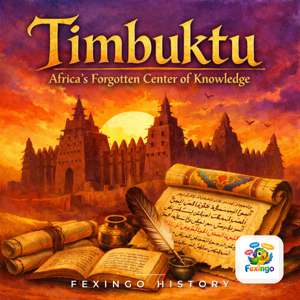


Long before Timbuktu became a legendary center of learning, its scholars needed something to write on. While the Catalan Atlas and the Sankore curriculum have been explored in previous episodes, the materials themselves have been overlooked. In this episode, Lucas and Luna dive into the forgotten industry of papermaking in the Sahel. From the arrival of rag paper via trans-Saharan caravans to the local innovations using mulberry bark and cotton rags, we uncover how Timbuktu's scribes produced the manuscripts that would later be smuggled to safety. Meet the papermakers of Djinguereber and Sankore, who blended techniques from North Africa and the Middle East with local resources. Discover the water-powered beaters that turned rags into pulp, and the secret recipes for sizing that made ink stay. How did a city in the middle of the Sahara sustain a book culture that produced tens of thousands of manuscripts? The answer lies in the hands of the papermakers, whose craft was as vital as the scholars who wrote on it. This episode connects the dots between trade, technology, and the written word in one of history's great intellectual hubs.
#Timbuktu #Papermaking #Sahel #Manuscripts #Sankore #Djinguereber #BookCulture #TransSaharanTrade #RagPaper #Mulberry #Sizing #Watermill #SonghaiEmpire #MaliEmpire #History #FexingoHistory #Africa #Craftsmanship
Keep every episode free: buymeacoffee.com/fexingo
Before Timbuktu became a center of scholarship and trade, the Sahara was nearly impassable. This episode explores how the introduction of the camel—specifically the North African dromedary—transformed West Africa. Lucas and Luna trace the camel's arrival from Arabia through Egypt and the Maghreb, its breeding by the Berber tribes of North Africa, and how it enabled the trans-Saharan gold-salt trade that made Timbuktu possible. They discuss the camel's advantages over oxen and horses, the development of the saddle that allowed for efficient cargo transport, and the creation of the oasis routes like the Taghaza–Timbuktu corridor. The episode also touches on the social impact: the rise of the Tuareg and other nomadic groups as caravan masters, and the environmental cost of overgrazing. No prior knowledge of camel history needed—just curiosity about how a single animal shaped a civilization.
#Camel #TransSaharanTrade #Timbuktu #Dromedary #SaharaDesert #BerberHistory #NigerBend #Taghaza #Tuareg #GoldSaltTrade #CaravanRoutes #Domestication #WestAfrica #MaliEmpire #Songhai #Sahel #History #FexingoHistory
Keep every episode free: buymeacoffee.com/fexingo
Episode 164 dives into the Aqit family, the scholarly dynasty who built Timbuktu's intellectual legacy long before the Saadian invasion. We explore how Umar Aqit transformed Sankore from a local mosque into a world-class university, how his son Muhammad cultivated connections across the Sahara, and how later generations—including the legendary Ahmad Baba al-Timbukti—preserved their library through occupation and exile. The episode also examines the family's political savvy: aligning with the Songhai Empire under Askia Muhammad, then navigating the brutal rule of Judar Pasha's Arma. We touch on the 16th-century manuscript trade that brought works from Cairo, Fez, and Baghdad to Timbuktu's dusty lanes, and how the Aqit collection survived the 1591 sacking. Finally, we reveal how one modern descendant, Abdel Kader Haidara, used his family's smuggling traditions to rescue 350,000 manuscripts from jihadists in 2012.
#Aqit #Timbuktu #Sankore #AhmadBaba #Manuscripts #SonghaiEmpire #AskiaMuhammad #JudarPasha #Saadian #AbdelKaderHaidara #Mali #WestAfrica #Sahara #IntellectualHistory #University #Jihadism #History #FexingoHistory
Keep every episode free: buymeacoffee.com/fexingo
Episode 163 of Fexingo History's Timbuktu series turns away from scholars and sieges to examine the economic engine that made the city possible: gold. Lucas and Luna walk through the Wangara goldfields, the silent trade that baffled early Arab geographers, and the Mande-speaking merchants who controlled the gold flow from the Bambuk and Bure mines to the Niger Bend. They discuss how the Mali Empire under Mansa Musa used gold diplomacy to reshape Mediterranean politics, how the Songhai Empire taxed and regulated the trade, and why the Moroccan invasion of 1591 was in large part a bid to seize the gold routes. They also touch on the role of salt as a complementary currency, the rise of the Mande dyula trading networks, and the environmental cost of alluvial mining along the Faleme and Senegal rivers. The episode asks a hard question: did Timbuktu's gold wealth ultimately make it a target that doomed its independence? Specific terms encountered include Wangara, Bambuk, Bure, dyula, silent trade, Mande, Sahel, and Askia Muhammad.
#Timbuktu #GoldTrade #Wangara #Bambuk #Bure #Mande #Dyula #SilentTrade #MansaMusa #SonghaiEmpire #MaliEmpire #Sahel #NigerBend #AskiaMuhammad #WestAfricanHistory #MedievalEconomy #FexingoHistory #History
Keep every episode free: buymeacoffee.com/fexingo
In 2012, as jihadists seized Timbuktu, a clandestine operation smuggled hundreds of thousands of priceless manuscripts to safety. This episode tells the story of the heist—how Abdel Kader Haidara and a network of librarians, couriers, and ordinary citizens defied Ansar Dine and al-Qaeda to save the city's literary heritage. We trace the route from Sankore and Djinguereber through the Niger River to Bamako, and the financial ingenuity that funded the rescue. But it wasn't just a logistics story: it was a moral stand against the destruction of history. Learn about the role of the Ahmed Baba Institute, the Mamma Haidara Library, and the quiet heroism of those who risked execution to preserve centuries of African scholarship. Tune in for a tense, inspiring chapter in Timbuktu's ongoing fight to protect its legacy.
#Timbuktu #ManuscriptRescue #AbdelKaderHaidara #AnsarDine #alQaeda #AhmedBabaInstitute #MammaHaidara #Sankore #Djinguereber #NigerRiver #Bamako #2012Crisis #Mali #CulturalHeritage #History #FexingoHistory #AfricanHistory #LibrarianHeroes
Keep every episode free: buymeacoffee.com/fexingo
In 1591, the Saadian army of Morocco crushed the Songhai Empire at Tondibi and occupied Timbuktu. But one scholar refused to submit. Ahmad Baba al-Timbukti, the greatest intellectual of his age, was arrested and exiled to Marrakech, where he spent two years under house arrest. From captivity, he wrote a devastating critique of the Saadian conquest, arguing that it was illegal under Islamic law because the Songhai were Muslims. He also produced a biography of the Maliki jurists of Timbuktu, preserving their legacy. After his release, he returned to a shattered city, rebuilt its scholarly networks, and trained a new generation. His story is a testament to intellectual resistance in the face of military occupation. This episode explores Ahmad Baba's career, his confrontation with Judar Pasha, the fatwa he wrote against the invasion, and his role in salvaging the manuscript culture of Timbuktu after the Saadian destruction.
#AhmadBaba #Timbuktu #SaadianInvasion #JudarPasha #SonghaiEmpire #MalikiFiqh #Marrakech #Exile #IntellectualResistance #TarikhAlSudan #ManuscriptCulture #16thCentury #WestAfrica #Islam #History #FexingoHistory #Sankore #Sahel
Keep every episode free: buymeacoffee.com/fexingo
Long before European medicine reached West Africa, Timbuktu was a center of medical knowledge, where scholars like Ahmad Baba al-Timbukti and the Kunta doctors blended Islamic medicine with local herbal remedies. In this episode, Lucas and Luna explore the medical manuscripts of the Mamma Haidara and Ahmed Baba collections, the role of the humoral theory of Galen and Hippocrates adapted to the Sahel, and the healing practices of the Tuareg and Fulani. They discuss specific remedies like the use of the baobab tree, treatments for guinea worm, and the influence of the Qadiriyya Sufi order on public health. The episode also touches on the decline of this knowledge during the French colonial period and how modern scholars are now digitizing these texts to revive lost cures.
#Timbuktu #MedicalHistory #AhmadBaba #MammaHaidara #Kunta #Qadiriyya #Sahel #HerbalMedicine #HumoralTheory #Galen #Hippocrates #Baobab #Tuareg #Fulani #FrenchColonial #Digitization #History #FexingoHistory
Keep every episode free: buymeacoffee.com/fexingo
Long before Timbuktu became a center of scholarship, it was a boomtown built on salt. The city's wealth came not from gold but from slabs of white salt mined at Taghaza and shipped across the Sahara. This episode follows the trade route from the salt mines to the Niger River, where salt was traded pound for pound for gold. We explore how the Mali and Songhai empires controlled the salt trade, how Tuareg caravans moved the slabs, and how salt shaped Timbuktu's rise. We also look at the decline of the salt routes with the Moroccan invasion and the discovery of Atlantic sea salt. Featuring the Tarikh al-Sudan, Askia Muhammad, and the Tuareg of the Sahara.
#Timbuktu #SaltTrade #Taghaza #Sahara #Songhai #MaliEmpire #Tuareg #AskiaMuhammad #TarikhAlSudan #NigerBend #TransSaharan #Trade #Gold #Caravan #WestAfrica #History #FexingoHistory #Mining
Keep every episode free: buymeacoffee.com/fexingo
In this episode, Lucas and Luna explore the educational system of medieval Timbuktu, focusing on the Sankore Madrasa and its curriculum. They discuss how the curriculum integrated Maliki fiqh, Arabic grammar, logic, rhetoric, astronomy, and medicine, and how scholars like Ahmad Baba al-Timbukti and the Aqit family shaped it. The episode covers the role of private libraries, the oral transmission of knowledge, and the contrast with European universities of the time. Lucas explains the ijaza system of certification and how Timbuktu's scholars connected West Africa to the broader Islamic world through networks of learning stretching to Fez, Cairo, and even Granada.
#Sankore #Timbuktu #AhmadBaba #Aqit #Maliki #WestAfrica #IslamicEducation #MedievalAfrica #Madrasa #Ijaza #Curriculum #ArabicGrammar #MalikiFiqh #Astronomy #Medicine #History #FexingoHistory #AfricanHistory
Keep every episode free: buymeacoffee.com/fexingo
In this episode of Timbuktu: Africa's Forgotten Center of Knowledge, we explore the sophisticated astronomical tradition of the Sahel. Lucas and Luna discuss a surviving brass astrolabe from 18th-century Timbuktu, now housed in the Institut Fondamental d'Afrique Noire in Dakar. They trace how scholars like al-Wangari adapted Islamic astronomical tools to the Sahara, using the stars for navigation, prayer times, and agricultural calendars. The conversation delves into the Sankore curriculum, which included mathematics and optics, and the controversy over whether Timbuktu's science was derivative or innovative. We also cover the role of the Kunta scholars in preserving manuscripts on astronomy, and the challenges of dating and attributing these artifacts today. Finally, the episode reflects on what the astrolabe tells us about intellectual exchange across the Sahara and the Sahel's place in global science.
#TimbuktuAstronomy #SankoreMadrasa #AlWangari #Astrolabe #SahelScience #IslamicAstronomy #SaharanTrade #KuntaScholars #AhmadBaba #TarikhAlSudan #MaliEmpire #SonghaiEmpire #18thCentury #HistoryOfScience #FexingoHistory #WestAfrica #TimbuktuManuscripts #Navigation
Keep every episode free: buymeacoffee.com/fexingo
From the publisher's feed