
Sign up to save your podcasts
Or

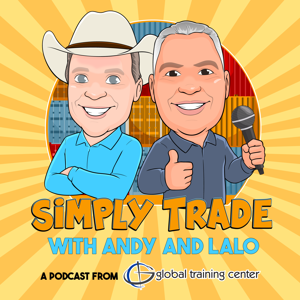

Host: Lalo Solorzano and Trudy Wilson
In this episode of Simply Trade, Lalo Solorzano and Trudy Wilson return for another Trudy’s Trade Tips segment, shifting the conversation from Incoterms to USMCA and free trade agreements. The big message: you do not have to participate in a free trade agreement just because one is available.
Trudy explains why companies should pause before making USMCA or other FTA claims, especially if they do not have the proper documentation, qualification process, or internal controls in place. While free trade agreements can offer legitimate duty savings, they also come with responsibility. If your company claims preferential treatment, Customs can verify that claim, and you need to be ready to prove the goods qualify.
The episode also highlights why importers are not required to use a certificate just because they receive one, and why other duty-free provisions, such as Chapter 98, may sometimes be worth reviewing. Trudy closes with a key warning about USMCA preference criterion A: if you see it, challenge it.
This episode focuses on whether companies should participate in a free trade agreement, with special attention on USMCA. Trudy explains that FTAs can be valuable tools for reducing duty, but they should not be used casually or automatically.
A major point of discussion is the importance of supporting documentation. Companies that make USMCA claims must be able to prove that their products qualify under the agreement. If they cannot, they may be exposing themselves, and their customers, to verification risk.
Trudy also explains that importers have a choice. Even if a supplier provides a free trade agreement certificate, the importer does not have to use it. In some cases, another duty-free provision may be more appropriate, but those options also require documentation and proper reporting.
The conversation also introduces preference criteria, especially criterion A. Trudy warns that criterion A is often misunderstood and should only be used when every part, component, ingredient, or input can be traced back to the U.S., Mexico, or Canada.
• You do not have to participate in a free trade agreement simply because one is available.
• Global Training Center
Host:
Producer:
Stay connected with the Simply Trade community and never miss an episode that helps you trade smarter.
🎧 Listen on:
• Apple Podcasts
💬 Connect with us:
• Simply Trade
Don’t forget to rate, review, and share with your fellow trade geeks!
Want to be on the show or have topic suggestions?
 View all episodes
 By Global Training Center

4.6
2222 ratings
Host: Lalo Solorzano and Trudy Wilson
In this episode of Simply Trade, Lalo Solorzano and Trudy Wilson return for another Trudy’s Trade Tips segment, shifting the conversation from Incoterms to USMCA and free trade agreements. The big message: you do not have to participate in a free trade agreement just because one is available.
Trudy explains why companies should pause before making USMCA or other FTA claims, especially if they do not have the proper documentation, qualification process, or internal controls in place. While free trade agreements can offer legitimate duty savings, they also come with responsibility. If your company claims preferential treatment, Customs can verify that claim, and you need to be ready to prove the goods qualify.
The episode also highlights why importers are not required to use a certificate just because they receive one, and why other duty-free provisions, such as Chapter 98, may sometimes be worth reviewing. Trudy closes with a key warning about USMCA preference criterion A: if you see it, challenge it.
This episode focuses on whether companies should participate in a free trade agreement, with special attention on USMCA. Trudy explains that FTAs can be valuable tools for reducing duty, but they should not be used casually or automatically.
A major point of discussion is the importance of supporting documentation. Companies that make USMCA claims must be able to prove that their products qualify under the agreement. If they cannot, they may be exposing themselves, and their customers, to verification risk.
Trudy also explains that importers have a choice. Even if a supplier provides a free trade agreement certificate, the importer does not have to use it. In some cases, another duty-free provision may be more appropriate, but those options also require documentation and proper reporting.
The conversation also introduces preference criteria, especially criterion A. Trudy warns that criterion A is often misunderstood and should only be used when every part, component, ingredient, or input can be traced back to the U.S., Mexico, or Canada.
• You do not have to participate in a free trade agreement simply because one is available.
• Global Training Center
Host:
Producer:
Stay connected with the Simply Trade community and never miss an episode that helps you trade smarter.
🎧 Listen on:
• Apple Podcasts
💬 Connect with us:
• Simply Trade
Don’t forget to rate, review, and share with your fellow trade geeks!
Want to be on the show or have topic suggestions?

43,560 Listeners

3,221 Listeners

4,355 Listeners

13,555 Listeners
4 Listeners

112,187 Listeners

56,559 Listeners
151 Listeners

27,817 Listeners
32 Listeners

6,404 Listeners

16,172 Listeners

154 Listeners
10,758 Listeners
16,380 Listeners