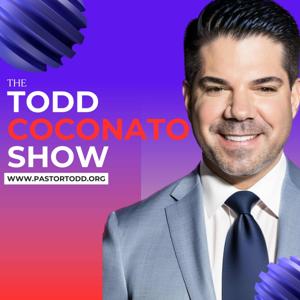
Todd Coconato Show | The Transformed Mind Experience

Todd Coconato Show | The Transformed Mind Experience

Download on the App Store
  • Favorites

    37

    Followers

  • Typical duration

    46 min

    per episode

Based on Podcast App listening data

Todd Coconato Show | The Transformed Mind Experience episodes

  • What Is Sin? | A teaching by Pastor Todd Coconato

    Website: www.PastorTodd.org

    To give: www.ToddCoconato.com/give


    Sin is described in the Bible as transgression of the law of God (1 John 3:4) and rebellion against God (Deuteronomy 9:7; Joshua 1:18). Sin had its beginning with Lucifer, probably the most beautiful and powerful of the angels. Not content with his position, he desired to be higher than God, and that was his downfall, the beginning of sin (Isaiah 14:12-15). Renamed Satan, he brought sin to the human race in the Garden of Eden, where he tempted Adam and Eve with the same enticement, “you shall be like God.” Genesis 3 describes Adam and Eve’s rebellion against God and against His command. Since that time, sin has been passed down through all the generations of mankind and we, Adam’s descendants, have inherited sin from him. Romans 5:12 tells us that through Adam sin entered the world, and so death was passed on to all men because “the wages of sin is death” (Romans 6:23).


    Through Adam, the inherent inclination to sin entered the human race, and human beings became sinners by nature. When Adam sinned, his inner nature was transformed by his sin of rebellion, bringing to him spiritual death and depravity that would be passed on to all who came after him. We are sinners because we sin and we sin because we are sinners. This passed-on depravity is known as inherited sin. Just as we inherit physical characteristics from our parents, we inherit our sinful natures from Adam. King David lamented this condition of fallen human nature in Psalm 51:5: “Surely I was sinful at birth, sinful from the time my mother conceived me.”


    Another type of sin is known as imputed sin. Used in both financial and legal settings, the Greek word translated “impute” means “to take something that belongs to someone and credit it to another’s account.” Before the Law of Moses was given, sin was not imputed to man, although men were still sinners because of inherited sin. After the Law was given, sins committed in violation of the Law were imputed (accounted) to them (Romans 5:13). Even before transgressions of the law were imputed to men, the ultimate penalty for sin (death) continued to reign (Romans 5:14). All humans, from Adam to Moses, were subject to death, not because of their sinful acts against the Mosaic Law (which they did not have), but because of their own inherited sinful nature. After Moses, humans were subject to death both because of inherited sin from Adam and imputed sin from violating the laws of God.

    God used the principle of imputation to benefit mankind when He imputed the sin of believers to the account of Jesus Christ, who paid the penalty for that sin—death—on the cross. Imputing our sin to Jesus, God treated Him as if He were a sinner, though He was not, and had Him die for the sins of the entire world (1 John 2:2). It is important to understand that sin was imputed to Him, but He did not inherit it from Adam. He bore the penalty for sin, but He never became a sinner. His pure and perfect nature was untouched by sin. He was treated as though He were guilty of all the sins ever committed by the human race, even though He committed none. God then imputed the righteousness of Christ to believers and credited our accounts with His righteousness, just as He had credited our sins to Christ’s account (2 Corinthians 5:21).

    A third type of sin is personal sin, that which is committed every day by every human being. Because we have inherited a sin nature from Adam, we commit individual, personal sins, everything from seemingly innocent untruths to murder. Those who have not placed their faith in Jesus Christ must pay the penalty for these personal sins, as well as inherited and imputed sin. However, believers have been freed from the eternal penalty of sin—hell and spiritual death. We now also have the power to resist sinning. Now we can choose whether or not to commit personal sins because we have the power of the Holy Spirit who dwells within us. When we do sin, the Spirit convicts us (Romans 8:9-11). Once we confess our personal sins to God and ask forgiveness for them, we are restored to perfect fellowship and communion with Him. “If we confess our sins, He is faithful and just to forgive us our sins and cleanse us from all unrighteousness” (1 John 1:9).

    We are three times condemned due to inherited sin, imputed sin, and personal sin. The only just penalty for this sin is death (Romans 6:23), not just physical death but eternal death (Revelation 20:11-15). Thankfully, inherited sin, imputed sin, and personal sin have all been crucified on the cross of Jesus, and now by faith in Jesus Christ as the Savior “we have redemption through His blood, the forgiveness of sins, according to the riches of His grace” (Ephesians 1:7).

    27 min
  • Todd Coconato Radio Show | We Need A Sound Mind

    We need a sound mind. 

    Our website: www.PastorTodd.org

    To give to this ministry: www.ToddCoconato.com/give


    A few resources...

    Survival Food LINK: https://mypatriotsupply.com/?rfsn=5774972.922545e

    Real Money–Gold & Silver

    Kirk Elliot PhD
    LINK:
    http://kirkelliottphd.com/pastorTodd/?mibextid=Zxz2cZirk

    We encounter the expression sound mind in 2 Timothy 1:7: “For God hath not given us the spirit of fear; but of power, and of love, and of a sound mind” (KJV). The original Greek word translated “sound mind” here is sophronismos, and it appears in the Bible only this one time.


    In other Bible translations, the word sophronismos is rendered “self-control” (ESV), “self-discipline” (NIV, NLT), “discipline” (NASB), “good judgment” (GW), and “sound judgment” (CSB). These various interpretations seem to convey different meanings. What exactly does sophronismos mean? And what is Paul referring to when he tells Timothy that God has given us the spirit of a sound mind?


    Paul is writing to Timothy from prison. Knowing the time of his execution is drawing near, Paul pens Timothy this profoundly intimate letter filled with love, concern, and encouragement. Timothy would need courage and determination to carry on the enormous responsibility of his calling to lead the church in spreading the gospel. In the preceding verse, Paul reminds Timothy of the indwelling gift of the Holy Spirit and encourages him to “fan that gift into flames” (2 Timothy 1:6).


    Paul knows Timothy will need to counter his natural tendency toward quiet timidity by remembering that the Spirit of God lives within him. That Spirit will empower Timothy with boldness rather than fear, and with love and a sound mind. Timothy will rely on God’s Spirit to enable him to do whatever God requires. Timothy, being filled with God’s Spirit of love—the defining characteristic of Christians—will be capable of loving God and loving others. And Timothy will possess God’s Spirit of a sound mind.


    The influence of the Spirit of God is required to produce a genuinely sound mind. The sound mind Paul speaks of is a mind under the control of God’s Holy Spirit. In the sense of self-discipline, the word sophronismos denotes careful, rational, sensible thinking. Having a sound mind requires a thought process based on the wisdom and clarity that God imparts rather than being manipulated by fear.


    Today, as in Timothy’s day, fear is a driving force in the world. Fear inspires the news headlines, motivates advertising campaigns, and stirs up social media frenzies. Fear is one of Satan’s favorite devices to confuse our minds, cause irrational thoughts, misunderstandings, and derail us from the will of God. For this reason, the Word of God encourages us to cultivate a healthy, renewed mind that can process right-thinking based on God’s truth: “Do not conform to the pattern of this world, but be transformed by the renewing of your mind. Then you will be able to test and approve what God’s will is—his good, pleasing and perfect will” (Romans 12:2).


    A sound mind is a stable, healthy mind. A healthy mind is linked to our attitude and outlook as believers. A sound mind is not overly concerned with the cares and problems of this life but is set on God and His Kingdom (Colossians 1:1–2). A sound mind is alert and sober, focused on the eternal hope we have in Jesus Christ (1 Peter 1:13). A sound mind recognizes who we are in Christ, and does not depend on human wisdom and strength (2 Corinthians 10:3–5). A sound mind is guarded through prayer and purity: “Do not be anxious about anything, but in every situation, by prayer and petition, with thanksgiving, present your requests to God. And the peace of God, which transcends all understanding, will guard your hearts and your minds in Christ Jesus. Finally, brothers and sisters, whatever is true, whatever is noble, whatever is right, whatever is pure, whatever is lovely, whatever is admirable—if anything is excellent or praiseworthy—think about such things” (Philippians 4:6–8).


    A sound mind stabilizes our entire inner world. When Paul says God has given us the spirit of a sound mind (or self-control, discipline, and sound judgment), he doesn’t mean we’ll be able to train harder, eat better, or study more. Paul recognizes that God’s Spirit yields obedience, right living, and moral judgment. From the inside out, the Holy Spirit reshapes and transforms not just how we think, but who we are.

    46 min
  • Todd Coconato Show I Special Guest Pastor Leon Benjamin of New Life Harvest Church

    Todd Coconato Show I Special Guest Pastor Leon Benjamin of New Life Harvest Church

    Join us as Pastor Leon Benjamin discusses his Book "3 Keys to a Successful Marriage", his new podcast "Marriage is From Heaven", and his run for Virginia's 4th Congressional District in Congress!

    therealremnantchurch.com

    marriageisfromheaven.com

    --------------------------------------------------------------------------

    Our website: www.PastorTodd.org

    To support this ministry....www.ToddCoconato.com

    40 min
  • The Fruit of the Spirit...

    The Fruit of the Spirit...

    Our website: www.PastorTodd.org

    To give a donation: www.ToddCoconato.com/give

    Galatians 5:22-23 tells us, “But the fruit of the Spirit is love, joy, peace, patience, kindness, goodness, faithfulness, gentleness and self-control.” The fruit of the Holy Spirit is the result of the Holy Spirit’s presence in the life of a Christian. The Bible makes it clear that everyone receives the Holy Spirit the moment he or she believes in Jesus Christ (Romans 8:9; 1 Corinthians 12:13; Ephesians 1:13-14). One of the primary purposes of the Holy Spirit coming into a Christian’s life is to change that life. It is the Holy Spirit’s job to conform us to the image of Christ, making us more like Him.

    The fruit of the Holy Spirit is in direct contrast with the acts of the sinful nature in Galatians 5:19-21, “The acts of the sinful nature are obvious: sexual immorality, impurity and debauchery; idolatry and witchcraft; hatred, discord, jealousy, fits of rage, selfish ambition, dissensions, factions and envy; drunkenness, orgies, and the like. I warn you, as I did before, that those who live like this will not inherit the kingdom of God.” This passage describes all people, to varying degrees, when they do not know Christ and therefore are not under the influence of the Holy Spirit. Our sinful flesh produces certain types of fruit that reflect our nature, and the Holy Spirit produces types of fruit that reflect His nature.


    The Christian life is a battle of the sinful flesh against the new nature given by Christ (2 Corinthians 5:17). As fallen human beings, we are still trapped in a body that desires sinful things (Romans 7:14-25). As Christians, we have the Holy Spirit producing His fruit in us and we have the Holy Spirit’s power available to conquer the acts of the sinful nature (2 Corinthians 5:17; Philippians 4:13). A Christian will never be completely victorious in always demonstrating the fruits of the Holy Spirit. It is one of the main purposes of the Christian life, though, to progressively allow the Holy Spirit to produce more and more of His fruit in our lives—and to allow the Holy Spirit to conquer the opposing sinful desires. The fruit of the Spirit is what God desires our lives to exhibit and, with the Holy Spirit’s help, it is possible!

    28 min
  • The Names of God and Why You Need to Know This...

    The Names of God and Why You Need to Know This...


    Pastor Todd's website: www.PastorTodd.org

    To give to this ministry: www.ToddCoconato.com/give 


    ach of the many names of God describes a different aspect of His many-faceted character. Here are some of the better-known names of God in the Bible:


    EL, ELOAH [el, el-oh-ah]: God "mighty, strong, prominent" (Nehemiah 9:17; Psalm 139:19) – etymologically, El appears to mean “power” and “might” (Genesis 31:29). El is associated with other qualities, such as integrity (Numbers 23:19), jealousy (Deuteronomy 5:9), and compassion (Nehemiah 9:31), but the root idea of “might” remains.

    ELOHIM [el-oh-heem]: God “Creator, Mighty and Strong” (Genesis 17:7; Jeremiah 31:33) – the plural form of Eloah, which accommodates the doctrine of the Trinity. From the Bible’s first sentence, the superlative nature of God’s power is evident as God (Elohim) speaks the world into existence (Genesis 1:1).

    EL SHADDAI [el-shah-dahy]: “God Almighty,” “The Mighty One of Jacob” (Genesis 49:24; Psalm 132:2,5) – speaks to God’s ultimate power over all.

    ADONAI [ˌædɒˈnaɪ; ah-daw-nahy]: “Lord” (Genesis 15:2; Judges 6:15) – used in place of YHWH, which was thought by the Jews to be too sacred to be uttered by sinful men. In the Old Testament, YHWH is more often used in God’s dealings with His people, while Adonai is used more when He deals with the Gentiles.

    YHWH / YAHWEH / JEHOVAH [yah-way / ji-hoh-veh]: “LORD” (Deuteronomy 6:4; Daniel 9:14) – strictly speaking, the only proper name for God. Translated in English Bibles “LORD” (all capitals) to distinguish it from Adonai, “Lord.” The revelation of the name is given to Moses “I Am who I Am” (Exodus 3:14). This name specifies an immediacy, a presence. Yahweh is present, accessible, near to those who call on Him for deliverance (Psalm 107:13), forgiveness (Psalm 25:11) and guidance (Psalm 31:3).

    YAHWEH-JIREH [yah-way-ji-reh]: "The Lord Will Provide" (Genesis 22:14) – the name memorialized by Abraham when God provided the ram to be sacrificed in place of Isaac.

    YAHWEH-RAPHA [yah-way-raw-faw]: "The Lord Who Heals" (Exodus 15:26) – “I am Jehovah who heals you” both in body and soul. In body, by preserving from and curing diseases, and in soul, by pardoning iniquities.

    YAHWEH-NISSI [yah-way-nee-see]: "The Lord Our Banner" (Exodus 17:15), where banner is understood to be a rallying place. This name commemorates the desert victory over the Amalekites in Exodus 17.

    YAHWEH-M'KADDESH [yah-way-meh-kad-esh]: "The Lord Who Sanctifies, Makes Holy" (Leviticus 20:8; Ezekiel 37:28) – God makes it clear that He alone, not the law, can cleanse His people and make them holy.

    YAHWEH-SHALOM [yah-way-shah-lohm]: "The Lord Our Peace" (Judges 6:24) – the name given by Gideon to the altar he built after the Angel of the Lord assured him he would not die as he thought he would after seeing Him.

    YAHWEH-ELOHIM [yah-way-el-oh-him]: "LORD God" (Genesis 2:4; Psalm 59:5) – a combination of God’s unique name YHWH and the generic word for “God” signifying that He is the Lord who is God.

    YAHWEH-TSIDKENU [yah-way-tzid-kay-noo]: "The Lord Our Righteousness” (Jeremiah 33:16) – As with YHWH-M’Kaddesh, it is God alone who provides righteousness (from the Hebrew word tsidkenu) to man, ultimately in the person of His Son, Jesus Christ, who became sin for us “that we might become the Righteousness of God in Him” (2 Corinthians 5:21).

    YAHWEH-ROHI [yah-way-roh-hee]: "The Lord Our Shepherd" (Psalm 23:1) – After David pondered his relationship as a shepherd to his sheep, he realized that was exactly the relationship God had with him, and so he declares, “Yahweh-Rohi is my Shepherd. I shall not want” (Psalm 23:1).

    YAHWEH-SHAMMAH [yah-way-sham-mahw]: "The Lord Is There” (Ezekiel 48:35) – the name ascribed to Jerusalem and the Temple there, indicating that the once-departed glory of the Lord (Ezekiel 8—11) had returned (Ezekiel 44:1-4).

    YAHWEH-SABAOTH [yah-way-sah-bah-ohth]: "The Lord of Hosts" (Isaiah 1:24; Psalm 46:7) – Hosts means “hordes,” both of angels and of men. He is Lord of the host of heaven and of the inhabitants of the earth, of Jews and Gentiles, of rich and poor, master and slave. The name is expressive of the majesty, power, and authority of God and shows that He is able to accomplish what He determines to do.

    EL ELYON [el-el-yohn]: “Most High" (Deuteronomy 26:19) – derived from the Hebrew root for “go up” or “ascend,” so the implication is of that which is the very highest. El Elyon denotes exaltation and speaks of absolute right to lordship.

    EL ROI [el-roh-ee]: "God of Seeing" (Genesis 16:13) – the name ascribed to God by Hagar, alone and desperate in the wilderness after being driven out by Sarah (Genesis 16:1-14). When Hagar met the Angel of the Lord, she realized she had seen God Himself in a theophany. She also realized that El Roi saw her in her distress and testified that He is a God who lives and sees all.

    EL-OLAM [el-oh-lahm]: "Everlasting God" (Psalm 90:1-3) – God’s nature is without beginning or end, free from all constraints of time, and He contains within Himself the very cause of time itself. “From everlasting to everlasting, You are God” (Psalm 90:2).

    EL-GIBHOR [el-ghee-bohr]: “Mighty God” (Isaiah 9:6) – the name describing the Messiah, Christ Jesus, in this prophetic portion of Isaiah. As a powerful and mighty warrior, the Messiah, the Mighty God, will accomplish the destruction of God’s enemies and rule with a rod of iron (Revelation 19:15).

    45 min
  • Pastor Todd on Beauty for Ashes with Tania Joy!

    Todd Coconato | Nashville Shooting | We are IN this World But Not Of IT

    Pastor Todd Coconato joined us again to discuss the importance of being in this world but not of it. He was a childhood actor who is now preaching the good news of Jesus Christ!

    *** Watch LIVE DAILY at 4:14p CST on www.taniajoy.tv***

    Follow Tania Joy: https://allmylinks.com/taniajoy
    ------------------------------------------------------------------------------------------
    Our website: www.PastorTodd.org
    To give to this ministry: www.ToddCoconato.com/give
    A few resources...

    Survival Food LINK: https://mypatriotsupply.com/?rfsn=5774972.922545e

    Real Money–Gold & Silver

    Kirk Elliot PhD
    LINK:
    http://kirkelliottphd.com/pastorTodd/?mibextid=Zxz2cZirk

    49 min
  • Sunday Service LIVE | What Happened At Gilgal...and WHY YOU SHOULD KNOW!

    Sunday Service LIVE | What Happened At Gilgal...and WHY YOU SHOULD KNOW!

    Website: www.PastorTodd.org

    To support this ministry: www.ToddCoconato.com/give

    There are at least two locations named Gilgal in the Bible. There was a Gilgal just west of the Jordan River near Jericho (Joshua 5:9, 13) and one nearer Bethel (2 Kings 2:1–2). Some scholars believe there was a third place named Gilgal near Mount Gerizim and Mount Ebal (Deuteronomy 11:29–30). The meaning of the name Gilgal is “rolling.”

    Gilgal is not mentioned in the New Testament, but the Old Testament depicts it as follows:

    Gilgal was a place of memorial. Gilgal is significant in the Bible as serving as a place of memorial for the Israelites, to remind them of what God had done. After miraculously crossing the Jordan River into the Promised Land, the Israelites set up twelve stones taken from the river, representing the twelve tribes, to serve as a reminder to the children of Israel (Joshua 4:19–20). The stones at Gilgal would remind the Israelites and their descendants of the power of God and how He had dried up the Jordan River so they could walk through it, just as He had done to the Red Sea (Joshua 4:21–24). The stones at Gilgal would serve a teaching purpose to the younger generation, so that they too could remember what the Lord had done for them (Joshua 4:21–22).

    Gilgal was a place of consecration and change. It was at Gilgal that the Israelites were circumcised and celebrated their first Passover in the Promised Land (Joshua 5:7–8, 10). The children of those who had wandered in the desert had not yet been circumcised, and it was time for them to take the sign of the covenant and be set apart as God’s people. This time of circumcision is what gave Gilgal its name, for the Lord said He had “rolled away the reproach of Egypt from you” (Joshua 5:9). The “reproach” was the Israelites’ uncircumcised condition; the “rolling away” of that reproach set them apart, once and for all, from the Egyptian people and way of life. After the Israelites celebrated the Passover and began to eat the produce of their new land, the manna that the Lord had provided the Israelites during their years of wandering stopped. This also happened while they were camped at Gilgal (Joshua 5:11–12).

    A place of worship. Years later, Gilgal was still a place of worship to offer sacrifices to the Lord, and it was the place where Saul was publicly crowned the first king of Israel (1 Samuel 10:8; 11:15). Unfortunately, as the Israelites slipped into idolatry, Gilgal became connected with the worship of false gods (Hosea 4:15; Amos 4:4).

    A place of judgment. It was at Gilgal that Samuel rebuked Saul and prophesied of his loss of the kingdom (1 Samuel 13:13–14). Saul had been instructed to stay at Gilgal and wait for Samuel before offering sacrifices to the Lord there (1 Samuel 10:8; 13:8). Rather than obey, Saul took the matter in his own hands and sacrificed to the Lord at Gilgal (1 Samuel 13:9–12). When Samuel arrived, he announced judgment on Saul for his disobedience, stating that Saul’s kingdom and position would not endure (1 Samuel 13:14).

    A place of prophets. Gilgal was one of three cities where Samuel regularly held court as the judge of Israel (1 Samuel 7:16). It seems that Elijah and Elisha spent some time at a place called Gilgal before Elijah’s departure to heaven (2 Kings 2:1–2). This is most likely not the same Gilgal as where Joshua had camped; rather, it is a place nearer Bethel in central Canaan. Sometime after Elijah was gone, Elisha returned to Gilgal where many other prophets resided (2 Kings 4:38). There, he found that Gilgal was in the midst of a famine and so made sure the prophets were fed. He also miraculously fed around a hundred other residents (2 Kings 4:38–44).

    Gilgal was a significant place in that it reminded the Israelites of their heritage, served as a place of worship, and was visited by kings and prophets.

    56 min

About Todd Coconato Show | The Transformed Mind Experience

From the publisher's feed

The Todd Coconato Show | The Transformed Mind Experience is for faith-driven Kingdom people who know they were created for more and are ready to become who God has called them to be.

Best of Todd Coconato Show | The Transformed Mind Experience

Ranked by our users in the last 21 days

More shows like Todd Coconato Show | The Transformed Mind Experience

Understanding the Times by Pastor Josh Schwartz and Ken Mikle

Understanding the Times

2,569 Listeners

The WallBuilders Show by Tim Barton, David Barton & Rick Green

The WallBuilders Show

2,183 Listeners

The Glenn Beck Program by Mercury Radio Arts

The Glenn Beck Program

26,005 Listeners

Prophecy Watchers by Gary Stearman and Mondo Gonzales

Prophecy Watchers

1,014 Listeners

The Lance Wallnau Show by Dr. Lance Wallnau

The Lance Wallnau Show

2,172 Listeners

The Common Sense Show by The Common Sense Show

The Common Sense Show

670 Listeners

The Charlie Kirk Show by Charlie Kirk

The Charlie Kirk Show

65,334 Listeners

End Time Headlines by End Time Headlines

End Time Headlines

478 Listeners

Prophecy Pros Podcast by Jeff Kinley & Todd Hampson

Prophecy Pros Podcast

911 Listeners

Give Him 15 Plus | Insights with Dutch by Dutch Sheets

Give Him 15 Plus | Insights with Dutch

693 Listeners

Flyover Conservatives by Flyover Conservatives

Flyover Conservatives

294 Listeners

The Benny Show by Benny Johnson

The Benny Show

2,211 Listeners

Jack Hibbs Podcast by JackHibbs.com

Jack Hibbs Podcast

13,156 Listeners

Man in America Podcast by Man in America

Man in America Podcast

514 Listeners

Culture & Christianity: The Allen Jackson Podcast by Pastor Allen Jackson

Culture & Christianity: The Allen Jackson Podcast

889 Listeners