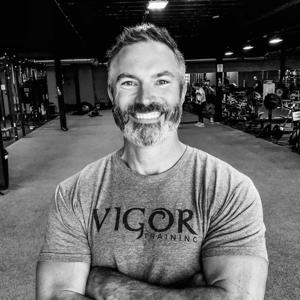
Tom Nikkola | VIGOR Training

Tom Nikkola | VIGOR Training

By Tom Nikkola | VIGOR TrainingHealth & FitnessNutritionMental HealthFitness
Download on the App Store

Tom Nikkola | VIGOR Training episodes

  • Is Coffee Good for You, or Is Coffee Bad for You?


    Is coffee good or bad for you? Few topics in nutrition create as much confusion as coffee does.


    Yet, when you look at the research, the evidence is clear: coffee is good for you.


    Of course, I'm referring to a plain cup of Joe. I'm not referring to a cappuccino, macchiato, latte, or any other Java-flavored beverage.


    Don't miss out. Join the VIP List!


    The Health Benefits of Coffee


    Coffee provides a number of health benefits, with few, if any, significant risks. That said, numerous myths still surround it. I'll cover the majority of health benefits here, and touch on a few of the potential drawbacks.


    Read more: How to Make the Best Drip Dark Roast Coffee.


    Enhances weight loss


    Coffee reduces appetite. That makes it a great option when intermittent fasting or dieting.


    In overweight or obese people, drinking two to four cups per day reduces food intake later in the day.


    Higher coffee consumption was associated with significantly lower total body fat percentage and trunk body fat percentage in a dose-response manner (all P values < 0.05) among women.Chao Cao, et al.


    The caffeine also raises metabolic rate, which could contribute to weight loss as well. The caffeine activates brown adipose tissue, a more metabolically active type of fat tissue.


    The effect is relatively small, though. Four cups of Joe, which contains about 320 milligrams of caffeine, would burn an extra 32 calories per day.


    Enhances physical / athletic performance


    Most of the performance-enhancing effects of coffee come from caffeine.


    Caffeine:


    * improves reaction time* enhances fat metabolism* increases stamina* improves strength* improves power* reduces mental fatigue


    Though coffee does contain caffeine, you probably won't be able to get enough caffeine from a standard cup of coffee to enhance exercise performance significantly. You might need to drink a nitro cold brew, a caffeinated energy drink, or take a caffeine pill.


    However, I'd recommend only using high-dose caffeine on occasion, such as during competition or for a game. If you use high doses all the time, your tolerance to caffeine reduces its stimulatory effect.


    Enhances cognitive and nervous system function


    Animal research shows caffeine may protect the nervous system from inflammation and protect the brain from developing Alzheimer's disease.


    Those who drink three to five cups of Joe per day during mid-life have a 65% lower risk of developing late-life dementia and Alzheimer's Disease when compared against non-drinkers.


    Heavy consumers also have a reduced risk of developing multiple sclerosis.


    In women, it may reduce the rates of depression while improving mental acuity, energy, and wellbeing in both men and women. Coffee's effect on acetylcholine and serotonin contributes to its cognitive benefits.


    Improves blood sugar control and reduces the risk of diabetes


    When compared with people who don't drink coffee,
    9 min
  • Health Benefits of Coffee: Why it’s good for you.
    Is coffee good or bad for you? Few topics in nutrition create as much confusion as the health benefits of coffee, or its risks.
    Yet, when you look at the research, the evidence is clear: coffee is good for you.
    Of course, I'm referring to a plain cup of Joe. I'm not referring to a cappuccino, macchiato, latte, or any other Java-flavored beverage.
    The Health Benefits of Coffee
    Coffee provides a number of health benefits, with few, if any, significant risks. That said, numerous myths still surround it. I'll cover the majority of health benefits here, and touch on a few of the potential drawbacks.
    Read more: How to Make the Best Drip Dark Roast Coffee.
    Enhances weight loss
    Coffee reduces appetite. That makes it a great option when intermittent fasting or dieting.
    In overweight or obese people, drinking two to four cups per day reduces food intake later in the day.
    Higher coffee consumption was associated with significantly lower total body fat percentage and trunk body fat percentage in a dose-response manner (all P values < 0.05) among women.Chao Cao, et al.
    The caffeine also raises metabolic rate, which could contribute to weight loss as well. The caffeine activates brown adipose tissue, a more metabolically active type of fat tissue.
    The effect is relatively small, though. Four cups of Joe, which contains about 320 milligrams of caffeine, would burn an extra 32 calories per day.
    Enhances physical / athletic performance
    Most of the performance-enhancing effects of coffee come from caffeine.
    Caffeine:
    improves reaction timeenhances fat metabolismincreases staminaimproves strengthimproves powerreduces mental fatigue
    Though coffee does contain caffeine, you probably won't be able to get enough caffeine from a standard cup of coffee to enhance exercise performance significantly. You might need to drink a nitro cold brew, a caffeinated energy drink, or take a caffeine pill.
    However, I'd recommend only using high-dose caffeine on occasion, such as during competition or for a game. If you use high doses all the time, your tolerance to caffeine reduces its stimulatory effect.
    Enhances cognitive and nervous system function
    Animal research shows caffeine may protect the nervous system from inflammation and protect the brain from developing Alzheimer's disease.
    Those who drink three to five cups of Joe per day during mid-life have a 65% lower risk of developing late-life dementia and Alzheimer's Disease when compared against non-drinkers.
    Heavy consumers also have a reduced risk of developing multiple sclerosis.
    In women, it may reduce the rates of depression while improving mental acuity, energy, and wellbeing in both men and women. Coffee's effect on acetylcholine and serotonin contributes to its cognitive benefits.
    Improves blood sugar control and reduces the risk of diabetes
    When compared with people who don't drink coffee, those who drink 6 cups per day reduce their risk of type 2 diabetes by 33%.
    Interestingly, caffeine reduces insulin sensitivity, so the blood sugar benefits must come from other compounds in coffee, such as chlorogenic acid, lignin's, quinines, and trigonelline.
    Reduces the risk of cardiovascular disease
    Three to five cups of coffee per day lowers the risk of cardiovascular disease. Drinking more than that does not raise or reduce the risk according to a meta-analysis that included more than 1 million people.
    Though this sounds promising, I should mention that two diterpenes in coffee – cafestol and kahweol – can raise cholesterol and triglyceride levels in some people. However, they are removed when you drink filtered Java. Unfiltered coffee, such as French press or espresso, would contain these diterpenes.
    The other benefits still significantly outweigh the potential risk associated with coffee, so go ahead and drink unfiltered coffee if you like it.
    A doctor might warn a patient with high blood pressure to avoid coffe...
    9 min
  • Guys, This Is Why You Have Low Testosterone
    Low libido, difficulty building muscle, depression, and increased body fat. These are the four most common symptoms of low testosterone people ask me about.
    If you have low testosterone, you're not alone.
    A 2006 study found 39% of U.S. men, age 45 and older, were testosterone-deficient.
    I'm confident the percentage would be higher if measured today.
    The situation is slightly better for women.
    Daniel Amen, in his book, Unleash the Power of the Female Brain, points out that 20% of women have low testosterone.
    He also suggests another 20% of women have polycystic ovary syndrome (PCOS) caused by testosterone levels that are too high.
    Rather than first looking at what raises testosterone with my clients, I always review what causes low testosterone.
    After all, a great strength training program, a testosterone-boosting supplement, or hormone therapy won't have much of an impact if you sabotage your levels with one or more of the following.
    Read also: Testosterone Levels Predict COVID-19 Severity and Mortality
    1. Overweight and Obesity
    Low testosterone increases body fat, and increased body fat lowers testosterone. This creates a vicious cycle of ongoing weight gain, which lowers testosterone, which causes more weight gain.
    Not surprisingly, hormone therapy does decrease body fat and increases muscle mass. However, I'd never recommend starting with hormone therapy. Instead, get your body fat under control by starting with your protein intake, sleep, and strength training.
    Grab a copy of my book that goes deeper on these three: The 3 Pillars of VIGOR: Essential Habits for Exceptional Health and Fitness.
    2. Unmanaged Stress
    Women are more susceptible to stress-related drops in testosterone than men. Men primarily produce androgens in the testes, but women depend on their adrenal glands to produce the precursor DHEA, which is then converted to testosterone.
    The adrenals also produce the stress hormone cortisol. When stress levels are too high, or when women can't recover from the stress they face, it can limit the production of testosterone, increasing the ratio of estrogen to testosterone.
    Men are not immune to stress either, but it can take longer to show symptoms in men than in women.
    Read also: The Best Adaptogens for Health and Fitness
    3. Sleep Debt
    Testosterone levels peak in the morning, just after waking up (in men, that's why something else reaches a peak in the morning as well, provided their levels are optimal, and they're getting enough sleep).
    Sleep debt or interrupted sleep suppresses androgen production.
    A staggering 26% of middle-aged men have obstructive sleep apnea (OSA), which drastically limits testosterone production.
    You might be surprised by how much better you feel after two weeks of consistent, sufficient sleep.
    4. Excess Alcohol Consumption
    A little alcohol increases androgens. Too much and it'll tank them.
    A single night of moderate drinking (one serving for women, two servings for men) increases testosterone. But if you drink more on a single night, or drink more often, you'll likely lower your hormone production.
    Chronic drinking also raises cortisol, which can be a double-whammy for women.
    Heavy drinking may lower testosterone by 23-27% 12-16 hours later.
    5. Statins
    A six-month study showed Rosuvastatin (Crestor) suppressed androgenic hormones. Levels returned to normal after discontinuing use.
    Atorvastatin (Lipitor) is also known to lower testosterone. Interestingly, research shows that Lipitor combined with testosterone therapy leads to better outcomes than using Lipitor alone.
    That said, I always encourage people to ask a lot of questions before committing to statin therapies. The side effects are undeniable, and the statin isn't always a necessity.
    Sometimes doctors can correct patients' cholesterol levels by treating their thyroid. Other times, the cholesterol levels take care of themselves wi...
    8 min
  • 9 Causes of Low Testosterone


    Low libido, difficulty building muscle, depression, and increased body fat. These are the four most common symptoms of low testosterone people ask me about.


    If you have low testosterone, you're not alone.


    A 2006 study found 39% of U.S. men, age 45 and older, were testosterone-deficient.


    I'm confident the percentage would be higher if measured today.


    The situation is slightly better for women.


    Daniel Amen, in his book, Unleash the Power of the Female Brain, points out that 20% of women have low testosterone.


    He also suggests another 20% of women have polycystic ovary syndrome (PCOS) caused by testosterone levels that are too high.


    Rather than first looking at what raises testosterone with my clients, I always review what causes low testosterone.


    After all, a great strength training program, a testosterone-boosting supplement, or hormone therapy won't have much of an impact if you sabotage your levels with one or more of the following.


    1. Overweight and Obesity


    Low testosterone increases body fat, and increased body fat lowers testosterone. This creates a vicious cycle of ongoing weight gain, which lowers testosterone, which causes more weight gain.


    Not surprisingly, hormone therapy does decrease body fat and increases muscle mass. However, I'd never recommend starting with hormone therapy. Instead, get your body fat under control by starting with your protein intake, sleep, and strength training.


    Grab a copy of my free ebook that goes deeper on these three: The First 3 Habits of VIGOR(ESS) Health.


    2. Unmanaged Stress


    Women are more susceptible to stress-related drops in testosterone than men. Men primarily produce androgens in the testes, but women depend on their adrenal glands to produce the precursor DHEA, which is then converted to testosterone.


    The adrenals also produce the stress hormone cortisol. When stress levels are too high, or when women can't recover from the stress they face, it can limit the production of testosterone, increasing the ratio of estrogen to testosterone.


    Men are not immune to stress either, but it can take longer to show symptoms in men than in women.


    Read also: The Best Adaptogens for Health and Fitness


    3. Sleep Debt


    Testosterone levels peak in the morning, just after waking up (in men, that's why something else reaches a peak in the morning as well, provided their levels are optimal, and they're getting enough sleep).


    Sleep debt or interrupted sleep suppresses androgen production.


    A staggering 26% of middle-aged men have obstructive sleep apnea (OSA), which drastically limits testosterone production.


    You might be surprised by how much better you feel after two weeks of consistent, sufficient sleep.


    4. Excess Alcohol Consumption


    A little alcohol increases androgens. Too much and it'll tank them.


    A single night of moderate (one serving for women, two servings for men) increases testosterone. But if you drink more on a single night, or drink more often, you'll likely lower your hormone production.
    9 min
  • 9 Causes of Low Testosterone
    Low libido, difficulty building muscle, depression, and increased body fat. These are the four most common symptoms of low testosterone people ask me about.
    If you have low testosterone, you're not alone.
    A 2006 study found 39% of U.S. men, age 45 and older, were testosterone-deficient.
    I'm confident the percentage would be higher if measured today.
    The situation is slightly better for women.
    Daniel Amen, in his book, Unleash the Power of the Female Brain, points out that 20% of women have low testosterone.
    He also suggests another 20% of women have polycystic ovary syndrome (PCOS) caused by testosterone levels that are too high.
    Rather than first looking at what raises testosterone with my clients, I always review what causes low testosterone.
    After all, a great strength training program, a testosterone-boosting supplement, or hormone therapy won't have much of an impact if you sabotage your levels with one or more of the following.
    1. Overweight and Obesity
    Low testosterone increases body fat, and increased body fat lowers testosterone. This creates a vicious cycle of ongoing weight gain, which lowers testosterone, which causes more weight gain.
    Not surprisingly, hormone therapy does decrease body fat and increases muscle mass. However, I'd never recommend starting with hormone therapy. Instead, get your body fat under control by starting with your protein intake, sleep, and strength training.
    Grab a copy of my free ebook that goes deeper on these three: The First 3 Habits of VIGOR(ESS) Health.
    2. Unmanaged Stress
    Women are more susceptible to stress-related drops in testosterone than men. Men primarily produce androgens in the testes, but women depend on their adrenal glands to produce the precursor DHEA, which is then converted to testosterone.
    The adrenals also produce the stress hormone cortisol. When stress levels are too high, or when women can't recover from the stress they face, it can limit the production of testosterone, increasing the ratio of estrogen to testosterone.
    Men are not immune to stress either, but it can take longer to show symptoms in men than in women.
    Read also: The Best Adaptogens for Health and Fitness
    3. Sleep Debt
    Testosterone levels peak in the morning, just after waking up (in men, that's why something else reaches a peak in the morning as well, provided their levels are optimal, and they're getting enough sleep).
    Sleep debt or interrupted sleep suppresses androgen production.
    A staggering 26% of middle-aged men have obstructive sleep apnea (OSA), which drastically limits testosterone production.
    You might be surprised by how much better you feel after two weeks of consistent, sufficient sleep.
    4. Excess Alcohol Consumption
    A little alcohol increases androgens. Too much and it'll tank them.
    A single night of moderate drinking (one serving for women, two servings for men) increases testosterone. But if you drink more on a single night, or drink more often, you'll likely lower your hormone production.
    Chronic drinking also raises cortisol, which can be a double-whammy for women.
    Heavy drinking may lower testosterone by 23-27% 12-16 hours later.
    5. Statins
    A six-month study showed Rosuvastatin (Crestor) suppressed androgenic hormones. Levels returned to normal after discontinuing use.
    Atorvastatin (Lipitor) is also known to lower testosterone. Interestingly, research shows that Lipitor combined with testosterone therapy leads to better outcomes than using Lipitor alone.
    That said, I always encourage people to ask a lot of questions before committing to statin therapies. The side effects are undeniable, and the statin isn't always a necessity.
    Sometimes doctors can correct patients' cholesterol levels by treating their thyroid. Other times, the cholesterol levels take care of themselves with good lifestyle and nutrition choices.
    6. Head Trauma (Men)
    8 min
  • 5 Nonnegotiable Habits For a Strong Immune System
    Throughout the COVID-19 pandemic, politicians and policymakers have focused on social distancing, washing hands, and face coverings, three things that might slow the spread of COVID-19.
    Coming from a health and fitness background, what’s most disturbing to me is the lack of discussion around improving people's health. If public health is important to public health policymakers, the first thing they should be emphasizing is what it takes to be healthy. 
    Healthy bodies handle viruses better than sick ones. Strong immune systems fight viruses better than weak ones.
    God gave us protection against pathogens that's much stronger than that of a cloth mask.
    The following are five ways I ensure my immune system is ready to handle the virus when it gets in my eyes, nose, or mouth. 
    They’re all habits you can adopt beginning today, to help keep the effects of the virus away. I call them nonnegotiable habits because they're not optional in my life. I hope they become nonnegotiable in your life as well.
    1. Sleep at least seven hours every night
    Sleep debt disrupts your hormones, making you gain body fat, even when you eat a lower-calorie diet. Being overweight increases your risk of a severe case of COVID-19. 
    A lack of sleep also leads to insulin resistance. Just one night of insufficient sleep leads to insulin resistance the next day. Elevated blood sugar also raises the risks of a severe case of COVID-19. 
    Finally, sleep debt compromises your ability to react to pathogens. It sabotages your body’s adaptive immunity, which is the part of your immune system that develops antibodies to viruses, like SARS-CoV-2.
    ...research during the past years has accumulated evidence that sleep affects a wide variety of immune functions, including the numbers of specific leukocyte subsets in circulating blood, the cell-specific production of cytokines and further immune cell functions.
    Besedovsky L, et al.
    Seven hours of sleep is the low end of the threshold for sufficient sleep. The range is seven to nine hours.
    2. Strength train three to five times per week
    Your level of muscle mass plays a significant role in your body’s immune function.
    The more muscle mass you have, the more capacity you create for storing carbohydrates. As I mentioned earlier, as fasting blood sugar rises, it compromises immune function. If you don’t have enough muscle to store the carbs you eat, your blood sugar remains elevated until you can turn the carbs into triglycerides or body fat.
    In addition, research shows that as you lose muscle, or if you’re in a catabolic (muscle-losing) state, you reduce the strength of your immune system. This could be why those with cardiovascular disease are more susceptible to something like COVID-19. The cardiac cachexia associated with heart disease weakens your immune system.
    Skeletal muscle regulates immune system functions via myokine signaling and the expression of immune modulatory surface molecules. Immune cells in turn critically influence muscle mass and function. Therefore, skeletal muscle may act as a central integrator between sarcopenia and immune senescence (age-related loss of immune function).
    Nelke C, et al.
    If you’re just getting started, three days a week will suffice for strength training. However, four is better. You will get results faster (provides you’re following a good strength training program). You’ll also develop the habit of exercising faster, as such a schedule has you exercising more days per week than you don’t.
    3. High-protein diet
    Protein is the most important macronutrient for a healthy body. Higher-protein intakes consistently lead to improved body composition, reduced appetite, improved lean body mass, better blood sugar levels, and stronger immune response.
    On the flip-side, insufficient protein can lead to increased body fat, poor health, and a weaker immune system.
    This is why a higher-protein diet is part of The 3 Pillars of VIGOR.
    ...
    10 min
  • 5 Nonnegotiable Habits For a Strong Immune System

    Throughout the COVID-19 pandemic, politicians and policymakers have focused on social distancing, washing hands, and face coverings, three things that might slow the spread of COVID-19.


    Coming from a health and fitness background, what’s most disturbing to me is the lack of discussion around improving people's health. If public health is important to public health policymakers, the first thing they should be emphasizing is what it takes to be healthy. 


    Healthy bodies handle viruses better than sick ones. Strong immune systems fight viruses better than weak ones.


    God gave us protection against pathogens that's much stronger than that of a cloth mask.


    The following are five ways I ensure my immune system is ready to handle the virus when it gets in my eyes, nose, or mouth. 


    They’re all habits you can adopt beginning today, to help keep the effects of the virus away. I call them nonnegotiable habits because they're not optional in my life. I hope they become nonnegotiable in your life as well.


    1. Sleep at least seven hours every night


    Sleep debt disrupts your hormones, making you gain body fat, even when you eat a lower-calorie diet. Being overweight increases your risk of a severe case of COVID-19. 


    A lack of sleep also leads to insulin resistance. Just one night of insufficient sleep leads to insulin resistance the next day. Elevated blood sugar also raises the risks of a severe case of COVID-19. 


    Finally, sleep debt compromises your ability to react to pathogens. It sabotages your body’s adaptive immunity, which is the part of your immune system that develops antibodies to viruses, like SARS-CoV-2.


    In sum, research during the past years has accumulated evidence that sleep affects a wide variety of immune functions, including the numbers of specific leukocyte subsets in circulating blood, the cell-specific production of cytokines and further immune cell functions.Besedovsky L, et al.


    Seven hours of sleep is the low end of the threshold for sufficient sleep. The range is seven to nine hours.


    2. Strength train three to five times per week


    Your level of muscle mass plays a significant role in your body’s immune function.


    The more muscle mass you have, the more capacity you create for storing carbohydrates. As I mentioned earlier, as fasting blood sugar rises, it compromises immune function. If you don’t have enough muscle to store the carbs you eat, your blood sugar remains elevated until you can turn the carbs into triglycerides or body fat.


    In addition, research shows that as you lose muscle, or if you’re in a catabolic (muscle-losing) state, you reduce the strength of your immune system. This could be why those with cardiovascular disease are more susceptible to something like COVID-19. The cardiac cachexia associated with heart disease weakens your immune system.


    Skeletal muscle regulates immune system functions via myokine signaling and the expression of immune modulatory surface molecules. Immune cells in turn critically influence muscle mass and function. Therefore, skeletal muscle may act as a central integrator between sarcopenia and immune senescence (age-related loss of immune function).Nelke C, et al.


    If you’re just getting started, three days a week will suffice for strength training. However, four is better.
    12 min
  • 5 Nonnegotiable Habits For a Strong Immune System
    Throughout the COVID-19 pandemic, politicians and policymakers have focused on social distancing, washing hands, and face coverings, three things that might slow the spread of COVID-19.
    Coming from a health and fitness background, what’s most disturbing to me is the lack of discussion around improving people's health. If public health is important to public health policymakers, the first thing they should be emphasizing is what it takes to be healthy. 
    Healthy bodies handle viruses better than sick ones. Strong immune systems fight viruses better than weak ones.
    God gave us protection against pathogens that's much stronger than that of a cloth mask.
    The following are five ways I ensure my immune system is ready to handle the virus when it gets in my eyes, nose, or mouth. 
    They’re all habits you can adopt beginning today, to help keep the effects of the virus away. I call them nonnegotiable habits because they're not optional in my life. I hope they become nonnegotiable in your life as well.
    1. Sleep at least seven hours every night
    Sleep debt disrupts your hormones, making you gain body fat, even when you eat a lower-calorie diet. Being overweight increases your risk of a severe case of COVID-19. 
    A lack of sleep also leads to insulin resistance. Just one night of insufficient sleep leads to insulin resistance the next day. Elevated blood sugar also raises the risks of a severe case of COVID-19. 
    Finally, sleep debt compromises your ability to react to pathogens. It sabotages your body’s adaptive immunity, which is the part of your immune system that develops antibodies to viruses, like SARS-CoV-2.
    ...research during the past years has accumulated evidence that sleep affects a wide variety of immune functions, including the numbers of specific leukocyte subsets in circulating blood, the cell-specific production of cytokines and further immune cell functions.Besedovsky L, et al.
    Seven hours of sleep is the low end of the threshold for sufficient sleep. The range is seven to nine hours.
    2. Strength train three to five times per week
    Your level of muscle mass plays a significant role in your body’s immune function.
    The more muscle mass you have, the more capacity you create for storing carbohydrates. As I mentioned earlier, as fasting blood sugar rises, it compromises immune function. If you don’t have enough muscle to store the carbs you eat, your blood sugar remains elevated until you can turn the carbs into triglycerides or body fat.
    In addition, research shows that as you lose muscle, or if you’re in a catabolic (muscle-losing) state, you reduce the strength of your immune system. This could be why those with cardiovascular disease are more susceptible to something like COVID-19. The cardiac cachexia associated with heart disease weakens your immune system.
    Skeletal muscle regulates immune system functions via myokine signaling and the expression of immune modulatory surface molecules. Immune cells in turn critically influence muscle mass and function. Therefore, skeletal muscle may act as a central integrator between sarcopenia and immune senescence (age-related loss of immune function).Nelke C, et al.
    If you’re just getting started, three days a week will suffice for strength training. However, four is better. You will get results faster (provides you’re following a good strength training program). You’ll also develop the habit of exercising faster, as such a schedule has you exercising more days per week than you don’t.
    3. High-protein diet
    Protein is the most important macronutrient for a healthy body. Higher-protein intakes consistently lead to improved body composition, reduced appetite, improved lean body mass, better blood sugar levels, and stronger immune response.
    On the flip-side, insufficient protein can lead to increased body fat, poor health, and a weaker immune system.
    This is why a higher-protein diet is part of my First 3 Habits of VIGOR(ESS...
    10 min
  • Unmasked. Unmuzzled. Unvaccinated. Unafraid.
    Like any long-term relationship, marriage, or business, America's history includes successes and sadness, trials and triumphs, horrors and happiness, and mistakes and milestones.
    Through it all, Americans have protected life, liberty, and the pursuit of happiness. Infringing upon those rights always leads to turmoil.
    Those rights have been put to the test in 2020 in ways we've never seen in our long history. The continued masking and muzzling of Americans and the growing expectation of mandatory vaccinations are three examples.
    Inquiring about the logic leads to malice and hatred from the mob that chooses to comply without question.
    Asking for proof of safety and effectiveness leads to attacks of one's credibility.
    Meanwhile, many businesses remain closed. People see other people everywhere, wearing masks, which further reinforce fear. In my opinion, it's even worse for the kids who go through this.
    And taking this beyond COVID-19, people are more afraid than ever to have an opinion about anything. If they do, and the wrong person hears it or takes it out of context, the mob will come after them, their career, or their reputation.
    As a result, many Americans aren't standing up for other Americans anymore. They're only standing up for the mob.
    More than ever, we need Americans to stand up for the rights afforded all of our citizens and the values that make our nation the greatest in the world.
    That's why I will remain unmasked, unmuzzled, unvaccinated, and unafraid.
    Unmasked
    Why do so many people willingly cover their faces with masks that have no proof they reduce the risk of spreading coronavirus?
    After all,
    wearing a mask to keep the virus from escaping your mouth is like covering yourself with a chain-link fence in the woods, so you don't get bit by a mosquito. 
    Why do people wear a mask when there's no science to show it's safe for extended periods?
    Breathing in your expired air is lower in oxygen and higher in carbon dioxide than unmasked air. There is no long-term research to show that’s smart or safe.
    Of course, if you choose not to wear a mask, you're immediately labeled as selfish. People will tell you you're going to kill others.
    "You don't wear a mask for yourself; you wear it for others." Or, "You wear a mask to slow the spread."
    Nice try with the peer pressure. 
    Prove that the masks stop a 125 nm virus particle. Prove that breathing through a piece of cloth is harmless. 
    Heck, even prove that keeping people from getting infected is a good idea. 
    Nobody has shown that a mask is effective at anything other than spreading more fear, and providing a way to trigger virtue signaling.
    Unmuzzled
    The first amendment states:
    Congress shall make no law respecting an establishment of religion, or prohibiting the free exercise thereof; or abridging the freedom of speech, or of the press; or the right of the people peaceably to assemble, and to petition the Government for a redress of grievances.
    U.S. Constitution
    As of late, this amendment only applies to people with specific ideologies.
    If your values are different from the far-left mob, you're likely to be silenced, threatened, or canceled. You could put your career on the line if you say, "I support President Trump."
    When the threat to your livelihood or reputation is significant enough, what do you do?
    Most people give in to the pressure and remain silent. They avoid speaking out, posting on social media, or joining a march against the "wrong" cause.
    As long as they keep their opinions to themselves, they can remain safe from persecution.
    Do you know where that sort of behavior takes place? In communist countries. Not in America.
    You’re supposed to be able to say whatever you want. As long as your words don’t constitute a physical threat, you’re free to share them.
    In the words of Martin Luther King, Jr.,
    A man dies when he refuses to stand up for that which is right.

    10 min
  • Unmasked. Unmuzzled. Unvaccinated. Unafraid.
    Like any long-term relationship, marriage, or business, America's history includes successes and sadness, trials and triumphs, horrors and happiness, and mistakes and milestones.
    Through it all, Americans have protected life, liberty, and the pursuit of happiness. Infringing upon those rights always leads to turmoil.
    Those rights have been put to the test in 2020 in ways we've never seen in our long history. The continued masking and muzzling of Americans and the growing expectation of mandatory vaccinations are three examples.
    Inquiring about the logic leads to malice and hatred from the mob that chooses to comply without question.
    Asking for proof of safety and effectiveness leads to attacks of one's credibility.
    Meanwhile, many businesses remain closed. People see other people everywhere, wearing masks, which further reinforce fear. In my opinion, it's even worse for the kids who go through this.
    And taking this beyond COVID-19, people are more afraid than ever to have an opinion about anything. If they do, and the wrong person hears it or takes it out of context, the mob will come after them, their career, or their reputation.
    As a result, many Americans aren't standing up for other Americans anymore. They're only standing up for the mob.
    More than ever, we need Americans to stand up for the rights afforded all of our citizens and the values that make our nation the greatest in the world.
    That's why I will remain unmasked, unmuzzled, unvaccinated, and unafraid.
    Unmasked
    Why do so many people willingly cover their faces with masks that have no proof they reduce the risk of spreading coronavirus?
    After all,
    wearing a mask to keep the virus from escaping your mouth is like covering yourself with a chain-link fence in the woods, so you don't get bit by a mosquito. 
    Why do people wear a mask when there's no science to show it's safe for extended periods?
    Breathing in your expired air is lower in oxygen and higher in carbon dioxide than unmasked air. There is no long-term research to show that’s smart or safe.
    Of course, if you choose not to wear a mask, you're immediately labeled as selfish. People will tell you you're going to kill others.
    "You don't wear a mask for yourself; you wear it for others." Or, "You wear a mask to slow the spread."
    Nice try with the peer pressure. 
    Prove that the masks stop a 125 nm virus particle. Prove that breathing through a piece of cloth is harmless. 
    Heck, even prove that keeping people from getting infected is a good idea. 
    Nobody has shown that a mask is effective at anything other than spreading more fear, and providing a way to trigger virtue signaling.
    Unmuzzled
    The first amendment states:
    Congress shall make no law respecting an establishment of religion, or prohibiting the free exercise thereof; or abridging the freedom of speech, or of the press; or the right of the people peaceably to assemble, and to petition the Government for a redress of grievances.U.S. Constitution
    As of late, this amendment only applies to people with specific ideologies.
    If your values are different from the far-left mob, you're likely to be silenced, threatened, or canceled. You could put your career on the line if you say, "I support President Trump."
    When the threat to your livelihood or reputation is significant enough, what do you do?
    Most people give in to the pressure and remain silent. They avoid speaking out, posting on social media, or joining a march against the "wrong" cause.
    As long as they keep their opinions to themselves, they can remain safe from persecution.
    Do you know where that sort of behavior takes place? In communist countries. Not in America.
    You’re supposed to be able to say whatever you want. As long as your words don’t constitute a physical threat, you’re free to share them.
    In the words of Martin Luther King, Jr.,
    A man dies when he refuses to stand up for that which is right.
    10 min

About Tom Nikkola | VIGOR Training

From the publisher's feed

Tune into the audio version of my written articles found at tomnikkola.com, read by yours truly. I candidly cover health and fitness,…