
Sign up to save your podcasts
Or

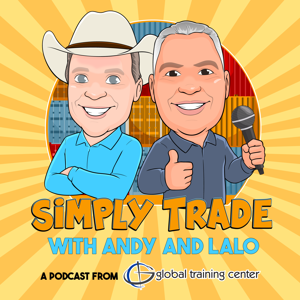

Hosts: Andy Shiles & Lalo Solorzano
As we kick off 2026, Andy and Lalo sit down with Ken Roberts, one of the most respected voices in global trade data and the founder of WorldCity, to cut through the noise and look at what the numbers actually say about U.S. trade.
This episode is a masterclass in data-driven trade storytelling. Ken walks listeners through the biggest shifts in global trade flows, explaining how U.S. trade relationships with Mexico, China, Canada, and Vietnam have evolved — and what those changes really mean for businesses making sourcing, routing, and investment decisions today.
The conversation covers everything from why Mexico is now the United States’ top trade partner, to how AI-driven server demand is reshaping imports, why gold exports are surging, and how de minimis and e-commerce shipments are quietly transforming trade volumes. Along the way, Andy and Lalo translate the data into real-world implications for compliance teams, logistics planners, and executive leadership.
If you work in trade, supply chain, or logistics — or if you need to explain trade impacts to senior leadership in plain English — this is an episode you’ll want to share.
Mexico has become the U.S.’s #1 trade partner — for imports, exports, and total trade.
China’s share of U.S. trade has dropped below 10% for the first time in decades.
AI infrastructure demand is driving massive growth in computer and server imports, especially through air cargo.
Gold exports are surging, driven more by price and economic uncertainty than volume.
De minimis and e-commerce shipments are reshaping both imports and exports.
Trade deficits don’t tell the whole story — they often reflect economic strength and consumer demand.
Rules of origin and enforcement will be a major theme in 2026, especially under USMCA review.
Trade policy moves slowly — even dramatic announcements take years to show up in the data.
U.S. trade trends heading into 2026
Why Mexico overtook China and Canada
Port and airport shifts (Chicago, JFK, Laredo, LA)
AI, servers, and Taiwan’s rise in trade rankings
Gold, energy exports, and economic uncertainty
De minimis, e-commerce, and low-value shipments
China trade diversion vs. true decoupling
What trade data means for routing, sourcing, and strategy
Ken Roberts (LinkedIn): https://www.linkedin.com/in/kenrobertsworldcitytradenumber/
WorldCity / U.S. Trade Numbers: https://ustradenumbers.com/
Ken Roberts on Forbes: https://www.forbes.com/sites/kenroberts/
U.S. Customs & Border Protection Trade Data: https://www.cbp.gov/trade
U.S. Census Bureau – Trade Statistics: https://www.census.gov/foreign-trade
This episode sponsored by Pax
Stay connected with the Simply Trade community and never miss an episode:
LinkedIn – Global Training Center:
LinkedIn – Simply Trade Podcast:
YouTube – Simply Trade Podcast:
Spotify:
Apple Podcasts:
Trade Geeks Community:
 View all episodes
 By Global Training Center

4.6
2222 ratings
Hosts: Andy Shiles & Lalo Solorzano
As we kick off 2026, Andy and Lalo sit down with Ken Roberts, one of the most respected voices in global trade data and the founder of WorldCity, to cut through the noise and look at what the numbers actually say about U.S. trade.
This episode is a masterclass in data-driven trade storytelling. Ken walks listeners through the biggest shifts in global trade flows, explaining how U.S. trade relationships with Mexico, China, Canada, and Vietnam have evolved — and what those changes really mean for businesses making sourcing, routing, and investment decisions today.
The conversation covers everything from why Mexico is now the United States’ top trade partner, to how AI-driven server demand is reshaping imports, why gold exports are surging, and how de minimis and e-commerce shipments are quietly transforming trade volumes. Along the way, Andy and Lalo translate the data into real-world implications for compliance teams, logistics planners, and executive leadership.
If you work in trade, supply chain, or logistics — or if you need to explain trade impacts to senior leadership in plain English — this is an episode you’ll want to share.
Mexico has become the U.S.’s #1 trade partner — for imports, exports, and total trade.
China’s share of U.S. trade has dropped below 10% for the first time in decades.
AI infrastructure demand is driving massive growth in computer and server imports, especially through air cargo.
Gold exports are surging, driven more by price and economic uncertainty than volume.
De minimis and e-commerce shipments are reshaping both imports and exports.
Trade deficits don’t tell the whole story — they often reflect economic strength and consumer demand.
Rules of origin and enforcement will be a major theme in 2026, especially under USMCA review.
Trade policy moves slowly — even dramatic announcements take years to show up in the data.
U.S. trade trends heading into 2026
Why Mexico overtook China and Canada
Port and airport shifts (Chicago, JFK, Laredo, LA)
AI, servers, and Taiwan’s rise in trade rankings
Gold, energy exports, and economic uncertainty
De minimis, e-commerce, and low-value shipments
China trade diversion vs. true decoupling
What trade data means for routing, sourcing, and strategy
Ken Roberts (LinkedIn): https://www.linkedin.com/in/kenrobertsworldcitytradenumber/
WorldCity / U.S. Trade Numbers: https://ustradenumbers.com/
Ken Roberts on Forbes: https://www.forbes.com/sites/kenroberts/
U.S. Customs & Border Protection Trade Data: https://www.cbp.gov/trade
U.S. Census Bureau – Trade Statistics: https://www.census.gov/foreign-trade
This episode sponsored by Pax
Stay connected with the Simply Trade community and never miss an episode:
LinkedIn – Global Training Center:
LinkedIn – Simply Trade Podcast:
YouTube – Simply Trade Podcast:
Spotify:
Apple Podcasts:
Trade Geeks Community:

43,551 Listeners

3,223 Listeners

4,353 Listeners

13,556 Listeners
4 Listeners

112,144 Listeners

56,553 Listeners
151 Listeners

27,818 Listeners
32 Listeners

6,398 Listeners

16,139 Listeners

154 Listeners

10,752 Listeners

16,381 Listeners