
Sign up to save your podcasts
Or

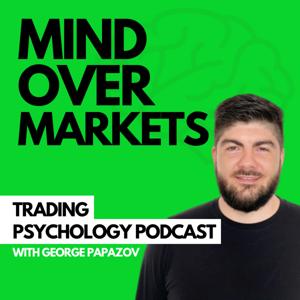

This episode breaks down why most traders struggle with execution, not because they lack tools, but because they rely on too many. When traders feel uncertain, they naturally seek more indicators, strategies, and information, believing complexity will solve their problems. In reality, this leads to confusion, hesitation, and repeated mistakes.
George emphasizes that trading, especially order flow, is fundamentally simple: it’s just an auction between buyers and sellers. The real edge comes from removing unnecessary information, separating analysis from execution, and focusing only on what directly supports decision-making. By simplifying charts, processes, and mental inputs, traders create clarity, reduce emotional noise, and allow their true edge to emerge.
Ultimately, progress in trading doesn’t come from adding more, it comes from removing what doesn’t belong.
Key Takeaways
More tools ≠ better execution
Complexity creates analysis paralysis
Traders add tools when they feel unsafe
Order flow is simple: market vs limit orders
Too much information overwhelms decision-making
Subtraction sharpens perception and clarity
Separate analysis vs execution processes
Only keep tools that:
Find levels
Qualify trades
Manage trades
Fewer charts = better focus
Simplicity creates confidence and consistency
Repetition > constantly switching strategies
Cluttered charts = cluttered thinking
Psychological issues often hide behind complexity
You don’t need more, you need clearer
Progress comes from removing what doesn’t belong
Subscribe & Get Full Access: ROOMS + COURSES + COMMUNITY — ONE MEMBERSHIP FOR $99.
Download the Free PDF: The 5 Most Destructive Loops in Trading — and How to Break Them
Leave a Voice Message: Ask a question, say hello or suggest a future episode on SpeakPipe
Rate and Review: If you’re enjoying the show, we’d love for you to rate us on Spotify or on Apple Podcasts
Follow on Twitter: For daily mindset insights and trading psychology content, follow me here.
Disclaimer:
Futures, options, and derivatives trading involve substantial risk and are not suitable for every investor. The high degree of leverage in futures trading can work against you as well as for you. Past performance is not necessarily indicative of future results. The information provided in this podcast is for educational and informational purposes only and should not be construed as specific trading, investment, or financial advice. Nothing discussed constitutes an offer to buy or sell any futures contract, option, security, or other financial instrument. You are solely responsible for your own trading decisions, and you should carefully consider whether trading is appropriate for your financial situation, experience level, and risk tolerance. Always consult with a licensed financial advisor, registered broker, or other qualified professional before making trading or investment decisions. While efforts are made to present accurate and timely information, the host makes no warranties or representations regarding the completeness, reliability, or accuracy of any information presented and assumes no liability for any losses that may arise from reliance on this content. By listening to this podcast, you acknowledge and accept these risks.
 View all episodes
 By George Papazov

4.9
9696 ratings
This episode breaks down why most traders struggle with execution, not because they lack tools, but because they rely on too many. When traders feel uncertain, they naturally seek more indicators, strategies, and information, believing complexity will solve their problems. In reality, this leads to confusion, hesitation, and repeated mistakes.
George emphasizes that trading, especially order flow, is fundamentally simple: it’s just an auction between buyers and sellers. The real edge comes from removing unnecessary information, separating analysis from execution, and focusing only on what directly supports decision-making. By simplifying charts, processes, and mental inputs, traders create clarity, reduce emotional noise, and allow their true edge to emerge.
Ultimately, progress in trading doesn’t come from adding more, it comes from removing what doesn’t belong.
Key Takeaways
More tools ≠ better execution
Complexity creates analysis paralysis
Traders add tools when they feel unsafe
Order flow is simple: market vs limit orders
Too much information overwhelms decision-making
Subtraction sharpens perception and clarity
Separate analysis vs execution processes
Only keep tools that:
Find levels
Qualify trades
Manage trades
Fewer charts = better focus
Simplicity creates confidence and consistency
Repetition > constantly switching strategies
Cluttered charts = cluttered thinking
Psychological issues often hide behind complexity
You don’t need more, you need clearer
Progress comes from removing what doesn’t belong
Subscribe & Get Full Access: ROOMS + COURSES + COMMUNITY — ONE MEMBERSHIP FOR $99.
Download the Free PDF: The 5 Most Destructive Loops in Trading — and How to Break Them
Leave a Voice Message: Ask a question, say hello or suggest a future episode on SpeakPipe
Rate and Review: If you’re enjoying the show, we’d love for you to rate us on Spotify or on Apple Podcasts
Follow on Twitter: For daily mindset insights and trading psychology content, follow me here.
Disclaimer:
Futures, options, and derivatives trading involve substantial risk and are not suitable for every investor. The high degree of leverage in futures trading can work against you as well as for you. Past performance is not necessarily indicative of future results. The information provided in this podcast is for educational and informational purposes only and should not be construed as specific trading, investment, or financial advice. Nothing discussed constitutes an offer to buy or sell any futures contract, option, security, or other financial instrument. You are solely responsible for your own trading decisions, and you should carefully consider whether trading is appropriate for your financial situation, experience level, and risk tolerance. Always consult with a licensed financial advisor, registered broker, or other qualified professional before making trading or investment decisions. While efforts are made to present accurate and timely information, the host makes no warranties or representations regarding the completeness, reliability, or accuracy of any information presented and assumes no liability for any losses that may arise from reliance on this content. By listening to this podcast, you acknowledge and accept these risks.

3,347 Listeners
1,982 Listeners
104 Listeners
2,294 Listeners

8,876 Listeners

4,025 Listeners

4,942 Listeners
224 Listeners

2,660 Listeners
358 Listeners
58 Listeners

29,272 Listeners

2,004 Listeners

70 Listeners

29 Listeners