
Sign up to save your podcasts
Or

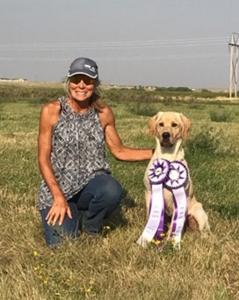


After an exciting June and Facebook attack, I'm back to the podcast with an explanation of what happened and discussion of the new Video Series, and several overdue listener questions.
In this third episode about trying to improve your training efforts and relationship with your dog, we talk about evaluating your own strengths and weaknesses and how they impact your dog and your training efforts. Interesting topic if you don't mind a little introspection.
In this episode, we talk about framing the best mindset before beginning a training session, whether it is a large group session or just you and your dog. Where do you replace responsibility for mishaps and poor performances and how do you get the most you can from any training session? Most good training occurs when externals are not a part of your work, but instead you develop the strong connection and awareness with your canine student.
In this first of a small series on improving as a trainer and a handler, we discuss teaching how to give more responsibility to your dog for making the right decisions and choices while working. Ultimately we all want a dog that knows what to do and does the work on their own, both in the field and at home. This begins with the new pup and carries throughout all the work and interactions you have with your dog.
In this episode, we talk about getting a puppy to come when called; disciplining a pup; pups and playing with other dogs and finally, What makes a puppy happy.
In this episode, we talk about the challenge of running cold blind retrieves from the dog's perspective. Tools for running blind retrieves are taught in the double t. Pattern blinds allow the practice of these tools, developing confidence and identifying where your dog is weak or strong in their behaviors. Cold blinds are where we put all this into play, in an activity that in the beginning, can be very confusing for a dog. Lots to think about on our dog's behalf.
In this episode, we discuss the conditions of the upland competitions that have been delayed until warmer than normal months. To get dogs ready for what's coming, and frankly for any upland hunting, requires developing a level of cardiovascular fitness, a body which can meet the physical demands of the work and an understanding of what you can do to prevent your dog from being injured or just compromised.
In this 103rd episode, I answer three questions; Ideas for designing your weekly training program, Difference between "Nice Guy" training and corrective training and How this organized pointing Lab thing got started.
In this episode, outside of the normal performance based information, I talk about the raising and training of a performance breed (or any breed really), that is slated for pethood instead of the dog games. Done with my Boulder friends in mind....
In this episode, we discuss how your dog's mentality, ability to focus, to learn and to process and manage new information needs to be understood. There are many different types of dogs, just like children, with various learning disabilities or behaviors which just seem obnoxious, but have an organic origin in the dog's head. It is very helpful to know how to help your dog learn better, and why they may sometimes have difficulty in normal training.
From the publisher's feed
1,715 Listeners

38,056 Listeners
972 Listeners
631 Listeners

46,057 Listeners
263 Listeners
48 Listeners
81 Listeners