
Sign up to save your podcasts
Or

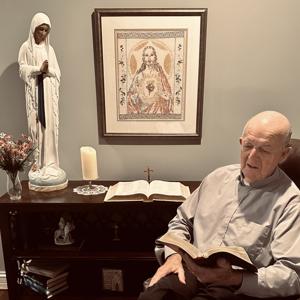


On Saturday of the First Week of Lent our Church invites us to first read and reflect on a passage from the book of Exodus (12:37-49, 13:11-16) entitled "The Hebrews depart. The law of the Passover and of the firstborn". Our treasure, which follows, is from the pastoral constitution on the Church in the modern world of the Second Vatican Council.
Gaudium et spes ("Joys and Hopes"), the Pastoral Constitution on the Church in the Modern World, is one of the four constitutions resulting from the Second Vatican Council in 1965. It was the last and longest published document from the council and is the first constitution published by a Catholic ecumenical council to address the entire world. Gaudium et spes clarified and reoriented the role of the church's mission to people outside of the Catholic faith. It was the first time that the church took explicit responsibility for its role in the larger world. The constitution's creation was necessitated by fear of the irrelevance in the modern era due to its ignorance on problems that plague the modern world. The document represents an inner examination of the church by the council and features a response to problems affecting the modern world.
Gaudium et Spes can be summarized this way: The Church walks with humanity, affirming what is true and good in modern life, correcting what is disordered, and always pointing to Christ as the answer to the deepest questions of the human heart.
The Book of Exodus, the second book of the Pentateuch, takes its name from a Greek word meaning "departure," highlighting the defining event of Israel's history: the Lord's deliverance of His people from slavery in Egypt. Its Hebrew title, Shemoth — "Names" — comes from its opening line, reminding us that God's saving work unfolds within real history, among real persons whom He knows and calls.
Exodus continues the sacred story where Genesis ends. The descendants of Jacob, once welcomed in Egypt, find themselves oppressed and enslaved. Into this suffering, God reveals Himself not as distant, but as the One who hears the cry of His people. Through Moses, He performs mighty works, freeing Israel and leading them through the Red Sea — an event the Church has long recognized as a powerful foreshadowing of Baptism and redemption.
Yet liberation is only the beginning. At Mount Sinai, God establishes His covenant with Israel. The Law (torah) given through Moses is not merely a set of rules but the framework of a relationship. God saves first; then He teaches His people how to live in the freedom He has given. The moral, civil, and ritual laws form Israel into a holy nation, called to reflect God's own holiness before the world.
A striking portion of Exodus is devoted to the tabernacle, the portable sanctuary where God chooses to dwell among His people. This reveals the deeper purpose of salvation: communion. God does not simply rescue Israel from something — He rescues them for something — life in His presence. Even when Israel falls into rebellion, we witness repentance, covenant renewal, and divine mercy. The book culminates with the construction of the tabernacle and the descent of the cloud, the visible sign of God's glorious presence.
In Exodus, we see the foundations of Israel's identity: a people redeemed, covenanted, instructed, and indwelt by God. For Catholics, the book speaks not only of ancient history but of the enduring pattern of salvation: God delivers, God binds Himself to His people, God teaches, and God remains with them.
On Friday of the First Week of Lent our Church invites us to first read and reflect on a passage from the book of Exodus (12:21-36) entitled "The plague inflicted on the firstborn". Our treasure, which follows, is from The Mirror of Love by Saint Aelred, abbot.
Saint Aelred, a twelfth century English Cistercian monk, was a writer, historian, and outstanding abbot who influenced monasticism in medieval England, Scotland, and France. He is venerated by the Catholic Church as a saint and by some Anglicans.
Saint Aelred of Rievaulx possessed a personal charm which drew friends and disciples naturally to him. His own experience of human weakness in a worldly life at the court of King David of Scotland made him sensitive to the doctrine of charity which he found among Cistercian monks.
Saint Aelred of Rievaulx possessed a personal charm which drew friends and disciples naturally to him. His own experience of human weakness in a worldly life at the court of King David of Scotland made him sensitive to the doctrine of charity which he found among Cistercian monks.
Saint Aelred's Mirror of Love is fundamentally a meditation on the nature, origin, and fulfillment of love. Its central message is that true love begins in God, is shaped by God, and ultimately leads back to God.
Saint Aelred presents love not merely as an emotion, but as the very structure of the Christian life. Human beings are created out of divine love, and therefore the restless desires of the human heart can only find lasting peace when ordered toward God. Love of God is not opposed to love of others; rather, it purifies and elevates it. When properly understood, love becomes the force that unites the soul with God and binds human beings together in charity.
A key theme is that authentic love is transformative. It heals selfishness, moderates disordered attachments, and reshapes the will. Aelred insists that love must move beyond sentiment into self-giving — expressed through patience, humility, mercy, and sacrifice. In this way, love becomes a path of sanctification.
Ultimately, the work teaches that the Christian life is a journey from lesser loves to perfect love. All created loves — friendships, affections, even self-love — find their proper meaning when rooted in divine charity. Perfect love is found not in possession, but in union with God, who is Love itself.
The Book of Exodus, the second book of the Pentateuch, takes its name from a Greek word meaning "departure," highlighting the defining event of Israel's history: the Lord's deliverance of His people from slavery in Egypt. Its Hebrew title, Shemoth — "Names" — comes from its opening line, reminding us that God's saving work unfolds within real history, among real persons whom He knows and calls.
Exodus continues the sacred story where Genesis ends. The descendants of Jacob, once welcomed in Egypt, find themselves oppressed and enslaved. Into this suffering, God reveals Himself not as distant, but as the One who hears the cry of His people. Through Moses, He performs mighty works, freeing Israel and leading them through the Red Sea — an event the Church has long recognized as a powerful foreshadowing of Baptism and redemption.
Yet liberation is only the beginning. At Mount Sinai, God establishes His covenant with Israel. The Law (torah) given through Moses is not merely a set of rules but the framework of a relationship. God saves first; then He teaches His people how to live in the freedom He has given. The moral, civil, and ritual laws form Israel into a holy nation, called to reflect God's own holiness before the world.
A striking portion of Exodus is devoted to the tabernacle, the portable sanctuary where God chooses to dwell among His people. This reveals the deeper purpose of salvation: communion. God does not simply rescue Israel from something — He rescues them for something — life in His presence. Even when Israel falls into rebellion, we witness repentance, covenant renewal, and divine mercy. The book culminates with the construction of the tabernacle and the descent of the cloud, the visible sign of God's glorious presence.
In Exodus, we see the foundations of Israel's identity: a people redeemed, covenanted, instructed, and indwelt by God. For Catholics, the book speaks not only of ancient history but of the enduring pattern of salvation: God delivers, God binds Himself to His people, God teaches, and God remains with them.
On Thursday of the First Week of Lent our Church invites us to first read and reflect on a passage from the book of Exodus (12:1-20) entitled "The Passover and the unleavened bread". Our treasure, which follows, is from a homily by Saint Asterius of Amasea, bishop.
Saint Asterius of Amasea, bishop and preacher, was born in Cappadocia in 350. Saint Asterius, having specialized in rhetoric and the practice of law, abandoned this profession to enter the clergy, and subsequently became metropolitan of Amasea in Pontus between 380 and 390. His extant writings consist of 16 homilies and panegyrics of the martyrs. His style is elegant, vigorous, and vivid, as in his description of a hunting scene in a sermon on Lazarus. His sermons show the high esteem in which the martyrs were held and throw light upon contemporary events, such as the persecution under Julian the Apostate and the pagan customs still in vogue at the beginning of the year. A sermon on St. Euphemia is important in the history of art, because a painting of this saint is compared with the works of Euphranor and Timomachus. The Second Council of Nicaea (787) twice referred to this picture as a proof that sacred images were venerated in the ancient Church. This council also speaks of Asterius as a saint, and he is honored as such by the Greek church. Saint Asterius died in Amasea in 410.
The Book of Exodus, the second book of the Pentateuch, takes its name from a Greek word meaning "departure," highlighting the defining event of Israel's history: the Lord's deliverance of His people from slavery in Egypt. Its Hebrew title, Shemoth — "Names" — comes from its opening line, reminding us that God's saving work unfolds within real history, among real persons whom He knows and calls.
Exodus continues the sacred story where Genesis ends. The descendants of Jacob, once welcomed in Egypt, find themselves oppressed and enslaved. Into this suffering, God reveals Himself not as distant, but as the One who hears the cry of His people. Through Moses, He performs mighty works, freeing Israel and leading them through the Red Sea — an event the Church has long recognized as a powerful foreshadowing of Baptism and redemption.
Yet liberation is only the beginning. At Mount Sinai, God establishes His covenant with Israel. The Law (torah) given through Moses is not merely a set of rules but the framework of a relationship. God saves first; then He teaches His people how to live in the freedom He has given. The moral, civil, and ritual laws form Israel into a holy nation, called to reflect God's own holiness before the world.
A striking portion of Exodus is devoted to the tabernacle, the portable sanctuary where God chooses to dwell among His people. This reveals the deeper purpose of salvation: communion. God does not simply rescue Israel from something — He rescues them for something — life in His presence. Even when Israel falls into rebellion, we witness repentance, covenant renewal, and divine mercy. The book culminates with the construction of the tabernacle and the descent of the cloud, the visible sign of God's glorious presence.
In Exodus, we see the foundations of Israel's identity: a people redeemed, covenanted, instructed, and indwelt by God. For Catholics, the book speaks not only of ancient history but of the enduring pattern of salvation: God delivers, God binds Himself to His people, God teaches, and God remains with them.
On Wednesday of the First Week of Lent our Church invites us to first read and reflect on a passage from the book of Exodus (10:21---11:10) entitled "The plague of darkness and the warning of the plague to be visited upon the firstborn". Our treasure, which follows, is from a demonstration by Aphraates, bishop.
Among the early Syriac Christian authors, Aphraates, known as the "Persian Sage," stands at the head of the tradition. What little we know about his life comes largely from his own writings. He appears to have been born to pagan parents in the late third century, likely near the frontier of the Persian Empire. After converting to Christianity, he embraced the ascetical life and was eventually raised to the episcopate, at which time he took the Christian name Jacob.
A later manuscript describes him as bishop of the Monastery of Mar Mattai, situated near modern Mosul. The surviving ruins of this ancient monastery testify to its long historical significance. Aphraates seems to have spent most of his life there. While the date of his death is unknown, the historian Barhebræus places him in the era of Papas I, which aligns well with internal evidence dating his literary activity to roughly A.D. 337–345.
Aphraates' legacy consists of twenty-three works known as the Demonstrations. These writings, presented as responses to a friend's inquiries, combine moral instruction with theological reflection. They are of exceptional importance as the earliest surviving documents of the Syriac Church. Beyond their linguistic value, they provide rich insight into doctrine, liturgical practice, and ecclesial life in the fourth century.
Theologically, the Demonstrations are deeply significant. Aphraates clearly affirms beliefs recognizable within Catholic tradition, including the Divine Motherhood of Mary, her perpetual virginity, the primacy of Peter, and the reality of the sacraments (with matrimony notably absent from explicit mention). His teaching on the Holy Eucharist is unmistakable: it is the true Body and Blood of Christ. In treating penance, he portrays the priest as a spiritual physician, emphasizing the necessity of confessing sins and the priest's obligation to confidentiality. Because his works are saturated with scriptural citations, they also serve as valuable witnesses to the early canon of Scripture and the methods of biblical interpretation in the Mesopotamian Church.
The Book of Exodus, the second book of the Pentateuch, takes its name from a Greek word meaning "departure," highlighting the defining event of Israel's history: the Lord's deliverance of His people from slavery in Egypt. Its Hebrew title, Shemoth — "Names" — comes from its opening line, reminding us that God's saving work unfolds within real history, among real persons whom He knows and calls.
Exodus continues the sacred story where Genesis ends. The descendants of Jacob, once welcomed in Egypt, find themselves oppressed and enslaved. Into this suffering, God reveals Himself not as distant, but as the One who hears the cry of His people. Through Moses, He performs mighty works, freeing Israel and leading them through the Red Sea — an event the Church has long recognized as a powerful foreshadowing of Baptism and redemption.
Yet liberation is only the beginning. At Mount Sinai, God establishes His covenant with Israel. The Law (torah) given through Moses is not merely a set of rules but the framework of a relationship. God saves first; then He teaches His people how to live in the freedom He has given. The moral, civil, and ritual laws form Israel into a holy nation, called to reflect God's own holiness before the world.
On Tuesday of the First Week of Lent our Church invites us to first read and reflect on a passage from the book of Exodus (6:29---7:25) entitled "The first plague sent upon Egypt". Our treasure, which follows, is from a treatise on the Lord's Prayer by Saint Cyprian, bishop and martyr.
Cyprian is important in the development of Christian thought and practice in the third century, especially in northern Africa. Highly educated and a famous orator, he became a Christian as an adult. He distributed his goods to the poor, and amazed his fellow citizens by making a vow of chastity before his baptism. Within two years he had been ordained a priest and was chosen, against his will, as Bishop of Carthage.
Cyprian complained that the peace the Church had enjoyed had weakened the spirit of many Christians and had opened the door to converts who did not have the true spirit of faith. When the Decian persecution began, many Christians easily abandoned the Church. It was their reinstatement that caused the great controversies of the third century, and helped the Church progress in its understanding of the Sacrament of Penance.
Cyprian was a mixture of kindness and courage, vigor and steadiness. He was cheerful and serious, so that people did not know whether to love or respect him more. He waxed warm during the baptismal controversy; his feelings must have concerned him, for it was at this time that he wrote his treatise on patience. Saint Augustine remarks that Cyprian atoned for his anger by his glorious martyrdom. His liturgical feast is celebrated on September 16.
The Book of Exodus, the second book of the Pentateuch, takes its name from a Greek word meaning "departure," highlighting the defining event of Israel's history: the Lord's deliverance of His people from slavery in Egypt. Its Hebrew title, Shemoth — "Names" — comes from its opening line, reminding us that God's saving work unfolds within real history, among real persons whom He knows and calls.
Exodus continues the sacred story where Genesis ends. The descendants of Jacob, once welcomed in Egypt, find themselves oppressed and enslaved. Into this suffering, God reveals Himself not as distant, but as the One who hears the cry of His people. Through Moses, He performs mighty works, freeing Israel and leading them through the Red Sea — an event the Church has long recognized as a powerful foreshadowing of Baptism and redemption.
Yet liberation is only the beginning. At Mount Sinai, God establishes His covenant with Israel. The Law (torah) given through Moses is not merely a set of rules but the framework of a relationship. God saves first; then He teaches His people how to live in the freedom He has given. The moral, civil, and ritual laws form Israel into a holy nation, called to reflect God's own holiness before the world.
A striking portion of Exodus is devoted to the tabernacle, the portable sanctuary where God chooses to dwell among His people. This reveals the deeper purpose of salvation: communion. God does not simply rescue Israel from something — He rescues them for something — life in His presence. Even when Israel falls into rebellion, we witness repentance, covenant renewal, and divine mercy. The book culminates with the construction of the tabernacle and the descent of the cloud, the visible sign of God's glorious presence.
In Exodus, we see the foundations of Israel's identity: a people redeemed, covenanted, instructed, and indwelt by God. For Catholics, the book speaks not only of ancient history but of the enduring pattern of salvation: God delivers, God binds Himself to His people, God teaches, and God remains with them.
On Monday of the First Week of Lent our Church invites us to first read and reflect on a passage from the book of Exodus (6:2-13) entitled "Another account of the call of Moses". Our treasure, which follows, is from a sermon by Saint Gregory of Nazianzen, bishop.
Saint Gregory of Nazianzus, was an early Roman Christian theologian and prelate who served as Archbishop of Constantinople from 380 to 381. He is known for instituting the first recorded large-scale mission from Rome, the Gregorian mission, to convert the then largely pagan Anglo-Saxons to Christianity. Gregory is also well known for his writings, which were more prolific than those of any of his predecessors as pope. He is widely considered the most accomplished rhetorical stylist of the patristic age. Gregory's most significant theological contributions arose from his defense of the doctrine of the Trinity. He is especially noted for his contributions to the field of pneumatology—that is, theology concerning the nature of the Holy Spirit. He died in 390.
The Book of Exodus, the second book of the Pentateuch, takes its name from a Greek word meaning "departure," highlighting the defining event of Israel's history: the Lord's deliverance of His people from slavery in Egypt. Its Hebrew title, Shemoth — "Names" — comes from its opening line, reminding us that God's saving work unfolds within real history, among real persons whom He knows and calls.
Exodus continues the sacred story where Genesis ends. The descendants of Jacob, once welcomed in Egypt, find themselves oppressed and enslaved. Into this suffering, God reveals Himself not as distant, but as the One who hears the cry of His people. Through Moses, He performs mighty works, freeing Israel and leading them through the Red Sea — an event the Church has long recognized as a powerful foreshadowing of Baptism and redemption.
Yet liberation is only the beginning. At Mount Sinai, God establishes His covenant with Israel. The Law (torah) given through Moses is not merely a set of rules but the framework of a relationship. God saves first; then He teaches His people how to live in the freedom He has given. The moral, civil, and ritual laws form Israel into a holy nation, called to reflect God's own holiness before the world.
A striking portion of Exodus is devoted to the tabernacle, the portable sanctuary where God chooses to dwell among His people. This reveals the deeper purpose of salvation: communion. God does not simply rescue Israel from something — He rescues them for something — life in His presence. Even when Israel falls into rebellion, we witness repentance, covenant renewal, and divine mercy. The book culminates with the construction of the tabernacle and the descent of the cloud, the visible sign of God's glorious presence.
In Exodus, we see the foundations of Israel's identity: a people redeemed, covenanted, instructed, and indwelt by God. For Catholics, the book speaks not only of ancient history but of the enduring pattern of salvation: God delivers, God binds Himself to His people, God teaches, and God remains with them.
On the First Sunday of Lent our Church invites us to first read and reflect on a passage from the book of Exodus (5:1---6:1) entitled "The oppression of the people". Our treasure, which follows, is from a commentary on the psalms by Saint Augustine, bishop.
Saint Augustine was born at Tagaste in Africa in 354. He was unsettled and restlessly searched for the truth until he was converted to the faith in Milan and baptized by Ambrose. Returning to his homeland, he embraced an ascetic life and subsequently was elected bishop of Hippo. For thirty-four years he guided his flock, instructing it with sermons and many writings. He fought bravely against the errors of his time and explained the Faith carefully and cogently through his writings. He is also a preeminent Catholic Doctor of the Church. His writings influenced the development of western philosophy and western Christianity, and he is viewed as one of the most important Church Fathers of the Latin Church in the Patristic Period. He died in 430.
Few Christians have influenced the way the Church talks and thinks about God more than Augustine. And he was a lover of the Psalms… "If the psalm prays, you pray; if it laments, you lament; if it exults, you rejoice; if it hopes, you hope; if it fears, you fear. Everything written here is a mirror for us." — Augustine.
The second book of the Pentateuch is called Exodus, from the Greek word for "departure," because its central event was understood by the Septuagint's translators to be the departure of the Israelites from Egypt. Its Hebrew title, Shemoth ("Names"), is from the book's opening phrase, "These are the names…." Continuing the history of Israel from the point where the Book of Genesis leaves off, Exodus recounts the Egyptian oppression of Jacob's ever-increasing descendants and their miraculous deliverance by God through Moses, who led them across the Red Sea to Mount Sinai where they entered a covenant with the Lord. Covenantal laws and detailed prescriptions for the tabernacle (a portable sanctuary foreshadowing the Jerusalem Temple) and its service are followed by a dramatic episode of rebellion, repentance, and divine mercy. After the broken covenant is renewed, the tabernacle is constructed, and the cloud signifying God's glorious presence descends to cover it.
These events made Israel a nation and confirmed their unique relationship with God. The "law" (Hebrew torah) given by God through Moses to the Israelites at Mount Sinai constitutes the moral, civil, and ritual legislation by which they were to become a holy people. Many elements of it were fundamental to the teaching of Jesus as well as to New Testament and Christian moral teaching.
On Saturday after Ash Wednesday our Church invites us to first read and reflect on a passage from the book of Exodus (3:1-20) entitled "The call of Moses and the revelation of the Lord's name". Our treasure, which follows, is from a treatise Against Heresies by Saint Irenaeus, bishop.
On Jan. 21, 2022, Pope Francis named a Saint Irenaeus as a Doctor of the Church. Although he has just now been named a doctor of the Church, St. Irenaeus has always been known as a brilliant and orthodox teacher of the faith. The documents of the Second Vatican Council cite 14 references to his work, and the Catechism of the Catholic Church cites him 29 times.
Pope Francis assigned St. Irenaeus the title "doctor of unity" for his efforts to unite the Church, which was competing against the heresy of Gnosticism. Gnosticism taught that the world was created and ruled by a lesser divinity, the demiurge, and that Christ was an emissary of the remote supreme divine being, esoteric knowledge (gnosis) of whom enabled the redemption of the human spirit.
St. Irenaeus might also be the first doctor of the Church to die as a martyr. St. Irenaeus is known mainly for his clear and systematic teaching of the Christian faith because he considered the role of a bishop primarily as a teacher. He was particularly interested in apostolic succession, and he produced one of the earliest lists of the first bishops, going back to the time of the Apostles.
He is most known, though, for his treatises Against All Heresies, written about the year 180. Most of these heresies, as already mentioned, were from Gnosticism. He clearly understood the need to articulate the orthodox faith taught by the Apostles and against those who promoted other ideas that threatened the Apostles' teachings. All this was more than 100 years prior to the Council of Nicaea, which began to codify Christian dogma.
Saint Irenaeus was the last known living connection with the apostles. He is the earliest surviving witness to regard all four of the canonical gospels as essential.
Against Heresies is a work of Christian theology written in Greek about the year 180 by Irenaeus, bishop of Lyon in France. In it, Irenaeus identifies and describes several schools of Gnosticism, and other schools of Christian thought, whose beliefs he rejects as heresy. He contrasts them with orthodox Christianity.
The second book of the Pentateuch is called Exodus, from the Greek word for "departure," because its central event was understood by the Septuagint's translators to be the departure of the Israelites from Egypt. Its Hebrew title, Shemoth ("Names"), is from the book's opening phrase, "These are the names…." Continuing the history of Israel from the point where the Book of Genesis leaves off, Exodus recounts the Egyptian oppression of Jacob's ever-increasing descendants and their miraculous deliverance by God through Moses, who led them across the Red Sea to Mount Sinai where they entered a covenant with the Lord. Covenantal laws and detailed prescriptions for the tabernacle (a portable sanctuary foreshadowing the Jerusalem Temple) and its service are followed by a dramatic episode of rebellion, repentance, and divine mercy. After the broken covenant is renewed, the tabernacle is constructed, and the cloud signifying God's glorious presence descends to cover it.
These events made Israel a nation and confirmed their unique relationship with God. The "law" (Hebrew torah) given by God through Moses to the Israelites at Mount Sinai constitutes the moral, civil, and ritual legislation by which they were to become a holy people. Many elements of it were fundamental to the teaching of Jesus as well as to New Testament and Christian moral teaching.
On Friday after Ash Wednesday our Church invites us to first read and reflect on a passage from the book of Exodus (2:1-22; 18:4) entitled "The birth and flight of Moses". Our treasure, which follows, is from a homily by Saint John Chrysostom, bishop.
Saint John Chrysostom was an important, fourth century, Early Church Father who served as Archbishop of Constantinople. He is known for his preaching and public speaking, and for his denunciation of abuse of authority of both ecclesiastical and political leaders. He was among the most prolific authors in the early Christian church. The word 'Chrysostom' means 'golden-mounted'. This name was given to him after he died because all his sermons were eloquent and lovely to hear.
The second book of the Pentateuch is called Exodus, from the Greek word for "departure," because its central event was understood by the Septuagint's translators to be the departure of the Israelites from Egypt. Its Hebrew title, Shemoth ("Names"), is from the book's opening phrase, "These are the names…." Continuing the history of Israel from the point where the Book of Genesis leaves off, Exodus recounts the Egyptian oppression of Jacob's ever-increasing descendants and their miraculous deliverance by God through Moses, who led them across the Red Sea to Mount Sinai where they entered a covenant with the Lord. Covenantal laws and detailed prescriptions for the tabernacle (a portable sanctuary foreshadowing the Jerusalem Temple) and its service are followed by a dramatic episode of rebellion, repentance, and divine mercy. After the broken covenant is renewed, the tabernacle is constructed, and the cloud signifying God's glorious presence descends to cover it.
These events made Israel a nation and confirmed their unique relationship with God. The "law" (Hebrew torah) given by God through Moses to the Israelites at Mount Sinai constitutes the moral, civil, and ritual legislation by which they were to become a holy people. Many elements of it were fundamental to the teaching of Jesus as well as to New Testament and Christian moral teaching.
On Thursday after Ash Wednesday our Church invites us to first read and reflect on a passage from the beginning of the book of Exodus (1:1-22) entitled "The oppression of Israel". Our treasure, which follows, is from a sermon by Saint Leo the Great, pope.
Saint Leo became pope in the year 440. Saint Leo was a Roman aristocrat, and was the first pope to have been called "the Great". Saint Leo is known as one of the best administrative popes of the ancient Church .His work branched into many areas of the church, indicative of his notion of the pope's total responsibility for the flock of Christ. In the 96 sermons which have come down to us, we find Leo stressing the virtues of almsgiving, fasting, and prayer, and also expounding Catholic doctrine with clarity and conciseness, in particular, the dogma of the Incarnation. Leo is perhaps best known for having met Attila the Hun in 452 and having persuaded him to turn back from his invasion of Italy.
The second book of the Pentateuch is called Exodus, from the Greek word for "departure," because its central event was understood by the Septuagint's translators to be the departure of the Israelites from Egypt. Its Hebrew title, Shemoth ("Names"), is from the book's opening phrase, "These are the names…." Continuing the history of Israel from the point where the Book of Genesis leaves off, Exodus recounts the Egyptian oppression of Jacob's ever-increasing descendants and their miraculous deliverance by God through Moses, who led them across the Red Sea to Mount Sinai where they entered a covenant with the Lord. Covenantal laws and detailed prescriptions for the tabernacle (a portable sanctuary foreshadowing the Jerusalem Temple) and its service are followed by a dramatic episode of rebellion, repentance, and divine mercy. After the broken covenant is renewed, the tabernacle is constructed, and the cloud signifying God's glorious presence descends to cover it.
These events made Israel a nation and confirmed their unique relationship with God. The "law" (Hebrew torah) given by God through Moses to the Israelites at Mount Sinai constitutes the moral, civil, and ritual legislation by which they were to become a holy people. Many elements of it were fundamental to the teaching of Jesus as well as to New Testament and Christian moral teaching.
From the publisher's feed