
Sign up to save your podcasts
Or

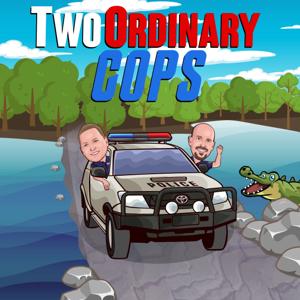


Welcome back to another episode of Two Ordinary Cops!
This week, Damo and Schultzy kick things off with some fantastic listener feedback, shout-outs and a reminder of why talking about mental health and supporting one another is so important.
Then, thanks to a listener's question about buying an ex-police vehicle, the boys take a trip down memory lane and talk about the police cars they drove throughout their careers in the Northern Territory Police.
From the trusty Toyota Hilux and the mighty V8 Land Cruiser to Commodores, Falcons and high-performance Camrys, the boys discuss which vehicles were built for the job and which ones simply weren't up to the task.
But it's the stories behind the wheel that make this episode! From high-speed responses and brutal bush roads to cracked chassis, rolled police cars, close calls with wild horses and a few hilarious mishaps, there's no shortage of laughs.
It's another entertaining episode full of police banter, real-life experiences and a fascinating look at what police vehicles are put through on the front line.
And after hearing these stories, you might think twice before buying an ex-police car!
Sit back, have a laugh and enjoy another episode of Two Ordinary Cops!
This week we hand the episode over to you, answering questions and sharing a few stories along the way.
We start on the serious side after a listener reaches out following a horrific fatal crash he came across on his way to work. We talk about critical incidents, the things you can’t unsee, the importance of debriefing and why asking for help isn’t weakness.
From there, things get a little more “Territory”. We answer questions about Territory Day, fireworks, explosives, the Finke Desert Race and some of the wild experiences that came with policing in the NT.
We also talk about preparing physically to join the police, look back at how Damo and Schultzy first met nearly 20 years ago, give some well-earned shout-outs — and, of course, finish with a Cartonable Offence.
A bit serious, a bit ridiculous and plenty of stories. Just another week with the Two Ordinary Cops.
A listener question gets Damo and Schultzy talking about something every cop should understand — who’s got your back when things go wrong?
In this episode, the boys look at the role of police unions and associations and why they’re about far more than just pay and conditions. From legal representation and disciplinary matters to supporting members through some of the toughest moments of their careers, having someone in your corner can make all the difference.
Drawing on their own experiences with the NT Police Association and their recent visit to the Queensland Police Union Council, Damo and Schultzy also talk about the delegates who give up their own time to stand beside their fellow cops when they need it most.
And, as usual, the conversation takes a few turns — including defence lawyers, court battles and why young cops shouldn’t be afraid to stand their ground when they’ve done their job properly.
Who’s got the cops’ backs? Sometimes, it’s another cop willing to stand beside them.
Welcome back to the Two Ordinary Cops for the fourth and final part of our interview with Roger Mayer APM.
In this episode, things get personal as Roger remembers his former NSW Police Dog Unit colleague Brett Meredith — a great mate and police officer who would later join the Northern Territory Police and work alongside both Damo and Schultzy.
The three reflect on Brett’s character, his ability as a police officer and dog handler, and the devastating impact of his death on his family, friends and the tight-knit Katherine policing community.
Roger then takes us deeper into the incredible abilities of police dogs, from tracking offenders across water to locating human remains and solving jobs where sometimes you simply have to trust the dog.
But behind a career filled with incredible police work was a cost. Roger speaks openly about PTSD, reaching the point where he knew something was wrong, and why asking for help — and looking after the people beside you — is so important.
A powerful finish to four episodes with Roger Mayer APM, with plenty of laughs, incredible police stories and some important lessons from a lifetime on the job.
Welcome back to the Two Ordinary Cops as we continue our conversation with Roger Mayer APM.
In this episode, Roger takes us from the NT Police to the NSW Police, where the action quickly steps up.
Starting in general duties at busy Campbelltown, Roger recalls confronting fatal accidents and the toll those jobs could take before moving into the Tactical Response Group — including a firsthand account of the infamous Bathurst riots, where police faced bricks, Molotov cocktails and absolute chaos.
From there, Roger moves into plain clothes and detective work, before finding the role that would define much of his career — police dog handling.
Roger takes us inside the early days of the NSW Police Dog Unit, introduces us to his first police dog, Cancho, and shares some incredible stories of tracking and catching offenders.
And just as Roger introduces one of the dog handlers who worked on his team — Brett Meredith — we leave it there.
Both Damo and Schultzy would later work with Brett in the Northern Territory Police, making his story a particularly personal one for the Two Ordinary Cops.
And Brett's story deserves an episode of its own.
Welcome back to Part Two with Roger Mayer APM.
In Episode 139, Roger takes us back to what it was really like joining the Northern Territory Police in the late 1970s and early ’80s — a very different era of policing.
It was a wild show back then. Communications were limited, backup wasn’t always available, and officers often had to think on their feet. When you were out there on your own, the power of speech could be your most important tool.
Roger shares stories from his time working in Gove, dealing with everything from crocodiles and fishermen to illegal fishing operations. There wasn’t always a policy or procedure to fall back on — sometimes you had to trust your gut, use your experience and police by the seat of your pants.
It’s a fascinating look at an era when policing in the Territory meant independence, adaptability and making decisions with whatever you had in front of you.
A must-listen episode for anyone interested in what life and policing were really like in the old NT.
This episode is an absolute blast. Roger Mayer not only tells you of his upbringing and how it turned him into the police officer and man he became. But it explains dedication and driving you to exceed expectations of what of what former experts thought you would reach. This is coming from a man who was not the best at school but showed his abilities in policing and how you are the person that defines you, not what people think. During this episode you will see the camaraderie between Roger, Damo and Schultzy having lived similar experiences between them and this being the first time the Two Ordinary Cops have spoken with him. It shows policing is not just a job, it is a lifestyle. We all hope you enjoy it as much as the speakers did. Let us know your thoughts.
What does a major murder investigation really look like from the inside?
This week, Damo takes us back to Operation Nina, the investigation into the 2011 murder of Ray Niceforo in Katherine — the Northern Territory’s first known contract killing.
Damo was one of the investigators at the front end of the case and personally arrested Zach Greve, one of three young men initially convicted of the murder. Greve would later be released after the court found there was no evidence establishing that he was present at the scene — ultimately becoming the subject of Dan Box’s book, The Man Who Wasn’t There.
But Damo was there.
He takes us behind the headlines and into the investigation as it unfolded: the discovery of the body, the first crime scene, the breakthrough admission that suddenly changed everything, simultaneous arrests and the enormous investigative effort that followed.
We also break down what television rarely shows — 12 to 18-hour days, search warrants, endless CCTV, exhibits, running sheets, intelligence coming in from dozens of directions, daily briefings and investigators following separate lines of inquiry before bringing everything back together.
And Damo gives his own perspective on Greve and the investigation, while making clear where his personal opinion differs from the findings ultimately made by the court.
It's an inside look at major crime from two former cops who have actually worked these investigations — where the breakthrough might happen in seconds, but getting there can take thousands of hours.
This week on Two Ordinary Cops, Schultzy and Damo take listeners behind the police cordon following the recent tragic murder-suicide in Charleville.
We break down what actually happens during a major critical incident — from inner and outer cordons and specialist police to negotiation and the difficult decisions being made behind the scenes. Schultzy also reflects on attending a murder-suicide as a young probationary constable in Katherine and the confronting jobs police carry with them long after the shift ends.
We recognise the Charleville constable who ran towards danger to rescue an 18-month-old child, awarding them our Big Camo Sauce – Extra Sauce on the Burger for going above and beyond.
Then, because policing isn't always doom and gloom, we finish with a Carton of the Week involving NSW Police, a suspected body in a suitcase… and a very unexpected sex doll.
Schultzy also gives a strong recommendation for David Raymond’s Vader: A Police Dog Story — the true story of Sergeant Raymond and Police Dog Vader, who spent five years tracking offenders, finding missing people and saving lives across North Queensland. An outstanding insight into what police dogs and their handlers do on the frontline.
Get Vader: A Police Dog Story
Vader – Big Sky Publishing
Former Queensland Police detective and undercover operative Todd Maguire shares the story behind the badge.
What starts as a conversation about policing quickly becomes something much more powerful. Todd opens up about personal tragedy, PTSD, grief, healing and finding purpose again after life changed forever.
For us, this episode felt like the best kind of police debrief. You start by talking through the toughest moments, but somehow finish with laughter, hope and a lighter load than when you arrived. That's something first responders have always understood—real conversations don't leave you feeling worse, they remind you that you're never carrying it alone.
If this episode encourages just one first responder to start a conversation, or reminds one person they're not alone, then it's been worth having.
Todd Maguire's book – Death Wish
🇦🇺 Australia: toddmaguire.com.au
🌏 International / Amazon: Death Wish – International links
From the publisher's feed
Ranked by our users in the last 21 days