
Sign up to save your podcasts
Or

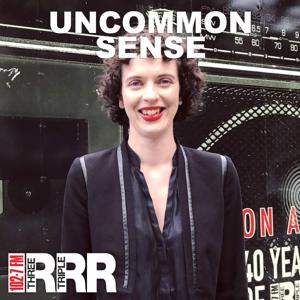


Emma Cutting, founder of The Heart Gardening Project discusses all things street gardening and how you can get involved. She also chats about their big community-led project, the Melbourne Pollinator Corridor – an 8km wildlife corridor linking the Royal Botanic Gardens in Melbourne to Westgate Park. The gardens have been designed for native pollinating insects and the plans being the result of input from over 20 specialists and scientists! British musician and environmental activist Nick Mulvey joins Amy for a special in-depth conversation about his latest album, New Mythology. Nick explains how he's "always trying to explore the planetary through the personal" with his music. From his early years as a founding member of Portico Quartet to his solo career, Nick shares the many spiritual, cultural, musical, and environmental influences on his new work, including ancient Celtic cultures, American buddhist Joanna Macy, and the revered late Vietnamese buddhist monk Thích Nhất Hạnh. Mulvey shares his song-writing process and some of the fascinating stories behind the tracks on his album including, Shores of Mona, Causes, The Gift, Star Nation, and Begin Again. Nick Feik, former Editor of The Monthly, delves into the latest in federal politics with an incisive analysis of all the developments and questions arising from former Prime Minister Scott Morrison's ministerial power grab, including the complicity of those who knew, the role of the Governor-General, and much more.
To listen to the Nick Mulvey interview with music from his album New Mythology included, listen to the OnDemand stream here.
Best-selling British author Johann Hari chats in-depth with Amy live on Uncommon Sense for part two of their conversation on his book, Stolen Focus: Why You Can't Pay Attention. Johann discusses the crisis of attention in both children and adults, how 'big tech' saps our ability to focus, as well as the insidious environmental factors that affect our attention, like pollution and chemicals. Most importantly, Johann explains what we can do about it, individually and collectively.
Listen to part one of our conversation about Stolen Focus on the podcast here. Note: Either part can be heard in isolation or in conjunction.
Professor Chris Wallace discusses the latest in federal politics, including the recent revelations that former Prime Minister Scott Morrison formally appointed himself to five Ministerial roles in secret. Chris delves into the detail of what happened and the historical and contemporary significance of this unprecedented action by an Australian Prime Minister. She also shares what this means for democracy and whether a Royal Commission or inquiry is needed. Chris is a Professor at the 50/50 By 2030 Foundation at the University of Canberra, a former member of the Canberra Press Gallery and author of How To Win An Election.
Best-selling British author Johann Hari chats in-depth with Amy live on Uncommon Sense for part two of their conversation on his book, Stolen Focus: Why You Can't Pay Attention. Johann discusses the crisis of attention in both children and adults, how 'big tech' saps our ability to focus, as well as the insidious environmental factors that affect our attention, like pollution and chemicals. Most importantly, Johann explains what we can do about it, individually and collectively.
Listen to part one of our conversation about Stolen Focus on the podcast here. Note: Either part can be heard in isolation or in conjunction.
Highly regarded geopolitical thinker and former Singaporean diplomat Kishore Mahbubani speaks in-depth about his essay, 'Australia's Choice: Can It Be A Bridge To Asia?', published in Australian Foreign Affairs Magazine (July 2022). Kishore explains how Australia needs to face up to the geopolitical reality of the 21st century – that China will become the number one global power. In order to find effective ways to both get along with and stand up to China, Kishore says there are many lessons Australia can learn from the ASEAN countries in South East Asia, especially Vietnam.
He also explains the diplomatic mistakes of the previous Morrison government in the Asian region and what the Albanese government can do to re-shape relations through ASEAN, APEC, The Quad, and the RCEP. Kishore shares the historical basis for the current diplomatic tensions between China, the U.S. and Taiwan, and how likely a war in the Taiwan Straits is. He also touches on related arguments in his book, Has China Won?: The Chinese Challenge to American Primacy. Kishore Mahbubani is a Distinguished Fellow at the Asia Research Institute, National University of Singapore, and served as Singapore’s Ambassador to the UN and as President of the United Nations Security Council.
Professor Chris Wallace discusses the latest in federal politics, including the recent revelations that former Prime Minister Scott Morrison formally appointed himself to five Ministerial roles in secret. Chris delves into the detail of what happened and the historical and contemporary significance of this unprecedented action by an Australian Prime Minister. She also shares what this means for democracy and whether a Royal Commission or inquiry is needed. Chris is a Professor at the 50/50 By 2030 Foundation at the University of Canberra, a former member of the Canberra Press Gallery and author of 'How To Win An Election.'
Highly regarded geopolitical thinker and former Singaporean diplomat Kishore Mahbubani speaks in-depth about his essay, 'Australia's Choice: Can It Be A Bridge To Asia?', published in Australian Foreign Affairs Magazine (July 2022). Kishore explains how Australia needs to face up to the geopolitical reality of the 21st century – that China will become the number one global power. In order to find effective ways to both get along with and stand up to China, Kishore says there are many lessons Australia can learn from the ASEAN countries in South East Asia, especially Vietnam.
He also explains the diplomatic mistakes of the previous Morrison government in the Asian region and what the Albanese government can do to re-shape relations through ASEAN, APEC, The Quad, and the RCEP. He also addresses the issue of AUKUS and what the Albanese government could have done to reverse course. Kishore shares the historical basis for the current diplomatic tensions between China, the U.S. and Taiwan, and how likely a war in the Taiwan Straits is. He also touches on related arguments in his books, Has China Won?: The Chinese Challenge to American Primacy and The Asian 21st Century (free to download via Springer - Open Access). Kishore Mahbubani is a Distinguished Fellow at the Asia Research Institute, National University of Singapore, and served as Singapore’s Ambassador to the UN and as President of the United Nations Security Council.
Acclaimed historian Henry Reynolds discusses his award-winning book, Forgotten War – on the frontier wars between First Nations people and white colonists. Frontier violence was commonplace in Australia during the nineteenth century, but can it be characterised as a war? Henry Reynolds explains. Originally published in 2014, it has been re-released by NewSouth Publishing.
Fiona Patten MP, Reason Party Leader and representative for the Northern Metropolitan Region in the upper house of Victoria's state parliament, joins Amy to discuss state politics and policy, as well as the upcoming state election. Fiona explains her bill which seeks to ensure that all publicly funded hospitals provide abortion services, contraception, and voluntary-assisted dying. She also discusses a widely-criticised law that criminalises logging protesters. And Fiona addresses concerns around a government bill that seeks to gather every Victorian's health records into a centralised database, with NO opt-out clause. Acclaimed historian Henry Reynolds discusses his award-winning book, Forgotten War – on the frontier wars between First Nations people and white colonists. Frontier violence was commonplace in Australia during the 19th century, but can it be characterised as a war? Henry Reynolds explains. Plus Guardian Australia's environment reporter Graham Readfearn shares the latest news on the Great Barrier Reef and federal environmental policy. With coral cover the highest reported in 36 years in some areas, what does this really mean for the long-term recovery of the reef?
Rachel Withers, Contributing Editor to the Monthly and The Politics columnist joins Amy to reflect on the first week of the 47th Parliament of Australia, including the draft referendum question on a Voice to Parliament, Anthony Albanese's Garma speech, the politics of pandemic management, rising inflation and more. Nic Maclellan, Pacific affairs correspondent for Inside Story, speaks about his trip to the Pacific Islands Forum in Fiji. With many Micronesian leaders absent and the withdrawal of Kiribati from the forum, there were some tensions but also successes. Nic reports on all of the developments, including the important "Suva Agreement" and "2050 Strategy for a Blue Pacific Continent." Philosopher Dr Matthew Sharpe from Deakin University discusses the rise of the far right in Europe and the recent controversial speech made by Hungarian Prime Minister Viktor Orbán on 'racial mixing,' where he claimed Hungarians should only 'mix' with other Europeans. Orbán's speech has been compared by some to Nazi ideology and denounced widely. With Orbán set to speak at the U.S. CPAC conference – the largest gathering of conservatives in the world – are his extreme political views influencing politics beyond Hungary?
Epidemiologist Adrian Esterman joins Amy to discuss the winter COVID-19 wave of cases we are currently experiencing. With Australia's COVID cases and death rates the third highest in the world per capita in the past week, there are demands for basic public health measures to be reintroduced. Adrian is Professor of Biostatistics and Epidemiology at the University of SA. Andrew Walter, Professor of International Relations at the University of Melbourne dropped by to talk about the latest in UK politics, including the demise of UK Prime Minister Boris Johnson and the final round of the Tory leadership contest between Rishi Sunak and Liz Truss. Andrew also discusses some of the other leadership contenders who have since left the field but are making their mark on the Tory party, including Kemi Badenoch. Dr Kylie Soanes, conservation biologist at the University of Melbourne delves into the State of the Environment Report, finally released by the federal government. With the report declaring that urban environments are in the best condition – rated as "good and neutral" – Kylie discusses whether this assessment reflects the reality of nature in our cities and urban ecologies. In fact, Australia’s cities and towns are home to more than 46% of threatened species – including some plants and animals that can’t be found anywhere else in the world. Kylie shares what we can do to save our most at risk species living in cities and urban environments – from our backyards and our balconies.
Dr Kylie Soanes, conservation biologist at the University of Melbourne delves into the State of the Environment Report, finally released by the federal government. With the report declaring that urban environments are in the best condition – rated as "good and neutral" – Kylie discusses whether this assessment reflects the reality of nature in our cities and urban ecologies. In fact, Australia’s cities and towns are home to more than 46% of threatened species – including some plants and animals that can’t be found anywhere else in the world. Kylie shares what we can do to save our most at risk species living in cities and urban environments – from our backyards and our balconies.
From the publisher's feed

1 Listeners

2 Listeners

0 Listeners

0 Listeners

1 Listeners

0 Listeners

1 Listeners
0 Listeners

0 Listeners

2,241 Listeners
0 Listeners

0 Listeners

0 Listeners
0 Listeners

0 Listeners

0 Listeners

1 Listeners

0 Listeners