
Sign up to save your podcasts
Or

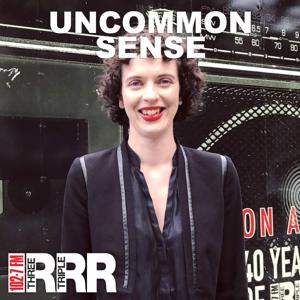


Amy speaks with Dr Ben Eltham from Monash Uni and Associate Professor Jo Caust from Melbourne Uni as they delve into the details of Australia's new arts and cultural policy, REVIVE. They talk about how these policy changes will reposition the arts in Australia and affect artists, musicians, writers, actors, and more. They analyse what sectors have benefited from the policy and what areas have been neglected.
Professor Chris Wallace returns to speak in-depth about her new book, Political Lives: Australian Prime Ministers and Their Biographers. Chris tells Australian political history anew through her account of prime ministers, their biographies and their biographers – examining their motivations and relationships.
Kendrah Morgan, Head Curator at the Heide Museum of Modern Art sits down to speak about the first survey exhibition of modernist sculptor Barbara Hepworth's (1903–1975) work in Australia. Inspired by the landscape and human form, Hepworth was one of the leading British artists of her generation and the first woman sculptor to achieve international recognition. BARBARA HEPWORTH – IN EQUILIBRIUM is showing at the Heide until March 13.
Professor Chris Wallace returns to speak in-depth about her new book, Political Lives: Australian Prime Ministers and Their Biographers. Chris tells Australian political history anew through her account of prime ministers, their biographies and their biographers – examining their motivations and relationships.
Acclaimed historian Professor Frank Bongiorno returns for an in-depth conversation about his epic new book, Dreamers and Schemers. It's the first full political history of Australia, presenting a social and cultural history of our political life from pre-colonial Aboriginal political and governance systems to the current day. Frank is a Professor of History at ANU and is the President of the Australian Historical Association. Regulars historian Dr Emma Shortis from RMIT University and Professor Andrew Walter from The University of Melbourne sit down with Amy to reflect on the major political trends and developments of 2022 in the US, UK, and global geopolitical flashpoints like, US and China tensions over Taiwan, Russia’s war against Ukraine, AUKUS, and more. Dr Emma Shortis is a Research Fellow at the EU Centre of Excellence at RMIT and Dr Andrew Walter is a Professor of International Relations at the University of Melbourne.
Regulars historian Dr Emma Shortis and Professor Andrew Walter sit down with Amy to reflect on the major political trends and developments of 2022 in the US, UK, and global geopolitical flashpoints like, US and China tensions over Taiwan, Russia’s war against Ukraine, AUKUS, and more. Dr Emma Shortis is a Research Fellow at the EU Centre of Excellence at RMIT and Dr Andrew Walter is a Professor of International Relations at the University of Melbourne.
Professor Raina Macintyre talks about her new book on pandemics and biosecurity, Dark Winter: An Insider's Guide to Pandemics and Biosecurity. A world-leading epidemiologist and biosecurity expert Raina MacIntyre discusses the dangers of information warfare during the COVID-19 pandemic and beyond, as well as the history of biological attacks, lab accidents and epidemics, synthetic biology, and gain of function research. She reveals a pattern of denial, silence and cover-up around unnatural epidemics and the powerful vested interests at play.
Professor MacIntyre is a physician, epidemiologist and Professor of Global Biosecurity at UNSW and adjunct Professor at Arizona State University. She leads research in epidemic control, vaccinology and aerosol science. She is an expert in outbreak detection and mitigation, including that arising from bioterrorism and biological warfare. She has a 28-year track record in pandemics, epidemic infections, serious emerging infections, vaccines and control of respiratory viruses. She has worked as a clinician in hospitals, as an epidemiologist in a health department and as a researcher. In 2022, MacIntyre won the Eureka Prize for Leadership in Science and Innovation. Raina is also a founding member of the independent scientific advisory group, OzSAGE.
Historian Dr Meg Foster from the University of Cambridge talks about the fascinating hidden history of Australia's other bushrangers in her book, Boundary Crossers. Meg talks about the bushrangers who didn’t fit into Australia’s national mythology, like African American man Black Douglas, who was seen as the terror of the Victorian goldfields, Sam Poo – Australia’s only Chinese bushranger, and Captain Thunderbolt’s partner, Aboriginal woman Mary Ann Bugg. Professor Raina Macintyre talks about her new book on pandemics and biosecurity, Dark Winter. A world-leading epidemiologist and biosecurity expert Raina MacIntyre discusses the dangers of information warfare during the COVID-19 pandemic and beyond, as well as the history of biological attacks, lab accidents and epidemics, synthetic biology, and gain of function research. She reveals a pattern of denial, silence and cover-up around unnatural epidemics and the powerful vested interests at play. Dr Brendan Wintle, Professor in Conservation Ecology at the University of Melbourne talks about some major developments on environmental conservation policy at the federal level. This includes the creation of the Biodiversity Council – a scientist-led think-tank, the Threatened Species Action Plan, and long overdue changes to the EPBC Act in response to the Samuel Review.
Professor Brendan Crabb AC, Director and CEO of the Burnet Institute, speaks directly and in-depth about the scientific reality of COVID-19 for everyone in Australia right now. Now in our fourth wave this year and with cases in the past week estimated at between 500,000 to 1 million (5 to 10 times the reported cases), what are the consequences of the unmitigated spread of COVID-19? What makes COVID truly exceptional? How do we stop transmission, and what are the risks of repeated infection?
With a federal inquiry into Long COVID underway, Brendan explains the most up to date scientific thinking behind the causes and effects of Long COVID and what patients need the most – to be believed and understood. As COVID is not just a respiratory condition, but an "inflammatory disease of your blood vessels," Brendan explains what kinds of post-COVID complications are possible for some, like stroke, diabetes, pulmonary embolism (PE), and heart attack. All this and more is discussed in a nuanced and wide-ranging interview.
Read the Burnet Institute's submission to the federal Inquiry Into Long COVID and Repeated Infections [PDF].
Chris Wallace, from the Faculty of Business, Government, and Law at the University of Canberra, reflects on federal politics in 2022, after the last sitting of federal parliament came to a close. Chris discusses the passing of legislation on the federal anti-corruption body (NACC) and the Secure Jobs, Better Pay Bill, plus the censure of former PM Scott Morrison after the release of the Bell report into his secret Ministries arrangement. Professor Brendan Crabb AC, Director and CEO of the Burnet Institute, speaks directly and in-depth about the scientific reality of COVID-19 for everyone in Australia right now. Now in our fourth wave this year and with cases in the past week estimated at between 500,000 to 1 million (5 to 10 times the reported cases), what are the consequences of the unmitigated spread of COVID-19? What makes COVID truly exceptional? How do we stop transmission, and what are the risks of repeated infection? With a federal inquiry into Long COVID underway, Brendan explains the most up to date scientific thinking behind the causes and effects of Long COVID and what patients need the most – to be believed and understood. As COVID is not just a respiratory condition, but an "inflammatory disease of your blood vessels," Brendan explains what kinds of post-COVID complications are possible for some, like stroke, diabetes, pulmonary embolism (PE), and heart attack. All this and more is discussed in a nuanced and wide-ranging interview. Geelong Gallery Director Jason Smith speaks about their latest exhibition, Mandy Martin – A Persistent Vision. An Australian environmental and feminist artist, the late Mandy Martin is considered "a landscape artist of national stature" – Tom Griffiths. Jason discusses the range of works on display, including the late artist's video collaboration with Alexander Boynes and composer-musician Tristen Parr, called Luminous Relic (2017). It's a panoramic piece that combines traditional oil painting with video projection and a music composition.
Writer, broadcaster, and musician, Sian Prior joins Amy to discuss her book, Childless, A Story of Freedom and Longing. It's about Sian's seven-year-long quest to become a mother, and how that failure affected every part of her emotional life. Sian explores how society could better support those who are childless not by choice, which has become an issue for a rising number of Australians.
Content Warning: Please note that the interview with Sian Prior talks about miscarriage, IVF treatments, and the struggle to become a mother and a parent. This may be distressing for some listeners.
Dr Kevin Bonham, psephologist, polling analyst, and political commentator, drops by to discuss the Victorian state election polling figures thus far, the problem with Group Voting Tickets and preference harvesting, and why we should vote below the line in the Upper House. Writer, broadcaster, and musician, Sian Prior joins Amy to discuss her book, Childless, A Story of Freedom and Longing. It's about Sian's seven-year-long quest to become a mother, and how that failure affected every part of her emotional life. Sian explores how society could better support those who are childless not by choice, which has become an issue for a rising number of Australians. Dr Holly Jones-Amin, Senior Conservator at Grimwade Conservation Services, The University of Melbourne talks about the intricacies of the award-winning conservation project to conserving Loong 龍, the oldest intact imperial processional dragon in the world. Loong is a 40m-long, five-clawed imperial dragon owned by the Bendigo Chinese Association and on permanent display at the Golden Dragon Museum, Bendigo 金龍博物館. Holly also discusses Loong's cultural and historical significance to Chinese-Australians and the Bendigo community. Loong’s earliest recorded public appearance was the Bendigo Easter Procession of 1892. Historically he was also referred to by the Chinese community as Gum Loong 金龙 (Golden Dragon) and Moo Loong 舞龍 (Dancing Dragon).
Content Warning: Please note that the interview with Sian Prior talks about miscarriage, IVF treatments, and the struggle to become a mother and a parent. This may be distressing for some listeners.
From the publisher's feed

1 Listeners
2 Listeners

0 Listeners

0 Listeners

1 Listeners

0 Listeners

1 Listeners
0 Listeners

0 Listeners

2,241 Listeners
0 Listeners

0 Listeners
0 Listeners
0 Listeners

0 Listeners
0 Listeners

1 Listeners

0 Listeners