
Sign up to save your podcasts
Or

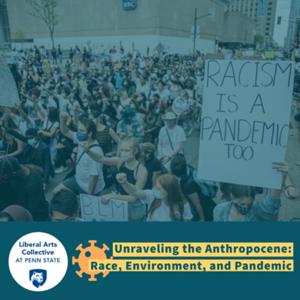


In this episode, LAC member Müge Gedik welcomes Dr. Margot Finn (University of Michigan) to talk about her project “Bellies Full of Stars: Feeding Multitudes of Multitudes in Apocalyptic Times.” This conversation begins with Margot Finn’s approach to the Anthropocene and her conceptualization of apocalypse. She underlines the importance of the ways we tell stories about time, the future, what it means to coexist. Coexistence and symbiosis become crucial tools for the discussion of multispecies justice in food futures in the Anthropocene, elaborated through examples of eating and thinking with companion species such as the lichen, the Hawaiian Bobtail Squid, and the Matsutake mushroom. Margot Finn points at the difference between the metaphorical distinctions between symbiosis and parasitism and the biological reality where interrelations are not usually mutually beneficial. Finn highlights the ways the pandemic has forced her (and she hopes others) into a new awareness of the dual racist epidemics of violent policing and disproportionate COVID-19 deaths in Black & Indigenous & Latinx communities.
In this episode, LAC members Irenae Aigbedion and Tembi Charles welcome Dr. Sinfree Makoni (Penn State) and Dr. Bassey Antia (University of the Western Cape) to have a conversation about their project, "Humor as a Semiotic Resource: Coping with COVID-19 Stress in Africa." The conversation branches out from a close examination of their work to a reflection on the ways that humor can be a tool to "speak back" to power, to critique histories of colonialism, and to shape a new identity for Africa itself. Humor becomes a critical tool we all need to navigate the unique social pressures we are currently facing.
From the publisher's feed