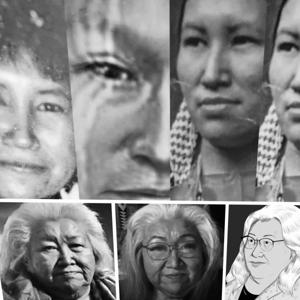
Upcoming Trial of Nathan Chasing Horse April 14, 2025

Upcoming Trial of Nathan Chasing Horse April 14, 2025

By Marina CraneArts
Download on the App Store

Upcoming Trial of Nathan Chasing Horse April 14, 2025 episodes

  • Reclaiming cultural practice and empowering young women

    Marina Crane discusses systemic racism, Indigenous rights, sovereignty, and the impact of colonialism on Indigenous communities. She also explores the significance of rite of passage ceremonies for young girls, the effects of alcohol, and the complexities of sexual recovery. Marina Crane discusses the impact of coercive control, indoctrination, and systemic racism on indigenous communities, as well as the importance of reclaiming cultural practices and empowering young women. She also shares personal experiences and reflections on spirituality, healing, and resilience.

    Takeaways

    • Systemic racism and the impact of colonialism continue to affect Indigenous communities in Canada.
    • The significance of rite of passage ceremonies for young girls and the challenges faced by Indigenous women in reclaiming their cultural practices.
    • The impact of alcohol on Indigenous communities and the complexities of sexual recovery. Coercive control and indoctrination have a profound impact on individuals and communities
    • The revitalization of cultural practices and empowerment of young women are crucial for healing and resilience

    Chapters

    • 00:00 Systemic Racism and Indigenous Rights
    • 05:16 Rite of Passage Ceremonies and Cultural Reclamation
    • 08:11 Sovereignty and Impact of Colonialism
    • 26:19 Alcohol and Its Impact on Indigenous Communities
    • 38:39 Complexities of Sexual Recovery
    • 40:31 Coercive Control and Indoctrination
    • 43:16 Systemic Racism and Cultural Reclamation
    • 49:35 Spirituality, Healing, and Resilience
    • 57:20 Empowerment of Young Women
    • 01:00:44 Reflections on Personal Experiences
    • 01:19:14 Impact of Coercive Control and Empowerment
    1 hr 23 min
  • Witnessing, Warning and Reclaiming

    The conversation covers a wide range of topics including systemic racism, indigenous experiences, mental health, and the impact of trauma. It delves into the themes of hypersexuality, stalking, and the need for support and understanding. The speaker shares personal experiences and insights, highlighting the importance of addressing these sensitive issues. The conversation covers a wide range of topics, including experiences of systemic racism, sexual health, identity, and the impact of historical events on indigenous communities. Marina shares personal stories and insights, highlighting the need for understanding, empathy, and awareness of the challenges faced by indigenous people.

    Takeaways

    • Systemic racism and its impact on indigenous communities
    • The intersection of mental health, trauma, and hypersexuality
    • The need for support and understanding in cases of stalking and coercive control Systemic Racism
    • Sexual Health
    • Identity
    • Historical Impact on Indigenous Communities

    Chapters

    • 00:00 Systemic Racism and Indigenous Experiences
    • 03:04 Mental Health, Hypersexuality, and Trauma
    • 34:37 Stalking and Coercive Control
    • 40:30 Experiences of Systemic Racism
    • 47:30 The Impact of Historical Events
    • 53:36 Cultural Identity and Stereotypes
    • 01:03:22 Sexual Health and Empowerment
    • 01:07:34 Challenges of Indigenous Identity
    • 01:20:44 Empowerment and Advocacy
    1 hr 22 min
  • The complexities of accountability and justice

    Marina Crane discusses the impact of human behavior and sexuality on mental health, relationships, and societal attitudes. She emphasizes the importance of recognizing vulnerability, understanding hypersexuality, and addressing the taboo around sexual health. Additionally, she highlights the power of women's pleasure and the need for assertiveness in understanding one's own body. The conversation covers a wide range of topics related to women's health, sexuality, indigenous culture, restorative justice, and systemic issues. It delves into the importance of vaginal estrogen, the significance of healthy human sexuality, and the need for restorative justice in indigenous communities. The conversation also addresses the impact of historical events on indigenous people and the complexities of accountability and justice.

    Takeaways

    • Vulnerability Awareness
    • Understanding Hypersexuality
    • Empowerment in Sexual Health Vaginal estrogen is a crucial treatment for women's health
    • Healthy human sexuality is important at all stages of life
    • Restorative justice is essential in indigenous communities
    • The impact of historical events on indigenous people is profound

    Chapters

    • 00:00 The Impact of Human Behavior and Sexuality
    • 02:26 Recognizing Vulnerability and Limerence
    • 08:21 Hypersexuality and Mental Health
    • 22:05 The Power of Women's Pleasure
    • 26:00 Assertiveness in Sexual Health
    • 27:52 Vaginal Estrogen and Women's Health
    • 29:13 Healthy Human Sexuality
    • 40:41 Men, Accountability, and Restorative Justice
    • 48:35 Impact of Historical Events on Indigenous People
    56 min
  • The need for advocacy and activism

    The conversation covers the topics of Alberta separatism, historical trauma and colonization, and indigenous activism and resistance. It delves into the issues surrounding separatism in Alberta, the impact of historical trauma and colonization on indigenous communities, and the role of indigenous activism and resistance in addressing systemic injustices. The conversation delves into the deconstruction of colonial psychology and the impact of systemic racism on indigenous communities. It also explores the effects of the Indian Act, cultural appropriation, gaslighting, and institutional defenses, shedding light on the complexities of these issues and the need for advocacy and activism.

    Takeaways

    • Separatism in Alberta
    • Historical trauma and colonization
    • Indigenous activism and resistance Colonial Gaslighting
    • Systemic Racism

    Chapters

    • 00:00 Alberta Separatism
    • 06:00 Historical Trauma and Colonization
    • 21:33 Indigenous Activism and Resistance
    • 30:22 Deconstructing Colonial Psychology
    • 32:20 The Impact of the Indian Act
    • 37:08 Cultural Appropriation and Gaslighting
    • 53:33 Institutional Defenses and Weaponizing Ignorance
    1 hr 5 min
  • The importance of recognizing and dismantling the system of patriarchy

    The conversation covers topics related to data breach, separatism, artificial intelligence, human sexuality, systemic racism, and indigenous history. It also delves into the normalization of sexualization in society, the impact of technology on childhood development, and the historical context of systemic racism and colonization. The discussion also addresses the fragility of white women, coercive control, and the impact of patriarchy. The conversation delves into the impact of patriarchy on women, the role of masculinity, and the prevalence of coercive control. It also highlights the need for self-accountability and the importance of recognizing and dismantling the system of patriarchy.

    Takeaways

    • Data sovereignty is crucial in the age of artificial intelligence.
    • The normalization of sexualization in society has significant implications for childhood development and societal values. Patriarchy perpetuates inequality and affects women disproportionately.
    • Masculinity and femininity are social constructs that shape behavior and expectations.

    Chapters

    • 00:00 Data Breach and Separatism
    • 03:13 Artificial Intelligence and Human Sexuality
    • 04:54 Systemic Racism and Indigenous History
    • 10:13 Normalization of Sexualization in Society
    • 11:40 Impact of Technology on Childhood Development
    • 17:28 Fragility of White Women and Coercive Control
    • 26:56 Understanding Patriarchy and Its Impact
    • 28:09 The Price Paid by Women Under Patriarchy
    • 30:19 The Role of Masculinity and Femininity
    • 34:22 The Reality of Coercive Control
    • 36:09 Self-Accountability and Dismantling Patriarchy
    1 hr 38 min
  • The complexities of human relationships and boundaries

    The conversation delves into the impact of systemic racism and historical context on mental health, particularly for indigenous communities. It also explores the relationship between avoidant attachment and capitalism, as well as the correlation between job loss and divorce. The importance of collective and holistic approaches to child development is also highlighted. The conversation delves into the impact of systemic racism, the nature of intimacy and mental health, historical context and the indigenous experience, and the complexities of human relationships and boundaries. Marina shares personal experiences and insights, shedding light on the challenges and dynamics of these themes.

    Takeaways

    • Systemic Racism
    • Impact of Historical Context
    • Mental Health and Racism
    • Avoidant Attachment and Capitalism
    • Job Loss and Divorce
    • Collective and Holistic Approaches to Child Development Systemic racism and its impact
    • The complexity of human relationships

    Chapters

    • 00:00 Systemic Racism and Historical Context
    • 03:04 Mental Health and Racism
    • 38:38 Avoidant Attachment and Capitalism
    • 47:21 Job Loss and Divorce
    • 51:23 Systemic Racism and Its Impact
    • 54:13 The Nature of Intimacy and Mental Health
    • 59:01 Historical Context and Indigenous Experience
    • 01:37:28 Human Relationships and Boundaries
    1 hr 46 min
  • impact of language, trauma and systemic oppression

    The podcast covers a wide range of topics, including recovery and mental health, white privilege, cultural insensitivity, grief, religious hypocrisy, coercive control, feminism, patriarchy, the science of physiology and medicine, limerence and fantasy, pornography and brain health, and balancing the central nervous system. The conversation covers topics such as understanding coercive control, the impact of language on sexuality, healing from borderline personality disorder, trauma, kink, and wellness, and systemic racism and indigenous identity. The discussion delves into the complexities of these themes, offering insights into the impact of language, trauma, and systemic oppression on individual experiences and well-being.

    Takeaways

    • Recovery and mental health are important topics that need to be addressed with sensitivity and understanding.
    • Issues of white privilege, cultural insensitivity, and coercive control have a significant impact on mental health and well-being. The impact of language on sexuality is profound
    • Healing from trauma and mental health disorders is a complex and multifaceted process

    Chapters

    • 00:00 Recovery and Mental Health
    • 01:19 White Privilege and Grifters
    • 02:03 Cultural Insensitivity and Arrogance
    • 02:53 The Impact of Grief
    • 04:21 Religious Hypocrisy and Mental Health
    • 04:57 Colonial Mindset and White Privilege
    • 17:26 Coercive Control and Emotional Abuse
    • 22:41 Feminism and Patriarchy
    • 25:29 The Science of Physiology and Medicine
    • 28:26 Limerence and Fantasy
    • 34:21 Pornography and Brain Health
    • 36:48 Balancing the Central Nervous System
    • 38:43 Understanding Coercive Control
    • 42:00 The Impact of Language on Sexuality
    • 48:35 Healing from Borderline Personality Disorder
    • 01:08:46 Trauma, Kink, and Wellness
    • 01:15:08 Systemic Racism and Indigenous Identity
    1 hr 20 min
  • Experiences facing societal challenges within indigenous communities re: trauma bonds and bonds

    Marina Crane discusses a wide range of topics, including psychology, indigenous culture, systemic racism, and the impact of trauma on mental health. She also delves into the themes of objectification, infidelity, and the intersection between serial cheaters and serial killers. Marina shares personal experiences and insights, highlighting the need for self-reflection and understanding in the face of societal challenges. The conversation covers a wide range of topics including coercive control, domestic abuse, sexual repression, healthy human sexuality, and the impact of trauma on the brain. It also delves into the psychology of serial cheating, the connection between psychopathy and infidelity, and the importance of setting boundaries and self-reflection.

    Takeaways

    • Indigenous oral history and cultural practices
    • The impact of systemic racism and objectification on mental health Coercive control is a form of domestic abuse that does not have to be physical, but can be just as damaging psychologically and emotionally.
    • Healthy human sexuality is a natural and important aspect of human life, and it's essential to understand and respect boundaries and consent.
    • The impact of trauma on the brain can lead to hypersexuality as a coping mechanism, and it's important to seek professional help for rewiring the brain and developing healthier coping patterns.
    • Serial cheating is linked to psychopathy and can have long-term psychological effects on the victims, leading to self-doubt and trust issues.
    • Understanding the impact of sexual repression and the importance of healthy sexual expression is crucial for personal growth and well-being.

    Chapters

    • 00:00 Introduction and Indigenous Oral History
    • 03:06 Impact of Lived Knowledge and Education
    • 04:24 Psychological Insights and Personal Reflections
    • 05:31 Understanding Trauma and Healthcare
    • 12:56 Exploring the Influence of Trauma and Evil
    • 16:24 Systemic Racism and Societal Norms
    • 23:15 Cultural Differences and Historical Context
    • 26:11 Impact of Systemic Racism and Self-Reflection
    • 33:42 Objectification and Sexualization in Media
    • 37:01 Link Between Infidelity and Violence
    • 39:17 Personal Experiences and Societal Impact
    • 01:25:17 The Impact of Trauma and the Importance of Self-Awareness
    1 hr 27 min
  • The impact of societal norms on individuals

    The conversation covers a wide range of topics, including indigenous history, women's rights, romantic relationships, human sexuality, and societal attitudes towards men and women. It delves into the complexities of gender dynamics, historical injustices, and the impact of societal norms on individuals. The discussion also touches on the challenges of aging and the changing dynamics of relationships over time. The conversation covers a wide range of topics related to women's choices, pair bonding, indigenous women's treatment, and the impact of systemic racism and colonialism. It also delves into the concept of masculinism, the rise of Donald Trump, and the dynamics of power and privilege in society. The conversation covers a wide range of topics, including rape culture in conservative Christianity, the impact of the Indian Act on Indigenous people, systemic racism, and the lack of empathy in society. Marina also discusses the importance of understanding trauma bonding and the challenges of building romantic relationships.

    Takeaways

    • Indigenous history and women's rights
    • Romantic relationships and human sexuality
    • Societal attitudes towards men and women Women's choices are influenced by societal norms and systemic factors
    • Pair bonding and the treatment of indigenous women reflect systemic issues
    • Masculinism and the rise of Donald Trump highlight power dynamics and privilege in society Rape culture is used as a tool for power and control in conservative Christianity.
    • The Indian Act has had a significant impact on the identity and rights of Indigenous people.

    Chapters

    • 00:00 Indigenous History and Women's Rights
    • 09:59 Romantic Relationships and Human Sexuality
    • 25:23 Societal Attitudes Towards Men and Women
    • 35:06 Women's Choices and Pair Bonding
    • 36:33 Impact of Systemic Racism and Colonialism
    • 46:06 Masculinism and Power Dynamics
    • 01:03:27 The Rise of Donald Trump and Privilege
    • 01:11:57 Rape Culture in Conservative Christianity
    • 01:20:45 The Impact of the Indian Act
    • 01:28:29 Systemic Racism and Lack of Empathy

    01:46:11 Understanding Trauma Bonding and Building Relationships

    1 hr 48 min
  • Historical events on present-day society

    The conversation covers a range of topics including environmental issues, gender roles, historical trauma, racial violence, and empathy. Marina Crane shares personal experiences and insights on these subjects, highlighting the impact of historical events on present-day society. The conversation covers a wide range of topics, including politics, science, indigenous issues, addiction, and human sexuality. Marina shares personal experiences and observations, highlighting the complexities of human behavior and societal challenges. She emphasizes the need for understanding, compassion, and the importance of addressing historical injustices.

    Takeaways

    • Environmental impact of oil production
    • Impact of death on family dynamics
    • Gender roles and identity
    • Racial trauma and historical violence
    • Empathy and societal attitudes Complexities of Human Behavior
    • Societal Challenges

    Chapters

    • 00:00 Environmental Impact of Oil Production
    • 01:45 Gender Roles and Identity
    • 04:43 Racial Trauma and Historical Violence
    • 09:06 Empathy and Societal Attitudes
    • 12:12 Impact of Historical Events on Present-Day Society
    • 30:20 Observations on Politics and Science
    • 33:38 Challenges Faced by Indigenous People
    • 34:06 Cults, Addiction, and Grooming Behavior
    • 38:06 Understanding Human Sexuality
    • 58:28 Grieving and Healing in Indigenous Communities
    • 01:01:22 Historical Context and Societal Evolution
    1 hr 5 min

About Upcoming Trial of Nathan Chasing Horse April 14, 2025

From the publisher's feed

This is a series of short videos regarding my personal experience encounters with Nathan Chasing Horse. from my initial contact with him in 2006 spanning 19 years. These podcast briefly give an…