
Sign up to save your podcasts
Or

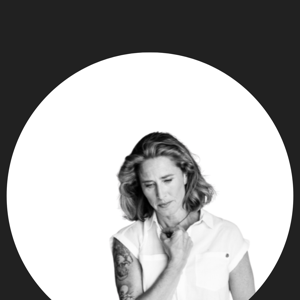


Molly Roškar works with a constellation of objects, materials, and processes, from restoring heirloom cabinets to making natural dyes to whittling spoons, knives, and creatures, all within a core theme of tradition, sustainability, and great curiosity and care.
Because I can get obsessed with details, we got into a bit of a conversation about shellac, which I now know is bug-processed resin. It has been used for thousands of years as a natural primer, stain, and varnish and it offers a deep lens into the structure of the wood.
We also talked about art and craft; as Molly explains, 'it would diminish art if you ruled out craft, and it would diminish craft if you ruled out conceptual processes.' She talks about her own work with tangible objects as a response to theoretical questions she wants to explore, intention as key to her creative process, and the beauty that comes from that which is simple and practical, but not obvious.
You can learn more about Molly and her work on her website atelierindigoandoak.com and on instagram @atelierindigoandoak
Gabrielle Rae Travis, literary artist and editor-in-chief of the zine whet, talks about the power of community, camaraderie, and connection and the role played by vulnerability and uncomfortable conversations.
I relate in many ways to what Gabrielle talks about, including the appreciation and joy of helping to foster the work - learning from wonderful artists who share their insights with us.
As she says, 'art is about stirring something in us.' And when the connections empower us to acquire the skills and gain the confidence to contribute and put our own voice out there, all the better. Give youself permission to start your project.
You can learn more about whet and subscribe by visiting https://www.whetzine.online/ You can also check out @gabrielllerae and @whetzine on instagram to learn more.
I had the opportunity to speak with Emma Krebs via an introduction through a friend (thanks Joy!). Emma is a freelance expert in producing content in the creator economy, including podcasts and youtube videos, and she is curious and open to learning not just from what comes her way but what she goes after.
Originally inspired by the concept of minimalism, she has been traveling the world gaining insight into human nature, connection, and relationships ever since.
And when she talks about the 'why' in relation to podcasting, for example, think about what that might mean for you. If there's a project you want to start or are already working on, what's your 'why?' And is it even important for you to define your 'why?'
There are several ways to learn more about Emma and what she's up to. You can check out her website emmakrebs.com, her instagram @byemmakrebs, and her youtube channel also @byemmakrebs. And I highly recommend her podcast 'The Curious One' for over 80 captivating conversations.
In spite of the fact that I took notes in preparation for this episode, there's more rambling than usual. All I can say in advance is that these are my reflections on having done 99 episodes to date, and planning for many more to come.
Singer/songwriter (and spin instructor) Morgan Weinmeister and I talked about the kinds of music she likes to write and perform, her focus on lyrics, the nature of vulnerability, and the power of specificity to convey the deeper feelings, as people 'may not connect with the lyric, but they connect with what they know that lyric feels like.'
And most importantly, that we should never feel like we need to be boxed into one thing.
You can follow Morgan on instagram @morganweinmeister. Also be sure to listen to her music on Spotify, starting with the album Bruises & Bellyaches. And if you find yourself in Montreal, sign up for one of Morgan's spin classes so you can connect the dots between instructor and singer/songwriter.
From sharing her experiences of academic mobbing to the ways in which she tries to create vulnerable (rather than safe) spaces for learning, professor of instructional design and technology Caroline Crawford is direct, engaged, and fully committed to the ongoing development and success of her student learners.
To learn more about Caroline and her academic work, you can check out her faculty page on the University of Houston at Clear Lake website at uhcl.edu/education/faculty/crawford-caroline
I had the pleasure of speaking with Craig Harrison - former British Army soldier, author, and Maverick Survival School course leader - not being quite sure how his story fit with the other conversations I've had over the past 3 and a half years.
And he was a perfect fit. How he spoke about his life with PTSD, the importance of communicating and connecting with others, and the restorative power of time in nature was brave, gentle, open, and generous.
You can check out themavericksurvivalschool.co.uk/ and instagram @cohcraigharrison to learn more about what Craig is up to today, and read his military memoir The Longest Kill: The Story of Maverick 41 for insight into what brought him to where he is now.
PS: For those of you who caught this, you're right - I mistakenly referred to a book as The Artist Within when it really should have been The Artist's Way.
Jason 'Blackbird' Selman is a spoken word artist, poet, and trumpet player. In this conversation, Jason shares his insights into the freedom of poetry, Carribean community and cultures, and what it means to be a good man out in the world.
Who am I, where do I come from, what does that mean, can I afford to be vulnerable... We can return to these questions, over and over, throughout our lives and experience how our responses evolve in time.
If you're interested in learning more about Jason and his work, you can check out his instagram @jason.b.selman. You can also look for his writings, which include "The Freedom I Stole" (2007, Cumulus Press) and "Africa as a Dream That Travels Through My Heart" (2016, Howl).
And be sure to check out the documentary, Ninth Floor, on nfb.ca to learn more about the events that occured after a group of Caribbean students studying at Concordia University (which was then called Sir George Williams) accused their professor of racism.
Two aspects of this conversation with dramaturg Aki Matsushita stood out to me most. One was learning what the expansive field of dramaturgy is all about. As Aki says, it's an art practice that doesn't necessarily show itself to people outside the development process. The practitioners themselves don't even agree on how to pronounce it.
My biggest takeaway was that the dramaturg can help answer the question, 'why this story now?'
The other is a tangent I went on somewhere in the middle about cross-cultural communication. I was planning to remove it, but Aki's response was both generous and illuminating, so I kept it in. It's something I don't know much about (obviously), so I thought it might be useful for others to hear about as well.
Learn more about Aki and her work through the Playwrights' Workshop Montréal website at playwrights.ca/who-we-are as well as her Instagram @kikimg07
This is an episode about what it means to know your thread, if it's important to know what your thread is, and the relationships between who you are and what you do.
From the publisher's feed