Chapter 26: Exemption (c)
Episode Overview
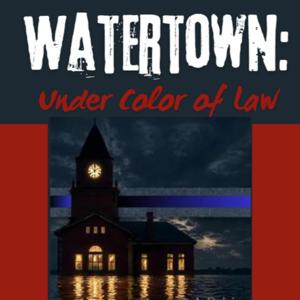
In this episode, we unpack the philosophical and structural layers of Chapter 26 from Watertown: Under Color of Law, titled “Exemption (c).” This chapter explores the chilling parallel between Antoine de Saint-Exupéry’s Le Petit Prince and the modern bureaucratic ego. We look at how a city council transforms from a representative body into an administrative maze of rigid archetypes, and how the introduction of high-tech surveillance systems contrasts sharply with an intentional, collective retreat into a vacuum of silence.
Key Themes & Discussion Points
* The “Grown-Ups” of Municipal Power
* We analyze how individuals within the municipal machine become conditioned by titles and “color of law” maneuvers to look at a citizen not as a constituent, but as a liability to be mitigated.
* Like the businessman on the Little Prince’s fourth planet who spends his days counting stars he can never touch, these officials manage procedures until the survival of the department’s image eclipses the justice it was built to serve.
* The Silent Film Approach to Governance
* A look at Council President Mark Sideris, who serves as the technical face of the Council. We discuss the strategic choice to adopt a bureaucratic “play dead” maneuver when confronted with the records of Captain Danny Unsworth and Officer Kal Mafhoum.
* By maintaining a state of stasis, the leadership risks effectively vacating the active, moral role they were elected to fill, hoping the truth will eventually lose interest and walk away.
* The Surveillance Paradox
* We explore the profound institutional irony of a city that has overseen the installation of Flock Safety cameras—high-tech Automated License Plate Readers that create a permanent, digital “fingerprint” of every vehicle’s movement.
* Watertown has engineered an AI-assisted network capable of tracking a car across the Arsenal Street corridor in seconds, yet the administration exists in a state of apparent cognitive delay when responding to human inquiry.
* The Breakdown of the Pantheon
* We break down the specific archetypes that populate the Council to maintain this tapestry of stasis:
* The Status Quo Sentinel: Uses the City Charter as a holy text to explain why change is impossible.
* The Technicality Tracker: Argues the font and format of a submittal rather than the merit of a systemic failure.
* The Aesthetic Progressive: Deeply committed to global, distant social justice, but remarkably quiet regarding the local police precinct three blocks away.
* The Aspiring Architect of Ambition: Perpetually “monitoring the situation” to avoid a hard stance that could become a liability in a primary.
DOCX
* The Neighborhood Liaison: Focuses on micro-groceries or a filled pothole to shield themselves from macro-questions of residency fraud and multi-million-dollar settlements.
* The Revolutionary Act of Hitting “Reply”
* Amidst an automated landscape of brush-offs, City Councilor Vincent Piccirilli stands out as a notable disruption.
* By performing the simple, human act of engaging with the whistleblower’s data, thanking her, and passing the information to the correct channels, his response feels like a transmission from a more grounded civilization.
Quotes Featured in This Episode
“We have an AI-assisted network capable of tracking a car across the Arsenal Street corridor in seconds, yet the administration often exists in a state of apparent cognitive delay when responding to human inquiry... They sit in the quiet glow of the council chambers, counting their stars and ignoring the sky.”
Book Club & Discussion Questions
* The Human vs. Electronic Gaze: Why is a city administration so eager to deploy automated networks to track its citizens’ movements, yet so completely paralyzed when those same citizens use open registries to track the movements of its officers?
* The Procedural Tetris: How do technical rules and public comment time limits switch from being tools of orderly governance to weapons used to make a citizen’s inquiry disappear?
* The Local Boundary: Why do “Aesthetic Progressives” find it comfortable to champion distant, macro-level human rights campaigns while actively ignoring documented civil rights liabilities inside their own municipality?
Resource Links & References
* Featured Book: Watertown: Under Color of Law by Amy M. Dubé (2026, Red Oak Media).
* Related Chapters: Chapter 25 (”Avoidance”) and Chapter 27 (”Protective Camouflage”).
This is a public episode. If you would like to discuss this with other subscribers or get access to bonus episodes, visit adminethicsindex.substack.com