
Sign up to save your podcasts
Or

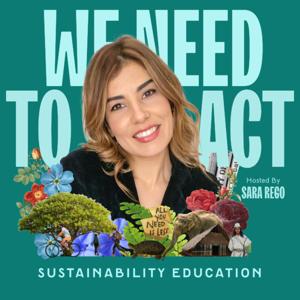


Most climate communication has failed to inspire the urgent climate action we need. What if the key to environmental change is not just science but how we talk, connect, and resonate emotionally with each other? In this episode, we explore how effective climate communication can motivate real behavior change and strengthen community engagement.
Our guest, George Marshall, a leading climate communication expert and author of the book "Don't Even Think About It: Why Our Brains Are Wired to Ignore Climate Change", explains why our brains often ignore climate change despite overwhelming evidence. You will learn how social psychology, identity, trust, and values shape perceptions and why traditional awareness campaigns often fall short. The episode reveals practical strategies to turn climate action into a shared identity, harness community values, and engage people through storytelling that inspires purpose and belonging.
We also discuss the future of climate messaging in a fragmented digital landscape. How can we overcome disinformation, polarization, and distrust to build collective action? Why is local, community-based dialogue essential and how can messages be tailored to different cultural and faith groups? George shares proven methods to foster inclusive conversations that ignite hope, agency, and meaningful environmental change.
This episode shows that climate communication is not just about spreading facts. It is about transforming how people see themselves in relation to the planet. With insights from psychology, sociology, and activism, you will discover how to raise awareness, inspire hope, and motivate real climate action in your community.
For anyone committed to making a difference, this conversation is essential listening. Learn how to use storytelling, empathy, and evidence-based strategies from George Marshall to lead with impact and drive environmental change.
Please show us your support by...
In this special episode of We Need to Act, Sara joins Podcasthon, the world’s largest podcast charity initiative, to spotlight a cause that affects us all: protecting our oceans.
Today’s guest is Fynn Hedrich, entrepreneur and founder of Ocean Pulse. After building a successful career in the meat industry, Fynn made a life-changing decision to step away and pursue more purpose-driven work. His journey led him to travel, adopt a vegetarian lifestyle, and develop a deep connection to the ocean through kite surfing—an experience that opened his eyes to the devastating impact of marine pollution.
In this conversation, Fynn shares the pivotal moments that shaped his transition, the realities of ocean degradation, and how Ocean Pulse is working to create tangible, lasting impact. Together, we explore the systems behind ocean pollution, the power of individual and collective action, and what it truly means to align your career with your values.
If you’re looking for inspiration, practical insight, and a reminder that change is possible, this episode is for you.
Don’t forget to subscribe, share, and join us in taking action for a better now.
Follow Ocean Pulse on Instagram
Please show us your support by...
In this powerful conversation, Osprey Orielle Lake—founder of the Women’s Earth and Climate Action Network (WECAN)—shares her personal journey into climate activism and the deeper values that guide her work. Drawing from decades of advocacy and her latest book, The Story is in Our Bones, Lake explores how the climate crisis is not only an environmental issue but also a reflection of deeper systemic problems rooted in greed, disconnection, and the loss of our relationship with nature.
Throughout the discussion, she highlights the critical role of women’s leadership and indigenous knowledge systems in shaping meaningful climate solutions. Lake argues that many of the answers to today’s ecological challenges can be found in indigenous worldviews that emphasize reciprocity, stewardship, and a deep sense of belonging within the natural world.
The conversation also explores how reconnecting with nature—and with our ancestral roots—can help individuals and communities rediscover purpose, resilience, and responsibility. From the importance of collective action to the power of localized communities, Lake calls for a transformation in how we see ourselves and our place on Earth.
Ultimately, this episode is a reminder that while the challenges are immense, everyone has agency. By listening to the wisdom of women leaders, honoring indigenous rights, and rebuilding our relationship with the natural world, we can begin creating the just and sustainable future our planet needs.
Episode Highlights
The climate crisis requires urgent and collective action.
Women are leading many of the most impactful climate solutions worldwide.
Indigenous knowledge provides essential guidance for sustainable living.
Greed-driven systems and disconnection from nature are at the root of many global crises.
Reconnecting with nature can support both personal and societal healing.
Localization and community resilience are crucial in a globalized world.
Understanding our ancestral roots can help guide meaningful transformation.
Everyone has a role and the agency to participate in climate solutions.
Please show us your support by...
In this episode of the We Need to Act podcast, we welcome John Pabon, greenwashing expert, author of The Great Greenwashing, consultant, and speaker.
John unpacks how greenwashing evolved from fossil fuel misinformation into a sophisticated global system of climate deception involving corporations, governments, NGOs, and even billionaires. We discuss the difference between accidental and deliberate greenwashing, why responsibility has been shifted onto individuals, and why the real climate debate is “up vs. down” — not left vs. right.
We also explore AI as a new amplifier of misinformation, the current state of greenwashing regulation, and how companies can communicate sustainability honestly without resorting to greenhushing.
Episode Highlights
John Pabon on his journey from the United Nations to exposing greenwashing
The difference between accidental greenwashing and deliberate corporate deception
How fossil fuel companies pioneered climate misinformation
Why consumers are smarter — but still up against billion-dollar influence machines
The shifting of climate responsibility onto individuals through recycling and carbon footprints
Ultra-wealthy emissions, private jets, and the “up vs. down” climate debate
The current state of greenwashing regulation in the EU, Australia, and the U.S.
The rise of AI as a potential amplifier of climate misinformation
Why companies must embrace transparency instead of greenhushing
A reminder that you don’t have to be a perfect environmentalist — just an honest and engaged one
Please show us your support by...
En este episodio conversamos con Diego Isabel La Moneda, cofundador y director de la Fundación Foro NESI, sobre la urgencia de transformar el modelo económico para que vuelva a estar al servicio de las personas y del planeta.
Desde una vocación temprana marcada por la idea de dejar el mundo mejor de como lo encontramos, Diego reflexiona sobre los límites del sistema actual, el falso dilema entre crecimiento y decrecimiento, y la necesidad de repensar cómo producimos, consumimos y vivimos. Hablamos de economía de proximidad, comunidad, salud mental, polarización política y del valor de pensar con libertad en un mundo cada vez más fragmentado.
También exploramos el papel clave de los territorios, la conexión entre lo local y lo global, y la importancia de dar voz a las nuevas generaciones para construir futuros más justos y sostenibles. Una conversación profunda y esperanzadora sobre cómo dirigir el cambio hacia modelos económicos más humanos, regenerativos y colaborativos.
Porque el cambio es inevitable. La pregunta es hacia dónde decidimos dirigirlo.
Puntos clave del episodio:
La idea de dejar el mundo mejor de como lo encontramos como motor vital y profesional.
Por qué muchas de las crisis actuales tienen su origen en un modelo económico agotado.
El falso dilema entre crecimiento y decrecimiento: cómo, dónde y para qué crecer.
La “obesidad económica”: más consumo y producción, pero menos bienestar y relaciones.
La importancia de la economía de proximidad y la comunidad frente a la soledad urbana.
Datos que conectan grandes ciudades, salud mental y pérdida de vínculos sociales.
La pérdida de libertad de pensamiento en un mundo cada vez más polarizado.
Local y global no son opuestos: hacia una globalización de la localización.
El papel clave de jóvenes, educación y liderazgo en la transformación social.
El trabajo de Foro NESI y la construcción de consensos como base del cambio sistémico.
Un mensaje final: amar, cuidar y enriquecer el alma como base de una nueva economía.
Apóyanos mostrando tu interés de las siguientes maneras:
🎧 Escucha y suscríbete al podcast We Need to Act en Spotify o Apple Podcasts.
☕ Apoya a nuestro trabajo comprándonos un café.
📲 Únete a nuestra comunidad en Instagram, LinkedIn, y YouTube
📬 Suscríbete a nuestro boletín informativo en nuestra página web.
In this episode of the We Need to Act podcast, we are honored to welcome Sara Olsvig, Chair of the Inuit Circumpolar Council (ICC), representing around 180,000 Inuit across Alaska, Canada, Greenland, and Russia.
Sara shares her experience leading the global Inuit voice in international forums such as the United Nations, the Arctic Council, and the International Maritime Organization. She explains why Inuit and Indigenous peoples must be at the center of decisions about the Arctic, climate change, biodiversity, and resource governance — guided by the principle “nothing about us without us.”
The conversation explores the Inuit relationship with nature, climate change impacts in the Arctic, environmental protection versus resource extraction, and the human rights dimensions of pollution and biodiversity loss. Sara also addresses current geopolitical tensions surrounding Greenland, the legacy of colonization, self-determination, and why there is “no such thing as a better colonizer.”
Finally, she reflects on resilience, hope, and the importance of multilateral cooperation, Indigenous knowledge, and respect for Arctic peoples in shaping a just and sustainable future.
🎧 A powerful and eye-opening conversation on climate justice, Indigenous rights, and the future of the Arctic.
Episode Highlights
Sara Olsvig, Chair of the Inuit Circumpolar Council, on representing Inuit across Alaska, Canada, Greenland, and Russia
The Arctic as a lived environment, not an empty ice desert
Why Inuit and Indigenous peoples must be part of all decisions affecting their lands and waters
The Arctic warming three to four times faster than the global average
Climate change and pollution as human rights issues
Tensions between environmental protection, resource extraction, and Indigenous livelihoods
Greenland, self-determination, and resistance to renewed colonial narratives
The role of international cooperation and multilateral institutions
Inuit resilience, adaptation, and hope for the future
Please show us your support by...
In this episode of We Need to Act, host Sara Rego sits down with Michael Kotutwa Johnson, a 250th-generation Hopi farmer and Assistant Professor at the University of Arizona, to explore how Indigenous knowledge can help address today’s climate and food crises.
Michael explains why industrial agriculture—not climate change alone—is driving soil degradation, biodiversity loss, and water scarcity worldwide. Drawing from thousands of years of Hopi farming traditions, he shares how ancestral seeds, place-based agriculture, and reciprocal relationships with the land create resilience in even the harshest environments.
The conversation also explores food sovereignty, the health impacts of losing traditional diets, the role of women in matrilineal food systems, and the Hopi Prophecy Rock—offering a powerful reflection on the choice humanity still has between excess and balance.
This episode is a call to rethink how we grow food, care for the land, and shape our collective future.
Episode Highlights
• Indigenous agricultural knowledge offers real solutions to today’s climate and food crises
• Why industrial agriculture — not climate change alone — is accelerating soil and ecosystem collapse
• How Hopi ancestral seeds have adapted over generations to thrive in arid environments
• The role of small, place-based farms in feeding the majority of the world’s population
• The connection between the loss of traditional diets and rising health crises in Indigenous communities
• What food sovereignty really means — and why it matters now
• How matrilineal systems create balance in agriculture and community life
• The Hopi Prophecy Rock and the choice humanity still has between excess and sustainability
• Why faith, hope, and planting anyway are acts of resistance and resilience
Please show us your support by...
In this enlightening conversation, Professor Jansen discusses his journey from aspiring biochemist to a dedicated educator, emphasizing the importance of teaching as a vocation. He reflects on the impact of colonialism on education and the urgent need for climate change education. The discussion also covers climate justice, the role of AI in education, and the importance of empowering communities through knowledge. Jansen encourages listeners to take local action to create meaningful change in the world.
Professor Jonathan Jansen is a distinguished professor of education at Stellenbosch University and a former president of the Academy of Science of South Africa. Educated at the University of the Western Cape, Unisa, Cornell University, and Stanford University, he is an internationally recognized scholar and leader in education. A prolific author of over 30 books, including Leading for Change and The Decolonization of Knowledge, Professor Jansen has made seminal contributions to education research, leadership, and public engagement over four decades. His work on race, leadership, and human rights has earned him major international honors, including induction into the American Academy of Arts and Sciences and multiple lifetime achievement awards.
Takeaways
Please show us your support by...
As we close out 2025 and step into 2026, this episode is a moment to pause, reflect, and look ahead.
In this special year-end wrap-up of We Need to Act, host Sara reflects on the conversations, voices, and lessons that shaped our understanding of sustainability in 2025 — and why sustainability must be reframed if we are serious about creating just, regenerative futures.
From Indigenous wisdom and ancestral knowledge to climate justice, regenerative systems, biodiversity, rewilding, and collective responsibility, this episode explores why incremental change is no longer enough. Sustainability is not a trend or a buzzword — it is about people, justice, ecosystems, and action.
This episode asks:
What did 2025 teach us about sustainability and systems change?
Why hope is not something we wait for, but something we build through action
What 2026 demands of us: community-led solutions, restoration, rewilding, and technology in service of life
How individual choices, local action, and collective responsibility create real impact
Featuring reflections inspired by conversations with Indigenous leaders, activists, educators, system thinkers, and culture keepers, this episode is an invitation to listen deeply, challenge assumptions, and choose courage over comfort.
Because we don’t just need to talk about change.
Together, we need to act.
Please show us your support by...
Este episodio es una conversación íntima con la poeta mapuche María Isabel Lara Millapán sobre memoria, lengua y territorio en tiempos de desconexión acelerada. Hablamos de cómo el mundo se ha vuelto más rápido y orientado al “hacer” más que al “ser”, y de lo que perdemos cuando nos alejamos de la naturaleza y de nuestras raíces.
María Isabel comparte cómo su poesía nace de la infancia, del duelo y de la espiritualidad, y cómo también se ha convertido en una voz de denuncia frente a las heridas de la colonización y las amenazas actuales que viven las comunidades mapuche. Exploramos el poder del mapuzungun como “la lengua de la tierra”, la importancia de las lenguas ancestrales para sostener una cosmovisión y el rol de las nuevas generaciones y la tecnología en los procesos de revitalización cultural.
María Isabel Lara Millapán es poeta mapuche, hablante nativa de mapuzungun, nacida en el lof de Chihuimpilli (comuna de Freire, Región de La Araucanía, Chile), y Doctora en Didáctica de la Lengua y la Literatura por la Universidad Autónoma de Barcelona. Actualmente es académica del Campus Villarrica de la Pontificia Universidad Católica de Chile e investigadora asociada del Centro de Estudios Interculturales e Indígenas (CIIR). Es además autora de una obra poética que entrelaza espiritualidad, territorio y resistencia.
Un episodio para quienes sienten la urgencia de frenar, escuchar a los pueblos originarios y recordar que la naturaleza, la memoria y el diálogo son claves para construir un futuro más justo y humano.
Capítulos:
Introducción y desconexión
Comienza en 0:00
El camino de María Isabel hacia la poesía
Comienza en 3:00
La importancia del mapuzungun
Comienza en 6:00
Conexiones culturales y espirituales
Comienza en 9:00
Desafíos y luchas contemporáneas
Comienza en 12:00
Revitalización y nuevas generaciones
Comienza en 15:00
Sabe más sobre el trabajo de María Isabel Lara Millapan en https://www.escritoresindigenas.cl/lara-millapan
Apóyanos mostrando tu interés de las siguientes maneras:
🎧 Escucha y suscríbete al podcast We Need to Act en Spotify o Apple Podcasts.
☕ Apoya a nuestro trabajo comprándonos un café.
📲 Únete a nuestra comunidad en Instagram, LinkedIn, y YouTube
📬 Suscríbete a nuestro boletín informativo en nuestra página web.
From the publisher's feed