If you’re anything like me, you’re a serial starter. An ideas factory. A self-professed shiny object chaser. I love the thrill of a new idea and starting a new project, but my pursuit of the next idea keeps me from seeing a lot of things through.
There’s nothing like writing those opening lines and feeling the rush of a new beginning. The problem is, if we’re constantly chasing the new things, that means we’re often neglecting the old.
Quick aside before I go on: I actually created a draft for a different article before writing this one. I titled it “On ‘The Big Idea’” and gave it the subheading “But… What does it mean?”, and I truly wish I could remember what I’d intended to write. Unfortunately, the big idea eludes me at present because a different idea drifted past the corner of my mind’s eye and, before you know it, I’d started something new.
And that’s the point of this article in a nutshell.
Part of what makes new ideas so hard to resist is their electricity. There’s a dopamine hit in the starting: the rush of possibility, the blank page, the sense that this one could be The One. But that feeling has a shelf life. It fades as the work gets harder and the ending feels further away. Before long, another idea drifts past, and the whole cycle begins again.
When we keep chasing that high, we only ever experience the beginning of things, and while the beginning is wonderful, it’s not the whole story. The harder stretches when it comes to writing — the long middle, the earned ending — are where our real development as writers happens. But when we keep skipping them, we start to convince ourselves that we can’t do them at all (and spoiler, we absolutely can).
I’ve admitted this before, so I’ve no qualms about saying it again here. As a writer, my weakness is endings. I know that. And there are a couple of reasons why…
Firstly — I don’t really like goodbyes. Not to my creative work, anyway. I like to draw the process out because there’s something comforting about knowing a piece is there to be visited when I need it. If I finish it, I’ve lost that comfort blanket.
The second reason I’m not great at endings is that I’m not very well practised at writing them. I don’t get to them often, so when I do, I’m like a deer in headlights. My confidence when it comes to wrapping things up in a satisfying bundle leaves a lot to be desired. So I shy away and start lots of things rather than ever finishing them.
The problem with starting lots of things and not seeing them through is that if we don’t complete them, they never see the light of day, and if they never see the light of day, they never get to be enjoyed in the way they were intended to.
In episode 2, we talk a lot about assigning meaning to our writing, and this is precisely why that lack of finishing matters. If our work has meaning, it also has purpose. But if we never finish something, how can it fulfil its purpose? How can we? As writers, as creatives.
And I know it’s hard to resist the call of a new idea. When it comes to you and flirts with you, and propositions you — it’s compelling, but we have to learn to say no when the timing isn’t right. That doesn’t mean you can’t revisit it later.
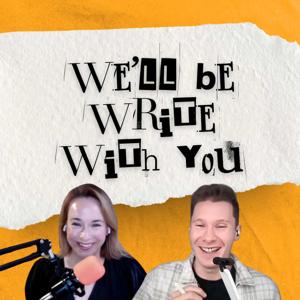
If you’re listening along to the podcast, you’ll have heard Shelly mentioning something called a commonplace book a few times. This is a small notebook you carry with you, in your pocket, in your bag, so you can capture those ideas you can’t act on right now.
It’s a great way to commit to ideas, just not… immediately. Think of it as a promise book. Your way of saying, I like you, I see you, I want to make this work, but I’m not ready just yet.
The only way to break the cycle of being a serial starter is to go ahead and finish something. If you think you’ll be missing out on that rush of starting something new, reframe it this way — every ending you write gets to be rewarded with starting something new. It becomes a win/win.
If you’re like me and can’t resist the call of the next idea, jot it down and then ask yourself, is this something I have to do now, or can it wait until I’m over the line on the piece I’m working on? There’s nothing wrong with having a queue of ideas. Some will leave the line as their patience wears thin, but the ones who stick around are going to be so much more fulfilling. Every ending you write is proof that you can write another.
How about we make a promise, you and I, that we’ll see things through a little more often? What’s one project that’s been ongoing for a while that you’re willing to commit to and get it over the line? Set aside some time for it, create a routine, commit to showing up for it, and push through that ending (remember, we can always improve it in the next draft). Then you can reward yourself with the rush of something new.
Speak soon,Liam
Find Liam on Instagram @liammarshallcreative and Shelly @doctorofstory
Thanks for reading We'll Be Write With You! Subscribe for free to receive new posts and support my work.
This is a public episode. If you would like to discuss this with other subscribers or get access to bonus episodes, visit wewillbewritewithyou.substack.com