
Sign up to save your podcasts
Or

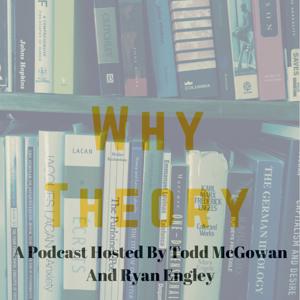

On this episode, Ryan and Todd complete their Sartre inflected trifecta of episodes by engaging his 1947 essay series What Is Literature? The hosts begin by talking about how much Sartre's method has meant to them respectively before moving on to engage the text's most famous claim: literature appeals to the reader's freedom. Sartre's diagnosis and prescription is that literary works--as opposed to poetry, music, and visual arts--must uniquely enact a praxis of "committed writing." For Sartre, committed writing is constant and conscious political awareness. Each text, according to Sartre, situates the author to their political temporal moment. The hosts discuss how this text presages his later movement toward thinking the "group-in-fusion" of the more Marxist and much less existential Critique of Dialectical Reason some thirteen years later. Ultimately, the hosts find that while many of Sartre's claims are untenable (or even abandoned by Sartre himself), the tension points his argument presents are fecund for developing the podcast's on claims about the transcendence of literary works and the importance of separating urgency from immediacy.
Quick note: to avoid any confusion, this text has also somewhat recently been reproduced as Literature and Existentialism. We refer to it exclusively by its more common and canonical name throughout the episode but it's possible some listeners may have a copy of this by a different title.
 View all episodes
 By Why Theory

4.8
578578 ratings
On this episode, Ryan and Todd complete their Sartre inflected trifecta of episodes by engaging his 1947 essay series What Is Literature? The hosts begin by talking about how much Sartre's method has meant to them respectively before moving on to engage the text's most famous claim: literature appeals to the reader's freedom. Sartre's diagnosis and prescription is that literary works--as opposed to poetry, music, and visual arts--must uniquely enact a praxis of "committed writing." For Sartre, committed writing is constant and conscious political awareness. Each text, according to Sartre, situates the author to their political temporal moment. The hosts discuss how this text presages his later movement toward thinking the "group-in-fusion" of the more Marxist and much less existential Critique of Dialectical Reason some thirteen years later. Ultimately, the hosts find that while many of Sartre's claims are untenable (or even abandoned by Sartre himself), the tension points his argument presents are fecund for developing the podcast's on claims about the transcendence of literary works and the importance of separating urgency from immediacy.
Quick note: to avoid any confusion, this text has also somewhat recently been reproduced as Literature and Existentialism. We refer to it exclusively by its more common and canonical name throughout the episode but it's possible some listeners may have a copy of this by a different title.
145 Listeners
195 Listeners

1,461 Listeners
1,583 Listeners
3,323 Listeners

216 Listeners
593 Listeners
181 Listeners

354 Listeners
377 Listeners

116 Listeners

202 Listeners
284 Listeners
287 Listeners
233 Listeners