
Sign up to save your podcasts
Or

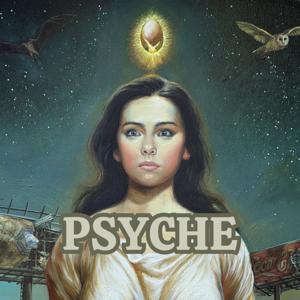

In this episode, I spend time with New Perspectives on Henry Corbin, edited by Hadi Fakhoury, and reflect on why Corbin still feels so strangely alive right now.
Corbin is difficult to place. He moves through Islamic philosophy, Suhrawardi, Shi’ism, Heidegger, Neoplatonism, angelology, psychoanalysis, esotericism, and the imaginal world, but what keeps pulling me in is his refusal to reduce spiritual reality to dogma, psychology, politics, or fantasy. He gives us a way to think about imagination not as escape, but as a form of perception.
I also reflect on some of the chapters I’m most excited by, including Charles Stang on Corbin and Neoplatonism, Joan Copjec on Corbin, Lacan, and Kiarostami, Matthew Dillon on James Hillman’s democratization of Corbin’s imaginal thinking, and Wouter Hanegraaff’s haunting portrait of Corbin’s Freemasonry, neo-Templar spirituality, and personal longing for a hidden community of the spirit.
This is less a summary of the whole book and more an invitation into Corbin as a provocation: What kind of world do we think we are living in? What kind of knowing have we allowed ourselves to trust? And does the soul still have access to images strong enough to guide it?
 View all episodes
 By Quique Autrey
5
1515 ratings
In this episode, I spend time with New Perspectives on Henry Corbin, edited by Hadi Fakhoury, and reflect on why Corbin still feels so strangely alive right now.
Corbin is difficult to place. He moves through Islamic philosophy, Suhrawardi, Shi’ism, Heidegger, Neoplatonism, angelology, psychoanalysis, esotericism, and the imaginal world, but what keeps pulling me in is his refusal to reduce spiritual reality to dogma, psychology, politics, or fantasy. He gives us a way to think about imagination not as escape, but as a form of perception.
I also reflect on some of the chapters I’m most excited by, including Charles Stang on Corbin and Neoplatonism, Joan Copjec on Corbin, Lacan, and Kiarostami, Matthew Dillon on James Hillman’s democratization of Corbin’s imaginal thinking, and Wouter Hanegraaff’s haunting portrait of Corbin’s Freemasonry, neo-Templar spirituality, and personal longing for a hidden community of the spirit.
This is less a summary of the whole book and more an invitation into Corbin as a provocation: What kind of world do we think we are living in? What kind of knowing have we allowed ourselves to trust? And does the soul still have access to images strong enough to guide it?

90,994 Listeners
15,251 Listeners
2,117 Listeners
1,461 Listeners

135 Listeners
313 Listeners
512 Listeners
583 Listeners
593 Listeners
354 Listeners
3,590 Listeners

59 Listeners

202 Listeners
287 Listeners
233 Listeners