
Sign up to save your podcasts
Or

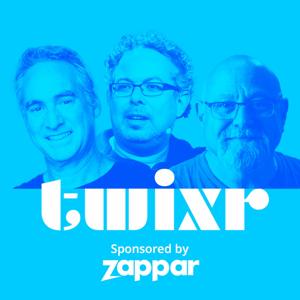

This week, Charlie, Ted, and Rony are joined by Kevin Williams — ex-Walt Disney Imagineer, location-based entertainment specialist, publisher of The Stinger Report, and the curator behind the LBE XR Zone at AWE 2026.
Kevin pulls back the curtain on why well-funded VR pioneers like The Void and Dreamscape really collapsed (spoiler: it wasn't COVID), why Sandbox VR and Zero Latency survived, and how "competitive socializing" venues are quietly becoming XR's most viable business.
Plus: Alex Karp's jaw-dropping CNBC appearance, Ted's "printer ink theory" of AI economics, and the decades-old simulation lessons that could have solved VR motion sickness years earlier.
⏱️ KEY MOMENTS
02:42 – Alex Karp's CNBC interview: AI, data & sovereignty
08:40 – Ted's printer ink theory of AI economics
09:54 – Computational autocracies & America's 250th
13:07 – Guest intro: Kevin Williams (ex-Disney Imagineer, The Stinger Report)
17:15 – Theme parks vs. LBE: where's the line?
21:16 – Glow's Magic Leap 2 graffiti experience at AWE
23:14 – Rony's story: a famous graffiti artist tries digital spray paint
25:19 – The open digital mesh problem: RP1, Niantic & who owns the map
30:10 – Why The Void and Dreamscape really failed ("one and done")
34:48 – What bowling alleys and pubs get right: competitive socializing
40:43 – Europa Park's mixed reality attractions
43:09 – Universal's Mario Kart AR ride: why less is more
46:08 – The Dracula/Frankenstein ride & the "squeezing" motion sickness fix
49:19 – Why VR makes you sick: the poisoning response & 30 years of forgotten simulation lessons
52:10 – The case for sharing knowledge before it's lost
Brought to you by Zappar and Mattercraft. Mattercraft is Zappar's web-based platform for building augmented reality experiences without an app. Find them at mattercraft.io.
Hosted on Acast. See acast.com/privacy for more information.
 View all episodes
 By Charlie Fink Productions

4.8
2626 ratings
This week, Charlie, Ted, and Rony are joined by Kevin Williams — ex-Walt Disney Imagineer, location-based entertainment specialist, publisher of The Stinger Report, and the curator behind the LBE XR Zone at AWE 2026.
Kevin pulls back the curtain on why well-funded VR pioneers like The Void and Dreamscape really collapsed (spoiler: it wasn't COVID), why Sandbox VR and Zero Latency survived, and how "competitive socializing" venues are quietly becoming XR's most viable business.
Plus: Alex Karp's jaw-dropping CNBC appearance, Ted's "printer ink theory" of AI economics, and the decades-old simulation lessons that could have solved VR motion sickness years earlier.
⏱️ KEY MOMENTS
02:42 – Alex Karp's CNBC interview: AI, data & sovereignty
08:40 – Ted's printer ink theory of AI economics
09:54 – Computational autocracies & America's 250th
13:07 – Guest intro: Kevin Williams (ex-Disney Imagineer, The Stinger Report)
17:15 – Theme parks vs. LBE: where's the line?
21:16 – Glow's Magic Leap 2 graffiti experience at AWE
23:14 – Rony's story: a famous graffiti artist tries digital spray paint
25:19 – The open digital mesh problem: RP1, Niantic & who owns the map
30:10 – Why The Void and Dreamscape really failed ("one and done")
34:48 – What bowling alleys and pubs get right: competitive socializing
40:43 – Europa Park's mixed reality attractions
43:09 – Universal's Mario Kart AR ride: why less is more
46:08 – The Dracula/Frankenstein ride & the "squeezing" motion sickness fix
49:19 – Why VR makes you sick: the poisoning response & 30 years of forgotten simulation lessons
52:10 – The case for sharing knowledge before it's lost
Brought to you by Zappar and Mattercraft. Mattercraft is Zappar's web-based platform for building augmented reality experiences without an app. Find them at mattercraft.io.
Hosted on Acast. See acast.com/privacy for more information.

30,666 Listeners

43,528 Listeners
9,622 Listeners
3,717 Listeners
3,150 Listeners
378 Listeners

111,948 Listeners

56,508 Listeners

2,534 Listeners
365 Listeners
5,530 Listeners
203 Listeners
703 Listeners

19,524 Listeners
682 Listeners