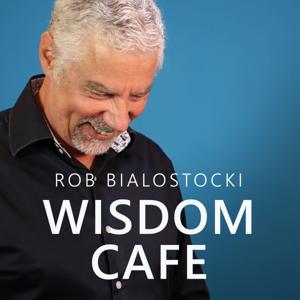
Wisdom Cafe
Download on the App Store

Wisdom Cafe episodes

  • Dealing with Parental Lament

    INTRO

    The empty nest is a hallmark feature of your middle-later years. It can be tough for many. You might ask, “Where did they go?” In this episode, we look at how to come to terms with this, and your perceived parenting mistakes. We also explore the question, “Where did I go?!”

    WHAT WE TALK ABOUT

    • The natural tendency to ask yourself what you were like as a parent
    • Your children turning out differently from how you planned
    • We have less control than we think
    • We do have influence, but there are many others as well
    • Three children, three very different people
    • Each person processes differently
    • Wrapping your identity up in your children
    • Too much identity - but whose?
    • Being marooned by yourself
    • Having family ideals that are unrealistic
    • Saying: “There is no should, there is only is.”
    • You can easily come across as projecting onto your children.
    • Asking ‘What do I do wrong?
    • Accepting the sadness and grief that comes from your kids ignoring your advice
    • Psychological research suggests that DNA has the upper hand
    • Google search: Nurture vs Nature recent findings
    • Book: Blueprint by Robert Plomin (How DNA makes us who we are)
    • Fostering your selfhood in your middle years
    • You are fully absolved right now!
    • Accept the past
    • Live in the now
    • Free yourself and your children to be as they are.

    HOW TO WORK THIS INTO YOUR LIFE

    • Get and read Robert Plomin’s book (although it can be quite scientific  at times)
    • Think about what you perceive as parenting mistakes you’ve made
    • Write them down and then look at that list
    • Accept that it’s in the past and you did the best you could at that time
    • You’re different now
    • What would your adult children want from you these days?
    • Resolve to give them that in your best way possible
    • Rest of the time? Create the life you want from now on.
    • What does that look like?
    13 min
  • Your 1-Minute Call 10 Years Ago

    INTRO

    We’d all like to be able to turn back the clock. Why? Because then we’d do things differently that would give us better outcomes than we’ve had. What would you change? In this episode, we zero in on that and ask, “Why not use that insight to ensure we have a better next 10 years then?”

    WHAT WE TALK ABOUT

    • Most people would want more money
    • Some might have relationship advice
    • Giving yourself career advice
    • Advising yourself - what would you say?
    • Our hopes reveal our values
    • The value of extracting what’s important
    • Saying - “We’re not too good at thinking about what’s important in the future, but we easily recognise it from the past.”
    • Use your insights from the last decade to shape your next
    • For me:
      • Creating more time for close friendships
      • Improving your financial wisdom
      • Stop doing work you don’t enjoy sooner
    • What is your advice to yourself?
    • In 10 year’s time, what will you    

    HOW TO WORK THIS INTO YOUR LIFE

    Clarifying your values and what’s most important to you is a core exercise for living a life that matters to you from hereon.

    One good way of doing that is to reflect on what you don’t like from the last 10 years, and turn it around into a positive commitment.

    1. Take some time to evaluate the highs and lows from your last decade.
    2. Identify what you like that you want more of.
    3. Identify what you didn’t like.
    4. Think about why that is the case.
    5. What’s the underlying value that that situation did not support?
    6. Ask yourself, “So, based on that, what commitment should I make to how I want to live my next 10 years?”
    7. Repeat the exercise as many times as necessary to clarify your values.
    8 min
  • Getting Real - Offering Connection Rather Than Content

    INTRO

    We’ve become consumers of content on a massive scale. What’s behind that? While it might be curiosity, it’s also likely that we’re trying to meet some deeper needs we have. In this episode, we look at whether we all need more content in our lives, or whether we need, and can offer, something far more useful. Something more…human.

    WHAT WE TALK ABOUT

    • There’s an avalanche of content out there
    • The new habit of scrolling
    • Getting real in today’s noisy world
    • We all want others to listen to, and engage with us
    • The Wisdom Cafe podcast as a platform for open, real ideas
    • Share out of who you are, not what you know
    • Our new rescue dog called Ava
    • She failed her conservation dog training!
    • Being open to meeting new people
    • Being more authentic
    • Noticing what we have in common with others, not what’s different
    • Similarities pave the way for connection
    • People respond to care
    • People are thirsty for “I see you” connection
    • We all want to be noticed
    • We love to offer others content
    • Connection is better than content
    • Being more real is more powerful
    • Helping others be authentic is very freeing for them
    • Covid-19 has forced us into each other’s real lives more
    • The legion of success messages out there
    • How we avoid showing weakness
    • Vulnerability is ok
    • Let’s get real, or let’s not play.

    HOW TO WORK THIS INTO YOUR LIFE

    • Give yourself permission to just be you.
    • Ask yourself, “Who am I really?”
    • “What do I really think about this?”
    • “Do I really want to do this?”
    • “Is this for me, or not?”
    • Give yourself permission to say ’No.’
    • If you don’t want to, say ‘no thanks.’
    • If you don’t agree, say ‘my opinion is a bit different.’
    • If you would prefer something else, say so.
    • Gently, but with clarity.
    • Be more real, and you can expect others will more likely be as well.
    14 min
  • Letting Go of the Control You Don't Have

    INTRO

    Wise people say we have little control over most of the aspects of Life. And that letting go of any notion of control can leave us free to enjoy Life more and spend our precious time and energy on what we do control. And what is that? In this episode we explore control, rivers, why the World doesn’t care about us, and what we can indeed control. Mostly. Well, sort of. 

    WHAT WE ALK ABOUT

    • Learning great ideas from multiple sources and everyday life
    • Send your ideas to [email protected]
    • Stoic philosophy is about doing life well - Zeno
    • Quote: “Don’t ask for things to be as you would like them to be, but wish for them to be as they are, and you will be alright.” (Epictetus)
    • Wasting energy by wishing for things you cannot control
    • Reality dictates life
    • Almost everything is not within your control
    • Why it’s a dumb idea to try to divert a river
    • Letting go can bring freedom and a lightness
    • It’s you that needs to adjust
    • Epictetus was not a fatalist
    • Accepting reality allows you to cease wasting your time and energy
    • Freeing up your mind and resources for what you want instead
    • You control your attitude, thoughts, talk and behaviour
    • According to neuroscience, maybe not even much of that!
    • Quote: “Thinking is just the chatter of the brain” (Bialostockus)
    • Behind your actions are your decisions
    • The power of choosing actions consciously
    • If we weren’t here, nothing would change in the World
    • The World is not here for us
    • What we do in the World matters and is up to us   
    • Send me your ideas, comments, or questions to either [email protected] or on Facebook @wisdomcafewithrob

    HOW TO WORK THIS INTO YOUR LIFE

    • Give up your plans for World domination - it’ll never happen.
    • Pay attention to your thoughts and notice whether they reflect physical or natural reality.
    • E.g. You may be thinking, “This is going to work out well.” 
    • It may not.
    • Try to re-work your self-talk. Instead of the above, try, “I hope this will work out well, I’m doing what I can to make it succeed.”
    • Better.
    • If it does, you can say things like, “Cool. That went well.”
    • If it doesn’t, you can say things like, “Damn! Something didn’t work out. Mind you, it happens. I wonder what it was?”
    • Each night, to cultivate reality-based living, you could say to yourself, “I am not in control of most of Life, but I’m gonna try my best to live well. Quod for feret, ferrous aqua animo.”
    • That’s Latin for “Come what may, we will meet it with courage.”
    • Very true.


    11 min
  • More Freedom by Downsizing After 50

    INTRO

    Do you wish you had less stuff? Less clutter? Less to deal with? More time to spend on what you really want? Many people would love to lead a clearer, simpler life in their middle age and beyond. In this episode, we talk about how you can achieve that, but warning: It will require some work. But the payoff is fantastic. 

    WHAT WE TALK ABOUT

    • The common garage scene
    • Moving is a great opportunity to downsize your stuff
    • Story: The infernal knitting machine I couldn’t shake
    • How we accumulate
    • Why we keep stuff we no longer use
    • Wanting less as you get older
    • Wanting life to be simpler in midlife
    • Website: The Senior Nomads - https://seniornomads.com
    • Website: Allan Karl: www.allankarl.com
    • Quietly wishing you were more free
    • Lightening your physical load
    • Saying: “Have fewer possession-commitments.”
    • Paperwork - you don’t need most of it
      • Digitising your paper
      • Stopping paper mail coming in
      • Creating a naming taxonomy
    • Clothes - you don’t need as many as you think
      • Unnecessarily high-priced clothes
      • The economics of having a few good things vs many average things
      • Freeing up your money
    • Stuff in cupboards - Freeing up your space, time and energy
      • Keeping too many items = more to deal with
      • Using the three-box system
      • How to deal with too many books
    • Gaining a sense of lightness and freedom
    • Website: www.TheMinimalists.com - keep what you truly enjoy, ditch the rest
    • The psychology trick to getting on top of things - blocks, not whole categories.

    HOW TO WORK THIS INTO YOUR LIFE

    Paperwork

    • Get a scanner to digitise your paper
    • Use a consistent naming format
    • Put aside a block of time to scan, save and toss each week

    Clothing

    • Choose some cheaper clothes for mucking around in
    • Decide on ‘If I buy one thing in, I take one thing out’
    • Doesn’t fit, no longer wanted or no good anymore, take.it.out

    Stuff in cupboards

    • Choose one cupboard to sort, and sort it until it’s finished.
    • Don’t try to take on a whole room, garage, or very large category like ‘all my clothes.’
    • Spend one block of time, do the job, then stop and treat yourself. 

    Use the power of imagination: Picture the end goal often - your paperless office or kitchen bench, your tidier wardrobe, and your clearer cupboards and garage. Imagine also, how that feels. This will engage more of your sense which makes achieving the outcome more likely. No woo-woo here, just science.

    SHARE & CONNECT

    Please share this podcast with others and on your social media

    And do leave a comment, send me a message, or email me with anything you'd like to share, or any question you'd like an opinion on.

    Love to hear from you and am always happy to help.

    Regards

    Rob


    Support the show (https://www.buymeacoffee.com/wisdomcafe)

    21 min
  • When Silence is Power

    INTRO

    Having the answer, being right, and explaining the best way is not always the best way. Sometimes, remaining silent is a much more powerful mode in life, leadership and legacy. In this episode, we explore how not saying something can say so much more than opening your mouth and talking like the knowledgeable one. And, as always, Rob is first in line for the lesson.

    WHAT WE TALK ABOUT

    • While talking is fundamental to our humanity it also has two sides to the coin
    • Times when talking is a positive thing
    • The downsides of talking 
    • Saying: “The wise person knows when to talk, and when not to.”
    • Situations when talking is a no-brainer
    • Situations when talking won’t add value
    • Being wrong is not always wrong
    • Robbing others of their thinking and growth
    • The skill at the heart of coaching
    • When your silence holds more power
    • Self-restraint
    • How to grow strength and gentleness
    • Saying: “Gentleness is strength under control.”
    • The paradox of when looking good looks bad
    • Question: Is it more powerful to say, or not say?
    • Projection versus invitation
    • Not saying is very difficult
    • To be wise needs us to learn to master silence.

    HOW TO WORK THIS INTO YOUR LIFE

    • The very next conversation you have, actively notice your tendency.
    • Do you want to talk over the other person? 
    • Do you want to correct them, be right?
    • Ask yourself, does it matter? What’s the greater good here?
    • If it is to restrain yourself and remain (mostly) silent, then choose to do so.
    • Once the conversation is finished, reflect.
    • Was that an improvement, or not so much?
    • What better outcome was achieved for you, for them and for the issue?
    • If you feel this is worth pursuing further, make it a campaign for every conversation you will have for the next 24 hours.
    • Repeat.

    SHARE & CONNECT

    Please share this podcast with others and on your social media

    And do leave a comment, send me a message or email me with anything you'd like to share, or any question you'd like an opinion on.

    Love to hear from you, and always happy to help.


    Regards
    Rob

    11 min
  • The Stoics Were Right - Cultivating Virtue in Your Life

    INTRO
    You know when you see it, someone with great character. But what is character, exactly? In this episode, we look at the ideas of the Stoics and realise that although they were around millennia ago, they were right all along. Cultivating virtues is the key to being a better person and living a better life.

    WHAT WE TALK ABOUT

    • Stoicism is not about the stiff upper lip
    • Stoicism is a philosophy from around 300BC onwards
    • The underlying principles are to be real, be virtuous, and grow wise
    • The philosophy of today’s world is wrecked
    • Four main types of virtues are courage, moderation, justice, and wisdom
    • Sometimes you need to push the boundaries and sometimes you need to pull back
    • Wisdom tells the difference
    • The Stoics suggested we actively cultivate these virtues
    • Wandering and wondering is a good way to think and talk
    • Stoics included:
    • Zeno
    • Seneca
    • Marcus Aurelius
    • Epictetus
    • Don’t become a Stoic, use the principles in your own life
    • Book: The Daily Stoic by Ryan Holiday and Stephen Hanselman
    • Website: dailystoic.com
    • Book: Meditations by Marcus Aurelius
    • Ideas should be cumulatively absorbed over time
    • Saying: “Repetition is the mother of skill” - Rob Bialostocki
    • I regret that I was so  judgemental when I was younger
    • Compassion is a better mindset
    • What you do on a daily basis is what your life’s like
    • Do it because that’s what you do
    • Living an examined life - Socrates
    • Wisdom is context-dependent

    HOW TO WORK THIS INTO YOUR LIFE

    • Do a periodic self-check
    • Schedule it into your life - weekly or monthly
    • Ask yourself, “How well am I doing?” in relation to virtues in your life
    • Ask with your head, listen with your heart
    • My list:
      • Kindness
      • Compassion
      • Fairness
      • Integrity
      • Generosity

    PLEASE SHARE THIS EPISODE
    To help grow the podcast listenership, I'd appreciate it if you would share this episode, or the whole podcast, with others you think would enjoy it. 

    Or just email me their name and email address and I'll invite them directly.

    17 min
  • The Thing and the Thought

    INTRO

    In this episode, we look at how our mind fuses thoughts, feelings and reality so that it can cause us some challenges in how we see things, and what we believe. People who want to develop greater mastery in their lives, realise the key is to separate out the elements of a situation, and see things more clearly.

    SUBSCRIBE
    To make sure you get notified of new episodes, use the buttons provided to listen on your favourite podcast platform.

    SHARE
    To help me spread the wisdom around to those who might like it, please consider sharing this podcast with others via social media or directly via email. Thank you!

    SUPPORT
    We have great pleasure in confirming that there are NO ads on this podcast. But we do need support to fund the various tools and platforms we use. Please consider supporting me through the SUPPORT THE SHOW link/button. Thank you doubly!!

    --------------------------------

    WHAT WE TALK ABOUT

    • The principle of the thing vs the thought
    • How our brain fuses together elements of a situation
    • We are sense-making machines and how that affects our perceptions
    • How judgements colour our experience
    • Learning to recognise our tendencies and choose how we feel
    • The freedom that comes from reality-based living
    • How to be more tolerant and accept differences
    • “There is no such things as bad weather, just bad clothing.” (Anon)
    • How to have more free attention and energy
    • Breaking through to a more present awareness
    • Meditation is a great way to increase presence and reality
    • You are thinking a lot, and your brain can’t help it
    • Exercising better choices
    • Using the ‘right-hand’ and ‘left-hand’ technique to seperate thoughts from things
    • Reactive behaviour versus proactive.

    HOW TO WORK THIS INTO YOUR LIFE

    • Cultivate the ability to notice yourself making unnecessary judgements
    • When you hear yourself, or feel yourself being negative (or overly positive) pause.
    • Hold out your left hand and in your imagination place the thing/person/event into your hand
    • Say something like, “OK, this is the (insert the object/subject) and it is as it is.”
    • Hold out your right hand and in your imagination place the thing/person/event into that hand
    • Say something like, “And this is what I’m adding to the reality. I am thinking/saying/feeling (insert). However, that is seperate to the reality.”
    • This will help you become more aware of what you’re adding to the ‘thing.’
    • Then you have put yourself in a position whereby you are aware of the two elements.
    • You can then alter whether, and what, you add.
    • You’ll notice a gradual ability to hold something without judging it any further.
    • You’ll notice you’ll become more tolerant, less reactive, more real.

    Support the show (https://www.buymeacoffee.com/wisdomcafe)

    13 min
  • Confessions of an Imperfect Life Coach

    INTRO
    Life coaches should have their act together, right? After all, they offer support to others on how to live well. They hold themselves up as someone to possibly emulate. In this episode, I open up about my own struggles to focus and follow through on one thing. Maybe, it’s because I don’t fit well into a standard box? And we look at imposter syndrome, how to live large, and stories of ordinary people doing cool things to make a difference.

    SUBSCRIBE
    Use the links provided to subscribe so you can get notified of new episodes.

    SHARE
    To help me grow the audience, and share the ideas more widely, please share this with people you think will enjoy it.  Use the social links provided. And thank you!

    --------------------------------

    WHAT WE TALK ABOUT

    • People in the digital world try to create a ‘brand’
    • The struggle to nail down the ‘one thing’ you do
    • Is having 13 irons in the fire, worse than only 2?
    • Life coaches and mentors experience the imposter syndrome
    • Showing confidence doesn’t mean you always are confident
    • Self-doubt may be built into your DNA
    • It’s also reinforced by your upbringing
    • You can walk with it successfully
    • “What if I’m wrong?”
    • “What if no one wants to know?”
    • The tendency to place more weight on other’s ideas
    • Education involves absorbing other’s ideas
    • The fear of having your own ideas rejected
    • Accepting who you are now as well
    • Society isn’t warm to being vulnerable or failing
    • Being a better person - you go first
    • We all have a lot of potential
    • Maybe we don’t all have the same level of potential
    • We can waste a lot of it, though
    • Having a direction for personal growth, not a destination
    • “Expand all the way to the end” (RB)
    • Living a larger life - connection with others
    • Our lives are also not just our own
    • We live in various communities
    • Reconnecting with my birth mother
    • Falling in love with my Dad again
    • “The better the quality of our connections…the larger our lives can be.” (RB)
    • The practical elements of better connecting
    • Make more of a difference
    • John Wood
    • The Minimalists
    • Brené Brown
    • Chefs for Compassion
    • Sea Cleaners
    • Richard in Budapest
    • Rob’s Solo world trip in 2016
    • Become more aware
    • Start doing small things

    How to Work This Into Your Life

    1. Accept that it’s OK not to be perfect
    2. Accept that you are a combination of all your strengths, weaknesses, ups, and downs.
    3. All of it is you.
    4. Try not to teach or lead out of what you know.
    5. Instead, teach or lead out of who you are.
    6. The real you offers more value than a constructed brand or curated expertise.
    7. Be appropriately honest with those you work alongside, serve through your work, or live with.
    8. Show your questions and doubts as part of the mix of your offer.


    19 min
  • Welcome to Wisdom Cafe

    There are hundreds of thousands of podcasts out there, and yet here you are! Thank you. And welcome. In this short introduction, you get to 'meet' the host of Wisdom Cafe, Rob Bialostocki, and get a feel for the style of the podcast.

    We think you'll like it.

    Rob is a New Zealander, in his late-midlife, who tells extremely good Dad-jokes, loves dogs, books, fly-fishing, and his wife. Not in that order. He was a professionally-trained radio broadcaster and then spent 25 years in corporate training and development. He still coaches and mentors people in living a life, and doing work, that matters.

    Email him about anything at [email protected]

    2 min

About Wisdom Cafe

From the publisher's feed

Simple, practical ideas for navigating life with more clarity, freedom and purpose. Join experienced New Zealand broadcaster, speaker and mentor Rob Bialostocki as he shares ideas, insights and…