
Sign up to save your podcasts
Or



Based on Podcast App listening data
Kirk Bloodsworth, an honorably discharged former Marine, was the first person sentenced to death and subsequently exonerated by DNA testing. He was 22 years old in 1984 when he was arrested for the rape and murder of nine-year-old Dawn Hamilton and sentenced to death in Baltimore County, MD. Kirk was arrested based on an anonymous call telling police that he was seen with the victim that day and an identification made by a witness from a police sketch shown on television. The description of the perpetrator was a 6 ft, 5 in tall white man with curly blond hair, a bushy mustache, skinny, and tan. Kirk was 6 ft, had red hair, and was well over 200 pounds. Though there was no physical evidence connecting him to the crime, Kirk Bloodsworth was convicted based on the testimony of five witnesses who placed him either with the victim or near the scene of the crime. The Maryland Court of Appeals overturned his conviction in 1986, finding that the prosecution had illegally withheld exculpatory evidence from the defense, and he was then retried, convicted again, and sentenced to two life terms. In the early 1990s, Kirk learned about DNA testing and the opportunities it could provide to prove his innocence. The prosecution finally agreed to DNA testing for Kirk’s case in 1992. The victim’s shorts and underwear, a stick found at the scene, and an autopsy slide were compared against DNA from the victim and Kirk. The DNA lab determined that testing on the panties excluded Kirk, and he was released from prison in June 1993 and pardoned in December 1993. Kirk Bloodsworth had spent almost nine years in prison, two of those years facing execution. He is now a published author and was instrumental in Maryland’s abolishment of the death penalty. The introduction of the Innocence Protection Act of 2003 established the Kirk Bloodsworth Post-Conviction DNA Testing Program, a program that helps states defray the costs of post-conviction DNA testing.
https://www.wrongfulconvictionpodcast.com/with-jason-flom
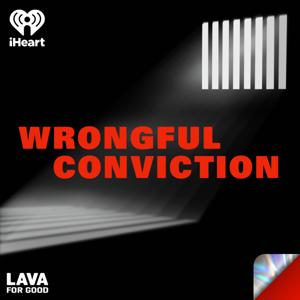
Wrongful Conviction is a production of Lava for Good™ Podcasts in association with Signal Co. No1.
We have worked hard to ensure that all facts reported in this show are accurate. The views and opinions expressed by the individuals featured in this show are their own and do not necessarily reflect those of Lava for Good.
See omnystudio.com/listener for privacy information.
On November 16, 1983, a 28-year-old woman was attacked and sexually assaulted by an unknown male as she was walking home from work in Lowell, MA. The following evening, a 23-year-old woman was attacked less than one hundred yards away from the site of the first assault. Even though no biological evidence could link him to any of the crimes, Dennis Maher, who was a sergeant in the United States Army at the time, was arrested and charged with both attacks, as well as an unsolved rape from the previous summer. He was convicted based on eyewitness misidentifications made by the victims, all of whom identified him in photographic lineups. Dennis Maher is joined by attorney Alex Spiro and New England Innocence Project Director of Communications Hannah Riley.
Wrongful Conviction is a production of Lava for Good™ Podcasts in association with Signal Co. No1.
We have worked hard to ensure that all facts reported in this show are accurate. The views and opinions expressed by the individuals featured in this show are their own and do not necessarily reflect those of Lava for Good.
See omnystudio.com/listener for privacy information.
Jon-Adrian “J.J.” Velazquez was convicted of second-degree murder and sentenced to 25 years to life for the 1998 shooting death of Albert Ward, a retired police officer who owned and operated an illegal gambling spot in Harlem. Ward was shot and killed in the course of a robbery. Following the robbery, witnesses provided a description of the gunman as “a light-skinned black male with dreadlocks,” which prompted the search for “Mustafa,” a known drug dealer who fit the description. After learning that he was being sought by the police, J.J. attempted to vindicate himself of the allegations by voluntarily subjecting himself to a lineup. Out of nine eyewitnesses present at the scene of the crime, three identified him at the lineup. Despite being a light-skinned Latino who had never had dreadlocks and despite providing phone records which corroborated his alibi and showed that he was talking to his mother during the time of the crime, J.J. Velazquez was sentenced to 25 years to life even though there was no physical evidence linking him to the crime. Since then, two of the witnesses have recanted, and the other eyewitness has expressed serious doubts. J.J. and his alibi witness have both taken lie detector tests and have passed them. He is currently in his 21st year, and Jason Flom interviews him from inside the walls of Sing Sing Correctional Facility for this special edition of Wrongful Conviction.
https://www.wrongfulconvictionpodcast.com/with-jason-flom
Wrongful Conviction is a production of Lava for Good™ Podcasts in association with Signal Co. No1.
We have worked hard to ensure that all facts reported in this show are accurate. The views and opinions expressed by the individuals featured in this show are their own and do not necessarily reflect those of Lava for Good.
See omnystudio.com/listener for privacy information.
Everton Wagstaffe was wrongfully convicted of the rape, kidnapping and murder of 16-year-old Jennifer Negron in 1993. Everton’s conviction was based primarily on the testimony of Brunilda Capella, a 25-year-old, drug-addicted sex worker who claimed that she had seen Everton pull the victim into a Buick Skylark driven by Reginald Connor. It was later revealed, however, that the car had been parked at a church during the time that Capella claimed she had witnessed the kidnapping. The owner of the car testified that she had told the police this fact prior to Everton’s conviction, but the police didn’t write any reports of the interview. It was also revealed that Capella had been regularly providing information to the police at that time—remarkably, she testified for the prosecution in 20 cases. The Innocence Project consulted on the case and aided in testing foreign hairs found on the victim’s body for DNA, which revealed that the hairs had not come from Everton or Reginald Connor. The ruling to dismiss their charges, however, was primarily based on a revelation that prosecutors had buried evidence that Everton himself uncovered that police had targeted him before even speaking with the informant who provided critical testimony against the two men. In 2014, his conviction was ultimately vacated after serving 23 years in prison.
https://www.wrongfulconvictionpodcast.com/with-jason-flom
Wrongful Conviction is a production of Lava for Good™ Podcasts in association with Signal Co. No1.
We have worked hard to ensure that all facts reported in this show are accurate. The views and opinions expressed by the individuals featured in this show are their own and do not necessarily reflect those of Lava for Good.
See omnystudio.com/listener for privacy information.
Peter Pringle was wrongfully convicted of an armed robbery and the murder of two police officers during a bank raid in Ireland in 1980. He was the last person sentenced to death in Ireland, and just days before a noose was to be tied around his neck, Peter learned that Ireland’s president had commuted his sentence to 40 years without parole. Peter then immersed himself in legal texts and effectively became a jailhouse lawyer. He discovered that the confession used by the prosecution was written down in a police officer’s notebook prior to his interrogation about the killings. Serving as his own counsel, he eventually convinced the Court of Criminal Appeal to quash his conviction in 1995. Today, Peter is a human rights and anti-death penalty activist and together he and his wife, Sunny Jacobs, also a death row exoneree, run the Sunny Center in Ireland where they provide counseling to other exonerees.
https://www.wrongfulconvictionpodcast.com/with-jason-flom
Wrongful Conviction is a production of Lava for Good™ Podcasts in association with Signal Co. No1.
We have worked hard to ensure that all facts reported in this show are accurate. The views and opinions expressed by the individuals featured in this show are their own and do not necessarily reflect those of Lava for Good.
See omnystudio.com/listener for privacy information.
Sedrick Courtney was wrongfully convicted of robbery with a firearm and first-degree burglary in Tulsa, OK. On April 6, 1995, two armed men wearing ski masks broke into an apartment in Sedrick’s building complex and brutally beat a female victim, blindfolded her, and forced her to lie on the floor as they ransacked her home. The victim suffered traumatic brain injury because of the attack, but she positively identified Sedrick Courtney as one of the assailants, claiming she recognized his voice. The second assailant was never identified. Even though his sister and cousins corroborated his alibi, Sedrick was sentenced to 30 years and served 15 years before the Innocence Project was able to conduct DNA testing on hairs from the crime scene, proving that none of the hairs from the ski masks matched him. He was exonerated on July 19, 2012. In this episode, Sedrick Courtney appears with his wife, Tina, whom he met in prison when she was working as one of the guards.
https://www.wrongfulconvictionpodcast.com/with-jason-flom
Wrongful Conviction is a production of Lava for Good™ Podcasts in association with Signal Co. No1.
We have worked hard to ensure that all facts reported in this show are accurate. The views and opinions expressed by the individuals featured in this show are their own and do not necessarily reflect those of Lava for Good.
See omnystudio.com/listener for privacy information.
In this special episode, Jason Flom talks to Amanda Knox, Jarrett Adams and Jeff Deskovic about what it's like for an innocent person who is forced to spend the holidays in prison. Amanda Knox was convicted of the murder of a 21-year-old British exchange student, Meredith Kercher, who died from knife wounds in the apartment she shared with Amanda in Perugia, Italy in 2007. Amanda and her then-boyfriend, Raffaele Sollecito, were both found guilty of killing Kercher, receiving 26- and 25-year prison sentences, respectively. Their convictions were subsequently overturned in 2011 and Amanda was released from prison after serving four years. In early 2014, the Italian Supreme Court ruled that they should both stand trial again and she and Sollecito were re-convicted. Finally, in March 2015, the Italian Supreme Court overturned both murder convictions, ending their eight-year ordeal. Jarrett Adams was 17 years old when he was wrongfully convicted of sexually assaulting a young woman at UW-Whitewater in 1998. He was sentenced to 28 years in prison and spent close to a decade incarcerated before his conviction was reversed with the help of the Wisconsin Innocence Project on the basis that trial counsel had been ineffective for failing to present the testimony of a critical witness. Jarrett graduated from Loyola Law School in May 2015 and is currently practicing law in New York and advocating for criminal justice reform. Jeffrey Deskovic was a 16-year-old high school sophomore when he was wrongfully convicted of the rape and murder of a high school classmate in 1991. Although hair and semen samples taken from the scene did not match Jeff’s DNA, he aroused the suspicion of detectives by weeping openly at the victim’s funeral. After six hours of intense interrogation, Jeff confessed to the crime, though he later contended in a lawsuit that police investigators had fed him the details of the killing and promised him that if he admitted guilt, he would not go to prison but would instead get psychiatric treatment. With the help of The Innocence Project, Jeff Deskovic was exonerated and released in 2006 after DNA analysis linked convict Stephen Cunningham to the crime and Cunningham confessed.
https://www.wrongfulconvictionpodcast.com/with-jason-flom
Wrongful Conviction is a production of Lava for Good™ Podcasts in association with Signal Co. No1.
We have worked hard to ensure that all facts reported in this show are accurate. The views and opinions expressed by the individuals featured in this show are their own and do not necessarily reflect those of Lava for Good.
See omnystudio.com/listener for privacy information.
Michael Morton's nightmare began in 1986, when his wife Christine was bludgeoned to death in their bed in Austin, TX. Despite any evidence pointing to his guilt and tremendous evidence showing his innocence, he quickly became the prime suspect. At his trial, Williamson County District attorney Ken Anderson painted a picture of him as a violent, sexually depraved murderer who showed no remorse for his crime and he was sentenced to life in prison. Evidence was withheld that may have cleared him, including statements from his child. Finally, after 25 years, a blue bandana found at the scene was tested for DNA evidence. The test not only proved the innocence of Michael Morton, it yielded a hit on a known felon who has since been charged with the murder of Christine Morton, along with the murder of another young woman two years later. After spending nearly 25 years in prison for the murder of his wife, Michael was released on October 4, 2011, and officially exonerated in December 2011.
https://www.wrongfulconvictionpodcast.com/with-jason-flom
Wrongful Conviction is a production of Lava for Good™ Podcasts in association with Signal Co. No1.
We have worked hard to ensure that all facts reported in this show are accurate. The views and opinions expressed by the individuals featured in this show are their own and do not necessarily reflect those of Lava for Good.
See omnystudio.com/listener for privacy information.
In September 1986, 34-year-old Douglas Dilosa was found bound with rope in his Jefferson Parish, LA home. His wife was found strangled upstairs. Dilosa, who is white, told police that he was awakened by a noise, and when he went downstairs to investigate, he was beaten and bound by two black men. Police suspected that Dilosa, who was in financial trouble, had murdered his wife for the insurance money. A jury convicted Dilosa of second-degree murder and he was sentenced to life in prison without the possibility of parole.
To learn more and get involved, visit:
https://www.first72plus.org/
Wrongful Conviction is a production of Lava for Good™ Podcasts in association with Signal Co. No1.
We have worked hard to ensure that all facts reported in this show are accurate. The views and opinions expressed by the individuals featured in this show are their own and do not necessarily reflect those of Lava for Good.
See omnystudio.com/listener for privacy information.
Richard Rosario was convicted of a murder that took place in the Bronx on June 19, 1996, based on the testimony of two witnesses who had picked his picture out of a book of police photos. There was no other evidence linking him to the crime, and Richard did not know the victim or the witnesses. On June 30, 1996, after he heard that the authorities were looking for him, he got on a Greyhound bus in Florida, arrived in New York the next day, and voluntarily contacted the police. He named more than a dozen people in Florida who he said would vouch for him including a pastor and a sheriff’s deputy. But the police did not follow up, and prosecutors charged him with murder based on the statements of the two eyewitnesses. Richard was convicted and sentenced to 25 years to life. When Richard challenged his conviction in state court in 2004, seven more witnesses appeared to say he had been in Florida around the time of the murder. He was released in 2016 after serving 20 years when the Bronx District Attorney’s office concluded that Richard did not receive a fair trial.
https://www.wrongfulconvictionpodcast.com/with-jason-flom
Wrongful Conviction is a production of Lava for Good™ Podcasts in association with Signal Co. No1.
We have worked hard to ensure that all facts reported in this show are accurate. The views and opinions expressed by the individuals featured in this show are their own and do not necessarily reflect those of Lava for Good.
See omnystudio.com/listener for privacy information.
From the publisher's feed
Hosted by celebrated criminal justice reform advocate and founding board member of the Innocence Project Jason Flom, Pulitzer prize-winning podcast host and producer Maggie Freleng, and Emmy…
Ranked by our users in the last 21 days
9,733 Listeners

15,105 Listeners

11,737 Listeners

10,568 Listeners
8,520 Listeners

4,152 Listeners

7,421 Listeners

22,198 Listeners
6,747 Listeners

4,319 Listeners

6,208 Listeners
48 Listeners

3,383 Listeners

5,058 Listeners

130 Listeners

422 Listeners
1,223 Listeners
206 Listeners
463 Listeners

59 Listeners