
Sign up to save your podcasts
Or

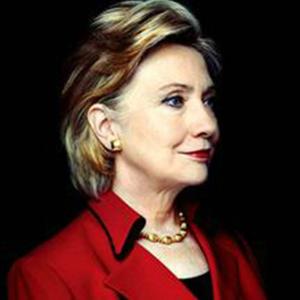


“What you don’t learn from your mother, you learn from the world” is a saying I once heard from the Masai tribe in Kenya. By the fall of 1960, my world was expanding and so were my political sensibilities. John E Kennedy won the presidential election, to my father’s consternation. He supported Vice President Richard M. Nixon, and my eighthgrade social studies teacher, Mr. Kenvin, did too. Mr. Kenvin came to school the day after the election and showed us bruises he claimed he had gotten when he tried to question the activities of the Democratic machine’s poll watchers at his voting precinct in Chicago on Election Day. Betsy Johnson and I were outraged by his stories, which reinforced my father’s belief that Mayor Richard J. Daley’s creative vote counting had won the election
for President-Elect Kennedy. A few days later, Betsy heard about a group of Republicans asking for volunteers to check voter lists against addresses to uncover vote fraud. Betsy and I decided to participate.We knew our parents would never give us permission, so we didn’t ask. The turnout must have been less than expected. We were each handed a stack of voter registration lists and assigned to different teams who, we were told, would drive us to our destinations, drop us off and pick us up a few hours later.Betsy and I separated and went off with total strangers. I ended up with a couple who drove me to the South Side, dropped me off in a poor neighborhood and told me to knock
on doors and ask people their names so I could compare them with registration lists to find evidence to overturn the election. Off I went, fearless and stupid. I did find a vacant lot that was listed as the address for about a dozen alleged voters. I woke up a lot of people who stumbled to the door or yelled at me to go away.When I finished, I stood on the corner waiting to be picked up, happy that I’d ferreted out proof of my father’s contention that “Daley stole the election for Kennedy.”
Of course, when I returned home and told my father where I had been, he went nuts. It was bad enough to go downtown without an adult, but to go to the South Side alone sent him into a yelling fit. And besides, he said, Kennedy was going to be President whether we liked it or
not.It’s a cliché now, but my high school in the early 1960s resembled the movie Grease
or the television show Happy Days. I became President of the local fan club for Fabian, a teen idol, which consisted of me and two other girls. Paul McCartney was my favorite Beatle. Years later, when I met icons from my youth,like Paul McCartney, George Harrison and Mick Jagger, I didn’t know whether to shake
hands or jump up and down squealing. All, however, was not okay during my high school years. I was sitting in geometry
class on November 22, 1963, puzzling over one of Mr. Craddock’s problems, when another teacher came to tell us President Kennedy had been shot in Dallas. The halls were silent as thousands of students walked in disbelief and denial to
the school auditorium. Finally, our principal came in and said we would be dismissed early.When I got home, I found my mother in front of the television set watching Walter Cronkite. Cronkite announced that President Kennedy had died at 1 P.M. CST. She confessed that she had voted for Kennedy and felt so sorry for his wife and children. So did I.I also felt sorry for our country and I wanted to help in some way, although I had no idea how.
I clearly expected to work for a living, and I was lucky to have parents who never tried to mold me into any category or career. In fact, I don’t remember a friend’s parent or a teacher ever telling me or my friends that “girls can’t do this” or “girls shouldn’t do that.” Sometimes, though, the message got through in other ways.
I had always been fascinated by exploration and space travel, maybe in part because my dad was so concerned about America lagging behind Russia. President Kennedy’s vow to put men on the moon excited me, and I wrote to NASA to volunteer for astronaut training. I received a letter back informing me that they were not accepting girls in the program. It was the first time I had hit an obstacle I couldn’t overcome with hard work and determination, and I was outraged.
I was interested in politics from an early age. I successfully ran for student council and junior class Vice President. I was also an active Young Republican and, later, a Goldwater girl, right down to my cow girl outfit and straw cowboy hat emblazoned with the slogan “AuH,O.”
My active involvement in the First United Methodist Church of Park Ridge opened my eyes and heart to the needs of others and helped instill a sense of social responsibility rooted in my faith.
My quest to reconcile my father’s insistence on self-reliance and my mother’s concerns about social justice was helped along by the arrival in 1961 of a Methodist youth minister named Donald Jones.
I had never met anyone like him. Don called his Sunday and Thursday night Methodist Youth Fellow ship sessions “the University of Life.”
Because of Don’s “University,” I first read e. e. cummings and T S. Eliot; experienced Picasso’s paintings, especially Guernica, and debated the meaning of the “Grand Inquisitor” in Dostoyevsky’s Brothers Karamazov. But the University of Life was not just about art and literature. We visited black and Hispanic churches in Chicago’s inner city for exchanges with their youth groups. These kids were more like me than I ever could have imagined. They also knew more about what was happening in the civil rights movement in the South. I had only vaguely heard of Rosa Parks and Dr. Martin Luther King, but these discussions sparked my interest.
So, when Don announced one week that he would take us to hear Dr. King speak at Orchestra Hall, I was excited. My parents gave me permission, but some of my friends’ parents refused to let them go hear such a “rabble-rouser.”
Dr. King’s speech was entitled, “Remaining Awake Through a Revolution.” Dr. King’s words illuminated the social revolution occurring in our country as well as challenged our indifference.
Being a high school senior also meant thinking about college. I wanta be applying to Smith and Wellesley. My mother thought I should go everywhere I wanted. My father said I was free to do that, but he wouldn’t pay if I went west of the Mississippi or to Radcliffe, which he heard was full of beatniks. Smith and Wellesley, which he had never heard of, were acceptable. I never visited either campus, so when I was accepted, I decided on Wellesley based on the photographs of the campus, especially its small Lake Waban, which reminded me of Lake Winola.
I arrived at Wellesley carrying my father’s political beliefs and my mother’s dreams and left with the beginnings of my own.
I didn’t hit my stride as a Wellesley student right away. My struggles with math and geology convinced me once and for all to give up on any idea of be coming a doctor or a scientist. My French professor gently told me, “Mademoiselle, your talents lie elsewhere.”
One snowy night during my freshman year, Margaret Clapp, then President of the college, arrived unexpectedly at my dorm, Stone-Davis, which perched on the shores above Lake Waban. She came into the dining room and asked for volunteers to help her gently shake the snow off the branches of the surrounding trees so they wouldn’t break under the weight. We walked from tree to tree through knee-high snow under a clear sky filled with stars, led by a strong, intelligent woman alert to the surprises and vulnerabilities of nature. She guided and challenged both her students and her faculty with the same care. I decided that night that I had found the place where I belonged.
Madeleine Albright, who served as Ambassador to the United Nations and Secretary of State in the Clinton Administration, started Wellesley ten years before me. I have talked with her often about the differences between her time and mine. She and her friends in the late fifties were more overtly committed to finding a husband and less buffeted by changes in the outside world.
In Madeleine’s day and in mine, Wellesley emphasized service. Its Latin motto is Non Ministrarised Ministrare ―“Not to be ministered unto, but to minister” ―a phrase in line with my own Methodist upbringing. By the time I arrived, in the midst of an activist student era, many students viewed the motto as a call for women to become more engaged in shaping our lives and influencing the world around us.
Our all-female college guaranteed a focus on academic achievement and extracurricular leadership we might have missed at a coed college. It was a given that the president of the class, the editor of the paper and top student in every field would be a woman. And it could be any of us.
The absence of male students cleared out a lot of psychic space and created a safe zone for us to eschew appearances Monday through Friday afternoon. We focused on our studies without distraction
My friends and I studied hard and dated boys our own age, mostly from Harvard and other Ivy League schools, whom we met through friends or at mixers.
Walking into my daughter’s coed dorm at Stanford, seeing boys and girls lying and sitting in the hallways, I wondered how anyone nowadays gets any studying done.
By the mid-1960s, the sedate and sheltered Wellesley campus had begun to absorb the shock from events in the outside
The debate over Vietnam articulated attitudes not only about the war, but about duty and love of country. For many thoughtful, self-aware young men and women there were no easy answers, and there were different ways to express one’s patriotism.
In hindsight, 1968 was a watershed year for the country, and for my own personal and political evolution. National and international events unfolded in quick succession: the Tet Offensive, the withdrawal of Lyndon Johnson from the presidential race, the assassination of Martin Luther King Jr., the assassination of Robert Kennedy and the relentless escalation of the Vietnam War.
By the time I was a college junior, I had resigned my position as a president of the collage republicans, and gone from being a Goldwater Girl to supporting the anti-war campaign of Eugene McCarthy, a Democratic Senator from Minnesota, who was challenging President Johnson in the presidential primary. Along with some of my friends, I would drive up from Wellesley to Manchester, New Hampshire, on Friday or Saturday to stuff envelopes and walk precincts.
Dr. King’s assassination on April 4, 1968, filled me with grief and rage. Riots broke out in some cities. The next day I joined in a massive march of protest and mourning at Post Office Square in Boston. I returned to campus wearing a black armband and agonizing about the kind of future America faced.
Senator Robert E Kennedy’s assassination two months later on June 5, 1968, deepened my despair about events in America.
I had applied for the Wellesley Internship Program in Washington, D.C., and though dismayed and unnerved by the assassinations, I was still committed to going to Washington. The nine-week summer program placed students in agencies and congressional offices for a firsthand look at “how government works.” I was assigned to intern at the House Republican Conference.
Toward the end of my internship, Congressman Charls Goodell in New York, asked me and a few other interns to go with him to the Republican Convention in Miami to work on behalf of Governor Rockefeller’s last-ditch effort to wrest his party’s nomination away from Richard Nixon. I jumped at the chance and headed for Florida.
Although I enjoyed all my new experiences, from room service to celebrities, I knew Rockefeller would not be nominated. The nomination of Richard Nixon cemented the ascendance of a conservative over a moderate ideology within the Republican Party, a dominance that has only grown more pronounced over the years as the party has continued its move to the right and moderates have dwindled in numbers and influence.
I came home to Park Ridge with no plans for the remaining weeks of summer except to visit with family and friends and get ready for my senior year.
My close friend Betsy Johnson had just returned from a year of study in Franco’s Spain. Neither Betsy nor I had planned to go into Chicago while the Democratic Convention was in town. But when massive protests broke out downtown, we knew it was an opportunity to witness history.
Just when we’d gone downtown to check voting lists in junior high school, we knew there was no way our parents would let us go if they knew what we were planning. So Betsy told her mother, “Hillary and I are going to the movies.”
She picked me up in the family station wagon, and off we went to Grant Park, the epicenter of the demonstrations. It was the last night of the convention, and all hell broke loose in Grant Park. You could smell the tear gas before you saw the lines of police. In the crowd behind us, someone screamed profanities and threw a rock, which just missed us. Betsy and I scrambled to get away as the police charged the crowd with nightsticks.
Betsy and I were shocked by the police brutality we saw in Grant Park, images also captured on national television. As Betsy later told The Washington Post, “We had had a wonderful childhood in Park Ridge, but we obviously hadn’t gotten the whole story”
That summer, I knew that despite my disillusionment with politics, it was the only route in a democracy for peaceful and lasting change. I did not imagine then that I would ever run for office, but I knew I wanted to participate as both a citizen and an activist. In my mind, Dr. King and Mahatma Gandhi had done more to bring about real change through civil disobedience and nonviolence than a million demonstrators throwing rocks ever could.
After graduated from Wellesley next year, I took off for a summer of working my way across Alaska, washing dishes in Mt. McKinley National Park (now known as Denali National Park and Preserve) and sliming fish in Valdez in a temporary salmon factory on a pier. During a visit to Alaska when I was First Lady, I joked to an audience that of all the jobs I’ve had, sliming fish was pretty good preparation for life in Washington.
My decision to go the Yale law school was an expression of my belief that the system could be changed from within. When I entered Yale in the fall of 1969, I was one of twenty-seven women out of 235 students to matriculate. This seems like a paltry number now, but it was a break through at the time and meant that women would no longer be token students at Yale. While women’s rights appeared to be gaining some traction as the1960s skittered to an end, everything else seemed out of kilter and uncertain.
White, middle-class anti-war activists were found plotting to build bombs in their basements. The non-violent, largely black civil rights movement splintered into factions, and new voices emerged among urban blacks belonging to the Black Muslims and Black Panther Party. As domestic spying and counterintelligence operations expanded under the Nixon Administration, it seemed, at times, that our government was at war with its own people.
On April 30, President Nixon announced that he was sending U.S. troops into Cambodia, expanding the Vietnam War.
Then, on May 4, National Guard troops opened fire on students protesting at Kent State University in Ohio. Four students were killed. I remember rushing out the door of the law school in tears and running into Professor Fritz Kessler, a refugee who fled Hitler’s Germany. He asked me what the matter was and I told him I couldn’t believe what was happening; he chilled me by saying that, for him, it was all too familiar.
True to my upbringing, I advocated engagement, not disruption or “revolution.” On May 7, I kept a previously planned obligation to speak at the convention banquet of the fiftieth anniversary of the League of Women Voters in Washington, D.C. I wore a black armband in memory of the students who had been killed.
The keynote speaker at the League convention was Marian Wright Edelman, whose example helped direct me into my lifelong advocacy for children.
A few months later, Marian spoke at Yale. I introduced myself to her after wards. The summer of 1970, the Law Student Civil Rights Research Council gave me a grant, which I used to support my working at the Washington Research Project Marian had started in Washington, D.C.
Marian assigned me to do research on the education and health of migrant children. I had some limited experience with migrant children who had attended my elementary school for a few months each year and with others my church had arranged for me to baby-sit when I was about fourteen years old. Every Saturday morning during harvest season, I went with several of my Sunday school friends to the migrant camp, where we took care of the children under ten while their older brothers and sisters worked in the fields with their parents.
I got to know one seven-year-old girl, Maria, who was preparing to receive her First Communion when her family returned to Mexico at the end of the harvest. But she wouldn’t be able to mark that passage unless her family saved enough money to buy her a proper white dress. I told my mother about Maria, and she took me to buy a beautiful dress. When we presented it to Maria’s mother, she started crying and dropped to her knees to kiss my mother’s hands. My embarrassed mother kept saying she knew how important it was for a little girl to feel special on such an occasion. Years later, I realized that my mother must have identified with Maria.
Although these children lived harsh lives, they were bright, hopeful and loved by their parents.
But as I conducted my research, I learned how often farm workers and their children were―and still too often are―deprived of basics like decent housing and sanitation.
When I returned to Yale for my second year in the fall of 1970, I decided to concentrate on how the law affected children. I realized that what I wanted to do with the law was to give voice to children who were not being heard.
My first scholarly article, titled “Children Under the Law,” was published in 1974 in the Harvard Educational Review. It explores the difficult decisions the judiciary and society face when children are abused or neglected by their families or when parental decisions have potentially irreparable consequences, such as denying a child medical care or the right to continue school. I come from a strong family and believe in a parent’s natural presumptive right to raise his or her child as he or she sees fit.
But in New Haven, I saw children whose parents beat and burned them; who left them alone for days in squalid apartments; who failed and refused to seek necessary medical care. The sad-truth, I learned, was that certain parents abdicated their rights as parents, and someone―preferably another family member, but ultimately the state―had to step in to give a child the chance for a permanent and loving home.
I thought often of my own mother’s neglect and mistreatment at the hands of her parents and grandparents, and how other caring adults filled the emotional void to help her.
Who would have predicted that during the 1992 presidential campaign, nearly two decades after I wrote the article, conservative Republicans like Marilyn Quayle and Pat Buchanan would twist my words to portray me as “anti-family”? Some commentators actually claimed that I wanted children to be able to sue their parents if they were told to take out the garbage. I couldn’t foresee the later misinterpretation of my paper; nor could I have predicted the circumstances that would motivate the Republicans to denounce me. And I certainly didn’t know that I was about to meet the person who would cause my life to spin in directions that I could never have imagined.
Bill Clinton was hard to miss in the autumn of 1970. He arrived at Yale Law School looking more like a Viking than a Rhodes Scholar returning from two years at Oxford. He was tall and handsome somewhere beneath that reddish brown beard and curly mane of hair. He also had a vitality that seemed to shoot out of his pores. When I first saw him in the law school’s student lounge, he was holding forth before a rapt audience of fellow students. As I walked by, I heard him say: “. . . and not only that, we grow the biggest watermelons in the world!” I asked a friend, “Who is that?”
“Oh, that’s Bill Clinton,” he said. “He’s from Arkansas, and that’s all he ever talks about.”
We didn’t talk to each other again until the last day of classes in the spring of 1971.We happened to walk out of Professor Thomas Emerson’s Political and Civil Rights course at the same time. Bill asked me where I was going. I was on the way to the registrar’s office to sign up for the next semester’s classes. He told me he was heading there too. As we walked, he complimented my long flower-patterned skirt. When I told him that my mother had made it, he asked about my family and where I had grown up. We waited in line until we got to the registrar. She looked up and said, “Bill, what are you doing here? You’ve already registered.” I laughed when he confessed that he just wanted to spend time with me, and we went for a long walk that turned into our first date.
We both had wanted to see a Mark Rothko exhibit at the Yale Art Gallery, but because of a labor dispute, some of the university’s buildings, including the museum, were closed. As Bill and I walked by, he decided he could get us in if we offered to pick up the litter that had accumulated in the gallery’s courtyard. Watching him talk our way in was the first time I saw his persuasiveness in action. We had the entire museum to ourselves. We wandered through the galleries talking about Rothko and twentieth-century art. I admit to being surprised at his interest in and knowledge of subjects that seemed, at first, unusual for a Viking from Arkansas. We ended up in the museum’s courtyard, where I sat in the large lap of Henry Moore’s sculpture Draped Seated Woman while we talked until dark.
I was starting to realize that this young man from Arkansas was much more complex than first impressions might suggest. To this day, he can astonish me with the connections he weaves between ideas and words and how he makes it all sound like music. I still love the way he thinks and the way he looks. One of the first things I noticed about Bill was the shape of his hands. His wrists are narrow and his fingers tapered and deft, like those of a pianist or a surgeon. When we first met as students, I loved watching him turn the pages of a book. Now his hands are showing signs of age after thousands of handshakes and golf swings and miles of signatures. They are, like their owner, weathered but still expressive, attractive and resilient.
In between cramming for finals and finishing up my first year of concentration on children, we spent long hours driving around in his 1970 burnt-orange Opel station wagon―truly one of the ugliest cars ever manufactured―or hanging out at the beach house on Long Island Sound near Milford, Connecticut, where he lived with his roommates. At aparty there one night, Bill and I ended up in the kitchen talking about what each of us wanted to do after graduation. I still didn't know where I would live and what I would do because my interests in child advocacy and civil rights didn't dictate a particular path. Bill was absolutely certain: He would go home to Arkansas and run for public office.
I told Bill about my summer plans to clerk at Treuhaft, Walker and Burnstein, a small law firm in Oakland, California, and he announced that he would like to go to California with me. I was astonished. I didn't know what to say.
"Why," I asked, "do you want to give up the opportunity to do something you love to follow me to California?"
"For someone I love, that's why," he said. He had decided, he told me, that we were destined for each other, and he didn't want to let me go just after he'd found me.
Bill and I shared a small apartment near a big park not far from the University of California at Berkeley campus where the Free Speech Movement started in 1964.
People have said that I knew Bill would be President one day and went around telling anyone who would listen. I don't remember thinking that until years later, but I had one strange encounter at a small restaurant in Berkeley. I was supposed to meet Bill, but I was held up at work and arrived late. There was no sign of him, and I asked the waiter if he had seen a man of his description. A customer sitting nearby spoke up, saying, "He was here for a long time reading, and I started talking to him about books. I don't know his name, but he's going to be President someday." "Oh, Yeah, right," I said, "but do you know where he went?"
At the end of the summer, we returned to New Haven and rented the ground floor of 21 Edgewood Avenue for seventy-five dollars a month. We shopped for furniture at the Goodwill and Salvation Army stores and were quite proud of our student decor.
We both had to work to pay our way through law school, on top of the student loans we had taken out. But we still found time for politics. Bill decided to open a McGovern for President headquarters in New Haven, using his own money to rent a storefront. New Haven was one of the few places in America that voted for McGovern over Nixon.
After Christmas, Bill drove up from Hot Springs to Park Ridge to spend a few days with my family. My mother appreciated his good manners and willingness to help with the dishes. But Bill really won her over when he found her reading a philosophy book from one of her college courses and spent the next hour or so discussing it with her. It was slow going at first with my father, I wondered what he'd say to a southern Democrate with ever sideburns, he warmed up over games of cards, and in front of the television watching football bowl games. After I introduced Bill to Betsy Johnson, her mother, Roslyn, cornered me on the way out of their house and said, "I don't care what you do,but don't let this one go. He's the only one I've ever seen make you laugh!"
After school ended in the spring of 1972, I returned to Washington to work again for Marian Wright Edelman. Bill took a full-time job with the McGovern campaign.
My primary assignment in the summer of 1972 was to gather information about the Nixon Administration’s failure to enforce the legal ban on granting tax-exempt status to the private segregated academies that had sprung up in the South to avoid integrated public schools.
As part of my investigation, I drove to Dothan, Alabama, for the purpose of posing as a young mother moving to the area, interested in enrolling my child in the local all-white academy. At a local private school, I went through my role-playing, asking questions about the curriculum and makeup of the student body. I was assured that no black students would be enrolled.
It was obvious to all of us that Nixon was going to trounce McGovern in the November election. But, as we soon would learn, this didn’t deter Nixon and his operatives from illegally using campaign funds (not to mention official government agencies) to spy on the opposition and finance dirty tricks to help ensure a Republican victory. A botched break-in at Democratic Committee offices at the Watergate complex on June 17, 1972, would lead to the downfall of Richard Nixon. It would also figure in my future plans. That 1972 race was our first rite of political passage.
After completing law school in the spring of 1973, Bill took me on my first trip to Europe to revisit his haunts as a Rhodes Scholar. We set out to visit as many cathedrals as we could, We meandered from Salisbury to Lincoln to Durham to York, pausing to explore the ruins of a monastery laid waste by Cromwell’s troops or wandering through the gardens of a great country estate.
Then at twilight in the beautiful Lake District of England, we found ourselves on the shores of Lake Ennerdale, where Bill asked me to marry him.
I was desperately in love with him but utterly confused about my life and future. So I said, “No, not now.” What I meant was, “Give me time.”
My mother had suffered from her parents’ divorce, and her sad and lonely childhood was imprinted on my heart. I knew that when I decided to marry, I wanted it to be for life. Looking back to that time and to the person I was, I realize how scared I was of commitment in general and of Bill’s intensity in particular. I thought of him as a force of nature and wondered whether I’d be up to the task of living through his seasons.
Bill Clinton is nothing if not persistent. He sets goals, and I was one of them. He asked me to marry him again, and again, and I always said no. Eventually he said, “Well, I’m not going to ask you to marry me any more, and if you ever decide you want to marry me then you have to tell me.” He would wait me out.
Soon after we returned from Europe, Bill offered to take me on another journey―this time to the place he called home.
Bill picked me up at the airport in Little Rock on a bright summer morning in late June. We made our way through the Arkansas River Valley with its low-slung magnolia trees, and into the Ouachita Mountains, stopping at overlooks and dropping by country stores so Bill could introduce me to the people and places he loved. As dusk fell, we arrived, at last, in Hot Springs, Arkansas.
Hot Springs was Virginia Cassidy Blythe Clinton Dwire Kelley’s natural element. Bill’s mother was raised in nearby Hope, eighty miles to the southwest. During World War II she attended nursing school in Louisiana, and that’s where she met her first husband, William Jefferson Blythe.
After the war, they moved to Chicago and lived on the North Side, not far from where my parents were living. When Virginia became pregnant with Bill, she went home to Hope to wait for the baby. Her husband was driving down to see her when he had a fatal accident in Missouri in May of 1946. Virginia was a twenty-three-year-old widow when Bill was born on August 19, 1946. She decided to go to New Orleans to train to become a nurse anesthetist because she knew she could make more money that way to support herself and her new son. She left Bill in the care of her mother and father, and when she got her degree, she returned to Hope to practice.
In 1950, she married Roger Clinton, a hard-drinking car dealer, and moved with him to Hot Springs in 1953. At the age of fifteen, Bill was finally big enough to make his stepfather stop beating his mother, at least when he was around. He also tried to look out for his little brother, Roger, ten years younger. Virginia was widowed again in 1967 when Roger Clinton died after a long battle with cancer.
I was no Miss Arkansas and certainly not the kind of girl Virginia expected her son to fall in love with. No matter what else was going on in her life, Virginia got up early, glued on her false eyelashes and put on bright red lipstick, and sashayed out the door. My style baffled her, and she didn’t like my strange Yankee ideas either.
Eventually Virginia and I figured out that what we shared was more significant than what we didn’t: We both loved the same man.
Bill was coming home to Arkansas and taking a teaching job in Fayetteville, at the University of Arkansas School of Law. I was moving to Cambridge, Massachusetts, to work for Marian Wright Edelman at the newly created Children’s Defense Fund (CDF).
Despite the satisfaction of my work, I was lonely and missed Bill more than I could stand. We agreed that I would come down to Arkansas after Christmas 1973 so we could try to figure out where we were heading. By the time I arrived for New Year’s, Bill had decided to run for Congress. He believed that the Republican Party would be hurt by the Watergate scandal and that even well-entrenched incumbents could be vulnerable.
I was aware of the announcement from Washington that John Doar had been selected by the House Judiciary Committee to head up the impeachment inquiry to investigate President Nixon. We had met Doar at Yale.
One day early in January, while I was having coffee with Bill in his kitchen, the phone rang. It was Doar asking him to join the impeachment staff he was organizing. Bill told Doar he had decided to run for Congress, Doar then said he would call me next. He offered me a staff position, explaining that the job would pay very little, the hours would be long and most of the work would be painstaking and monotonous. With Marian Wright Edelman’s blessing, I packed my bags and moved from Cambridge into a spare room in Washington apartment of Sara Ehrman. Who might had come to know well campaign for a government in Texas. I was on my way to one of the most intense and significant experiences of my life.
The forty-four attorneys involved in the impeachment inquiry worked seven days a week, I was twenty-six years old, awed by the company I was keeping and the historic responsibility we had assumed.
Doar was committed to running a process that the public and history would judge as nonpartisan and fair, no matter what the outcome. I assisted in drafting procedural rules to present to the House Judiciary Committee.
After working on procedures, I moved on to research the legal grounds for a presidential impeachment and wrote a long memo summarizing my conclusions about what did―and did not―constitute an impeachable offense. Years later, I reread the memo. I still agreed with its assessment of the kinds of “High Crimes and Misdemeanors”, the framers of the Constitution intended to be impeachable.
Slowly and surely, Doar’s team of lawyers put together evidence that made a compelling case for the impeachment of Richard Nixon.
On July 19, 1974, Doar presented proposed articles of impeachment that specified the charges against the President. The House Judiciary Committee approved three articles of impeachment citing abuse of power, obstruction of justice and contempt of Congress. The votes were bipartisan, earning the confidence of both the Congress and the American public.
Nixon resigned the Presidency on August 9, 1974, sparing the nation an agonizing and divisive vote in the House and trial in the Senate. The Nixon impeachment process of 1974 forced a corrupt President from office and was a victory for the Constitution and our system of laws. Even so, some of us on the committee staff came away from the experience sobered by the gravity of the process. The tremendous powers of congressional committees and special prosecutors were only as fair and just and constitutional as the men and women who wielded them.
Suddenly I was out of work. Yet early in the spring of that year, I had asked Doar for permission to visit Bill in Fayetteville. While there I went with Bill to a dinner party where I met some of his law school colleagues, including Wylie Davis, then the Dean. As I was leaving, Dean Davis told me to let him know if I ever wanted to teach. Now I decided to take him up on the idea.
My decision to move did not come out of the blue. Bill and I had been pondering our predicament since we started dating. If we were to be together, one of us had to give ground. With the unexpected end of my work in Washington, I had the time and space to give our relationship―and Arkansas―a chance. Despite her misgivings, Sara Ehrman offered to drive me down. Every few miles, she asked me if I knew what I was doing, and I gave her the same answer every time: “No, but I’m going anyway.”
I’ve sometimes had to listen hard to my own feelings to decide what was right for me. I had fallen in love with Bill in law school and wanted to be with him. I knew I was always happier with Bill than without him, and I’d always assumed that I could live a fulfilling life anywhere. If I was going to grow as a person, I knew it was time for me―to paraphrase Elean or Roosevelt―to do what I was most afraid to do. So I was driving toward a place where I’d never lived and had no friends or family. But my heart told me I was going in the right direction.
On a hot August evening, the day I arrived, I saw Bill give a campaign speech before a good-size crowd in the town square in Bentonville, and I was impressed. Maybe, despite the tough odds, he had a chance.
From the publisher's feed
她着实将自己的理智与情感写得非常动人。

0 Listeners

0 Listeners

1 Listeners

1 Listeners

0 Listeners

0 Listeners

4 Listeners
17 Listeners

1 Listeners

3 Listeners

3 Listeners

0 Listeners

0 Listeners

0 Listeners

1 Listeners

1 Listeners
3 Listeners

0 Listeners

0 Listeners

0 Listeners