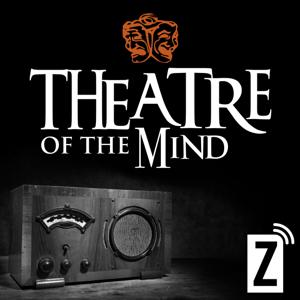
Zoomer Radio's Theatre of the Mind

Zoomer Radio's Theatre of the Mind

Download on the App Store

Zoomer Radio's Theatre of the Mind episodes

  • The Stolen Car Ring & The New Gyrm
    Tonight we begin with another story of Blackie Blackie, a jewel thief and safecracker written by Jack Boyle who certainly had the background to write stories involving criminals since he was one himself. Jack Boyle grew up in Chicago, Illinois. While working as a newspaper reporter in San Francisco, he became an opium addict, was drawn into crime, and was jailed for writing bad checks. Later convicted of robbery, Boyle was serving a term in San Quentin when he created the character of Boston Blackie, which became a detective in adaptations for films, radio and television. The first four stories appeared in The American Magazine in 1914, with Boyle writing under the pen name "No. 6066". From 1917 to 1919, Boston Blackie stories appeared in The Red Book magazine, and from 1918 they were adapted for motion pictures. Actor Chester Morris was the best-known Blackie, playing the character in 14 Columbia Pictures films (1941–1949) and in a 1944 NBC radio series. While investigating mysteries, Blackie invariably encountered harebrained Police Inspector Farraday, played by Maurice Tarplin and always solved the mystery to Farraday's amazement. Initially, friction surfaced in the relationship between Blackie and Farraday, but as the series continued, Farraday recognized Blackie's talents and requested assistance. Let’s go back to 1946 for the episode entitled “Stolen Car Ring.
    And stay tuned for A Day in the Life of Dennis Day.
    Owen Patrick Eugene McNulty, better known as Dennis Day, was an American singer, radio, television and film personality and comedian of Irish descent. In 1939 he sang on network radio with bandleader Larry Clinton. The 23-year won an audience poll as a favorite vocalist. Day appeared for the first time on Jack Benny's radio show on October 8, 1939, taking the place of another tenor, Kenny Baker. He remained associated with Benny's radio and television programs until Benny's death in 1974. When Day got his own radio sitcom, he continued to play essentially the same character that he originated on Benny's program. However, for this series, Day lived in the fictional town of Weaverville. He stayed at a boarding house run by Clara Anderson, played by Bea Benaderet. Day was engaged to their daughter Mildred, played by Barbara Eiler. His character worked at Willoughby's Drug Store, where his boss was Mr. Willoughby. The show was sponsored by Colgate-Palmolive. Verne Smith was the announcer, while music was provided by Bud Dant and his orchestra. The format of the show would begin with a song by Day, followed by the first half of the plot, a second song by Day in the middle of the episode, the rest of the plot, and then a third song by Day to finish the episode. Tonight’s episode is called “New Gym".

    58 min
  • Protective Mr. Drogen & Jury Duty
    Lights Out debuted in 1934 and was radio's premier horror series. Director and writer, Wyllis Cooper's writing was characterized by grisly stories always matched with the appropriate acting and sound effects, he conceived in 1933 the idea of writing a dramatic midnight mystery serial catchy enough to the listeners' attention at a time when the competition was mostly airing music. In June 1936 another Chicago writer, Arch Oboler, took over. By the time Cooper left, the series had inspired about 600 fan clubs. Arch Oboler was eccentric and ambitious when he took over and picked up where Cooper left off, following the latter's general example but investing the scripts with his own concerns using streams of conscious narration and sometimes social and political themes that reflected his commitment to anti-fascist liberalism. Although Lights Out would be closely associated with Oboler later on, he would always credit Wyllis Cooper as the series' creator and spoke highly of him as "the unsung pioneer of radio dramatic techniques" and the first person he knew who understood that radio drama is an art form.
    And stay tuned for that husband and wife team, Phil Harris and Alice Faye, to entertain. Tonight, Phil is on "Jury Duty".
    58 min
  • Diamond Ring & Damage Claim: Broken Mirror
    Tonight the episode "Diamond Ring" on Let George Do It from 1948.
    And Stay tuned to hear Luigi Basco stay out of the clutches of the landord’s daughter Rosa and deal with making a claim on a broken mirror. This show was first heard in 1948.
    58 min
  • You Could Die Laughing & Guest Star Frankie Laine
    Inner Sanctum. I love this series. Not just because the writers had a field day inventing all sorts of devilish plots but as well to enjoy the actors, who too, reveled in their roles; the creepy Mr. Host and of course the Tea Lady, The program's familiar and famed audio trademark was the eerie creaking door which opened and closed the broadcasts. Himan Brown got the idea from a door in the basement that "squeaked like Hell." The door sound was actually made by a rusty desk chair. The program did originally intend to use a door, but on its first use, the door did not creak. Undaunted, Brown grabbed a nearby chair, sat in it and turned, causing a hair-raising squeak. The chair was used from then on as the sound prop. On at least one memorable occasion, a staffer innocently repaired and oiled the chair, thus forcing the sound man to mimic the squeak orally. Enjoy the episode, “You Could Die Laughing”.
    And stay tuned to go back to hear what radio audiences were laughing at in 1951. Not a great ventriloquist, Edgar Bergen however didn’t have to be. He and his little dummy friend, Mortimer Snerd were on the radio! Bergen’s ability to jump from his own voice to that of Charlie’s is really quite remarkable. After a few moments, Charlie becomes a real person. Let’s listen to the show where they both welcome singer Frankie Laine.
    58 min

About Zoomer Radio's Theatre of the Mind

From the publisher's feed

Frank Proctor selects, and then describes some of the greatest shows from the golden age of radio — the 1930s and 1940s — like The Shadow and Fibber McGee & Molly. A half-hour of drama, mystery or…

More shows like Zoomer Radio's Theatre of the Mind

The Garden Show with Charlie Dobbin by Zoomer Podcast Network

The Garden Show with Charlie Dobbin

31 Listeners

Zoomer Week in Review by Zoomer Podcast Network

Zoomer Week in Review

0 Listeners

The Tonic by Zoomer Podcast Network

The Tonic

3 Listeners

Ages & Icons by Zoomer Podcast Network

Ages & Icons

3 Listeners

Art at the End of the World by Zoomer Podcast Network

Art at the End of the World

1 Listeners

Fight Back with Libby Znaimer by Zoomer Podcast Network

Fight Back with Libby Znaimer

3 Listeners

Dave's Corner Garage by Zoomer Podcast Network

Dave's Corner Garage

1 Listeners

Consignment Heroes by Zoomer Podcast Network

Consignment Heroes

1 Listeners

From a Woman's Perspective with Marilyn Wetston by Zoomer Podcast Network

From a Woman's Perspective with Marilyn Wetston

0 Listeners

The Naz & Wally Sports Hour by Zoomer Podcast Network

The Naz & Wally Sports Hour

0 Listeners

Finding Your Bliss by Zoomer Podcast Network

Finding Your Bliss

3 Listeners

ideacity On The Air by Zoomer Podcast Network

ideacity On The Air

0 Listeners

Zoomer Report by Zoomer Podcast Network

Zoomer Report

1 Listeners

Marilyn Lightstone Reads by Zoomer Podcast Network

Marilyn Lightstone Reads

27 Listeners

Avoid Probate by Zoomer Podcast Network

Avoid Probate

0 Listeners

Go To Grandma by Zoomer Podcast network

Go To Grandma

0 Listeners