
Sign up to save your podcasts
Or

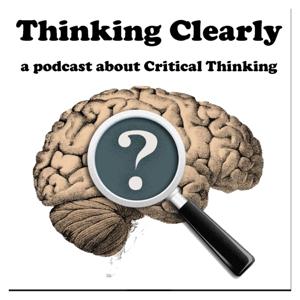

Emotions are often viewed as interfering with clear, objective, evidence-based reasoning; in fact, "appeal to emotion" is considered to be a logical fallacy. However, our guest, Mary Helen Immordino-Yang—professor of education, psychology, and neuroscience at the University of Southern California and author of: "Emotions, Learning, and the Brain"—argues that this narrow perspective overlooks a substantial body of research, and, far from being disruptive, emotions are integral to cognition, learning, and decision-making. As she states in her book: "It is literally neurobiologically impossible to build memories, engage in complex thoughts, or make meaningful decisions without emotion."
 View all episodes
 By Bob Froehlich-Retired Chemist, Counselor, Psychology Professor and Julia Mi

4.7
2323 ratings
Emotions are often viewed as interfering with clear, objective, evidence-based reasoning; in fact, "appeal to emotion" is considered to be a logical fallacy. However, our guest, Mary Helen Immordino-Yang—professor of education, psychology, and neuroscience at the University of Southern California and author of: "Emotions, Learning, and the Brain"—argues that this narrow perspective overlooks a substantial body of research, and, far from being disruptive, emotions are integral to cognition, learning, and decision-making. As she states in her book: "It is literally neurobiologically impossible to build memories, engage in complex thoughts, or make meaningful decisions without emotion."

38,481 Listeners

6,802 Listeners

43,637 Listeners

37,164 Listeners
214 Listeners

14,274 Listeners

2,858 Listeners
782 Listeners

87,797 Listeners

112,765 Listeners

12,684 Listeners
1,329 Listeners

16,068 Listeners

10,788 Listeners

1,415 Listeners