
Sign up to save your podcasts
Or

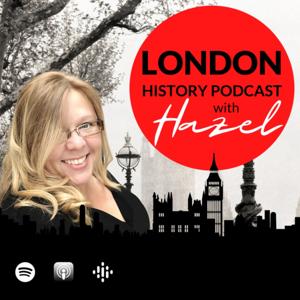

Hazel Baker introduces Smithfield (West Smithfield near St Bartholomew’s Hospital and Smithfield Meat Market) as a deceptively ordinary open space that for centuries served both as a major market/fairground and a prominent execution site used to project state and church power.
With tour guide Maria Alexe’s commentary, the episode traces Smithfield’s execution history from William Wallace’s hanging, drawing and quartering in 1305 to the last clearly documented burning in 1612, noting its particular association with heresy burnings and high-profile traitors, especially the Marian burnings under Mary I (about 48 at Smithfield, per Foxe). It highlights John Foxe’s shaping of Protestant martyr memory through accounts such as John Rogers and Anne Askew, describes execution methods including hanging, burning, quartering and boiling (Richard Rouse in 1531; Margaret Davy in 1547), and explains the crowd spectacle, commerce, and the risk of creating martyrs. It ends by identifying surviving local traces—St Bartholomew the Great, the gateway, street names like Cloth Fair, and modern contrasts—and invites listeners to related walking tours.
 View all episodes
 By londonguidedwalks.co.uk

4.8
4545 ratings
Hazel Baker introduces Smithfield (West Smithfield near St Bartholomew’s Hospital and Smithfield Meat Market) as a deceptively ordinary open space that for centuries served both as a major market/fairground and a prominent execution site used to project state and church power.
With tour guide Maria Alexe’s commentary, the episode traces Smithfield’s execution history from William Wallace’s hanging, drawing and quartering in 1305 to the last clearly documented burning in 1612, noting its particular association with heresy burnings and high-profile traitors, especially the Marian burnings under Mary I (about 48 at Smithfield, per Foxe). It highlights John Foxe’s shaping of Protestant martyr memory through accounts such as John Rogers and Anne Askew, describes execution methods including hanging, burning, quartering and boiling (Richard Rouse in 1531; Margaret Davy in 1547), and explains the crowd spectacle, commerce, and the risk of creating martyrs. It ends by identifying surviving local traces—St Bartholomew the Great, the gateway, street names like Cloth Fair, and modern contrasts—and invites listeners to related walking tours.

5,576 Listeners
3,196 Listeners
154 Listeners
110 Listeners

4,791 Listeners
228 Listeners
470 Listeners

3,245 Listeners
3,358 Listeners

15,506 Listeners
1,920 Listeners
2,060 Listeners
2,854 Listeners
1,144 Listeners

248 Listeners