
Sign up to save your podcasts
Or

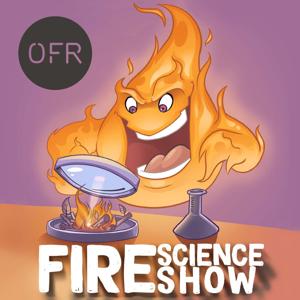

In the episode 10 of fire fundamentals together with David Morrisset, a nearly graduated PhD student from the University of Edinburgh, we explore the intricate dynamics of flame spread and its crucial role in fire safety engineering. David helps us differentiate between the two primary modes of flame spread, concurrent (imagine upward spread) and opposed (imagine downward spread), and explains how understanding these mechanisms can significantly enhance building safety and fire risk mitigation.
In this episode, we take a closer look at various materials like PMMA and timber and their unique fire behaviors. We also examine the complexities of flame spread on charring solids such as timber, discussing how pyrolysis and the resulting char layer influence heat transfer and flame behavior.
Lastly, we dissect the heat transfer mechanisms in various materials, from foams to solid slabs, and how factors like orientation and material properties affect flame spread rates. David highlights the balance between gas phase and solid phase heat transfer and the importance of precise modeling to predict flame behaviors accurately.
Phemonena discussed here:
Further reading:
And even though we did not have time to discuss diagnostics in the episode, you can check this crazy paper of David:
Cover image: edited from Figure 1 in https://doi.org/10.1016/j.firesaf.2023.104048
----
The Fire Science Show is produced by the Fire Science Media in collaboration with OFR Consultants. Thank you to the podcast sponsor for their continuous support towards our mission.
 View all episodes
 By Wojciech Wegrzynski

4.8
1616 ratings
In the episode 10 of fire fundamentals together with David Morrisset, a nearly graduated PhD student from the University of Edinburgh, we explore the intricate dynamics of flame spread and its crucial role in fire safety engineering. David helps us differentiate between the two primary modes of flame spread, concurrent (imagine upward spread) and opposed (imagine downward spread), and explains how understanding these mechanisms can significantly enhance building safety and fire risk mitigation.
In this episode, we take a closer look at various materials like PMMA and timber and their unique fire behaviors. We also examine the complexities of flame spread on charring solids such as timber, discussing how pyrolysis and the resulting char layer influence heat transfer and flame behavior.
Lastly, we dissect the heat transfer mechanisms in various materials, from foams to solid slabs, and how factors like orientation and material properties affect flame spread rates. David highlights the balance between gas phase and solid phase heat transfer and the importance of precise modeling to predict flame behaviors accurately.
Phemonena discussed here:
Further reading:
And even though we did not have time to discuss diagnostics in the episode, you can check this crazy paper of David:
Cover image: edited from Figure 1 in https://doi.org/10.1016/j.firesaf.2023.104048
----
The Fire Science Show is produced by the Fire Science Media in collaboration with OFR Consultants. Thank you to the podcast sponsor for their continuous support towards our mission.

78,688 Listeners

43,837 Listeners

32,246 Listeners
26,242 Listeners

30,870 Listeners
54 Listeners

5,109 Listeners
773 Listeners
495 Listeners

2,303 Listeners

3,858 Listeners

851 Listeners

131 Listeners
4 Listeners

1,153 Listeners