
Sign up to save your podcasts
Or

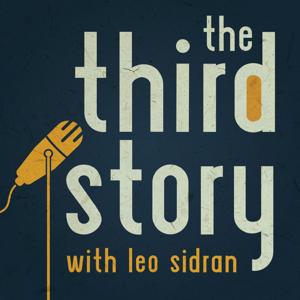

When Ibrahim Maalouf's parents decided to move to Paris from Beirut in the early 1980s, it was meant to be temporary. The Lebanese civil war was raging and they chose to raise their family away from the violence. But the intention was always to return to Lebanon when the war ended. They did their best to educate their children in the traditional way, and because they were both musicians themselves, music was hugely important to them. They played arabic music in the house, and young Ibrahim studied classical arabic trumpet from the age of seven.
His father, trumpeter Nassim Maalouf had even invented a special microtonal trumpet or "quarter tone trumpet", which makes it possible to play Arabic maqams on the trumpet, and Ibrahim developed his sound and style using that unique instrument.
But as a young boy growing up in Paris in the 80s and 90s, he was also influenced by all the popular sounds around him - Michael Jackson, De La Soul, pop and soul music and dance. In the end, Maalouf's family stayed in Paris rather than returning to Lebanon, and Ibrahim has been processing that distance for much of his life.
Ibrahim's career has been, in many ways, an exploration of his two worlds. He has released 17 albums and became the first trumpet player to headline France's biggest arena. He's collaborated with everyone from Sting to Wynton Marsalis, 6 million people tuned into his Bastille Day performance in France last year. He has also written scores for many films.
This year he released two albums. The first Queen of Sheba is a collaboration with Angelique Kidjo. The second Capacity to Love is a deep exploration of r&b and hip hop production for the first time in his career. It features De La Soul, D Smoke, Erick the Architect, plus jazz singer Gregory Porter, Tank and the Bangas and international stars from Europe, Africa and South America. The album opens with Charlie Chaplin's famous speech from The Dictator, and ends with a spoken word piece from Sharon Stone.
Here he talks about his childhood in France, developing his sound and concept, making elevated popular music, embracing the historical moment, refusing to be limited by labels or genres, and what it means when Quincy Jones orders sushi.
www.third-story.com www.patreon.com/thirdstorypodcast wbgo.org/studios
 View all episodes
 By Leo Sidran

4.9
172172 ratings
When Ibrahim Maalouf's parents decided to move to Paris from Beirut in the early 1980s, it was meant to be temporary. The Lebanese civil war was raging and they chose to raise their family away from the violence. But the intention was always to return to Lebanon when the war ended. They did their best to educate their children in the traditional way, and because they were both musicians themselves, music was hugely important to them. They played arabic music in the house, and young Ibrahim studied classical arabic trumpet from the age of seven.
His father, trumpeter Nassim Maalouf had even invented a special microtonal trumpet or "quarter tone trumpet", which makes it possible to play Arabic maqams on the trumpet, and Ibrahim developed his sound and style using that unique instrument.
But as a young boy growing up in Paris in the 80s and 90s, he was also influenced by all the popular sounds around him - Michael Jackson, De La Soul, pop and soul music and dance. In the end, Maalouf's family stayed in Paris rather than returning to Lebanon, and Ibrahim has been processing that distance for much of his life.
Ibrahim's career has been, in many ways, an exploration of his two worlds. He has released 17 albums and became the first trumpet player to headline France's biggest arena. He's collaborated with everyone from Sting to Wynton Marsalis, 6 million people tuned into his Bastille Day performance in France last year. He has also written scores for many films.
This year he released two albums. The first Queen of Sheba is a collaboration with Angelique Kidjo. The second Capacity to Love is a deep exploration of r&b and hip hop production for the first time in his career. It features De La Soul, D Smoke, Erick the Architect, plus jazz singer Gregory Porter, Tank and the Bangas and international stars from Europe, Africa and South America. The album opens with Charlie Chaplin's famous speech from The Dictator, and ends with a spoken word piece from Sharon Stone.
Here he talks about his childhood in France, developing his sound and concept, making elevated popular music, embracing the historical moment, refusing to be limited by labels or genres, and what it means when Quincy Jones orders sushi.
www.third-story.com www.patreon.com/thirdstorypodcast wbgo.org/studios

38,430 Listeners

6,881 Listeners

6,007 Listeners

3,917 Listeners
1,469 Listeners

4,120 Listeners

30 Listeners

3,198 Listeners
1,997 Listeners

1,016 Listeners
3,618 Listeners
1,968 Listeners
528 Listeners
4,661 Listeners

1,381 Listeners