
Sign up to save your podcasts
Or

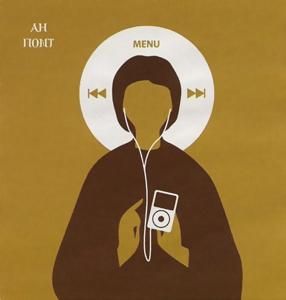

China and Byzantium both saw themselves as civilizations menaced by "barbarians," and periodically established empires that ruled over them. In this episode, Ying Zhang (Ohio State, an expert on Ming China) moderates a discussion between myself and Shao-yun Yang (Denison University), author of The Way of the Barbarians: Redrawing Ethnic Boundaries in Tang and Song China (University of Washington Press, 2019). How do imperial societies talk about barbarian or ethnic groups? How might we identify those groups, when they are used so often in the rhetorical construction of Chinese / Roman "orthodox" identities? Can our two fields find a common language in which to discuss these questions? My heartfelt gratitude to Shao-yun and Ying: you have been wonderful guides for your fascinating fields.
 View all episodes
 By Byzantium & Friends

4.8
181181 ratings
China and Byzantium both saw themselves as civilizations menaced by "barbarians," and periodically established empires that ruled over them. In this episode, Ying Zhang (Ohio State, an expert on Ming China) moderates a discussion between myself and Shao-yun Yang (Denison University), author of The Way of the Barbarians: Redrawing Ethnic Boundaries in Tang and Song China (University of Washington Press, 2019). How do imperial societies talk about barbarian or ethnic groups? How might we identify those groups, when they are used so often in the rhetorical construction of Chinese / Roman "orthodox" identities? Can our two fields find a common language in which to discuss these questions? My heartfelt gratitude to Shao-yun and Ying: you have been wonderful guides for your fascinating fields.

5,475 Listeners
3,228 Listeners
4,295 Listeners
4,380 Listeners
541 Listeners
1,099 Listeners
6,293 Listeners
459 Listeners
317 Listeners
419 Listeners
3,304 Listeners

343 Listeners
15,636 Listeners

1,881 Listeners
2,065 Listeners