
Sign up to save your podcasts
Or

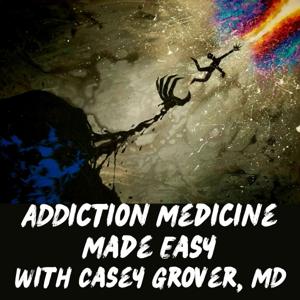

Your go-to stress relief can become the biggest source of stress in your life, and that’s where recovery often gets stuck. I’m joined by Dr Gary Sprouse, the “Less Stress Doc,” to unpack his deceptively simple framework called the Stress Reducer Loop: a substance or behavior lowers stress at first, then starts causing harm, which creates more stress, which drives more use. Once you see the loop clearly, it’s easier to replace shame with strategy.
We also dig into why the way we talk about addiction matters. Dr Sprouse explains how the disease label can backfire for some people by making them feel broken, abnormal, and permanently marked, so they wait until rock bottom to get help. His alternative framing treats alcohol, opioids, smoking, shopping, even over-exercising as attempts at “treatment” for stress. That perspective keeps the conversation practical: how do we reduce stress, and how do we swap in a lower-harm stress reducer?
From Suboxone as a safer replacement for fentanyl or heroin, to relapse mechanics like brain “tracks,” inhibition, deprivation, and dwindling “quit energy,” we translate addiction medicine into plain language you can use. We also cover concrete stress tools like setting boundaries, changing expectations, and “de-lumping” overwhelming problems, plus why past trauma can silently consume most of a person’s stress capacity.
If this helped you see addiction, relapse prevention, and stress management in a new way, subscribe, share the episode with someone who needs it, and leave a review so more people can find the show.
To learn more about Dr. Sprouse's work: https://www.thelessstressdoc.com/
To contact Dr. Grover: [email protected]
 View all episodes
 By Casey Grover, MD, FACEP, FASAM

4.9
5555 ratings
Your go-to stress relief can become the biggest source of stress in your life, and that’s where recovery often gets stuck. I’m joined by Dr Gary Sprouse, the “Less Stress Doc,” to unpack his deceptively simple framework called the Stress Reducer Loop: a substance or behavior lowers stress at first, then starts causing harm, which creates more stress, which drives more use. Once you see the loop clearly, it’s easier to replace shame with strategy.
We also dig into why the way we talk about addiction matters. Dr Sprouse explains how the disease label can backfire for some people by making them feel broken, abnormal, and permanently marked, so they wait until rock bottom to get help. His alternative framing treats alcohol, opioids, smoking, shopping, even over-exercising as attempts at “treatment” for stress. That perspective keeps the conversation practical: how do we reduce stress, and how do we swap in a lower-harm stress reducer?
From Suboxone as a safer replacement for fentanyl or heroin, to relapse mechanics like brain “tracks,” inhibition, deprivation, and dwindling “quit energy,” we translate addiction medicine into plain language you can use. We also cover concrete stress tools like setting boundaries, changing expectations, and “de-lumping” overwhelming problems, plus why past trauma can silently consume most of a person’s stress capacity.
If this helped you see addiction, relapse prevention, and stress management in a new way, subscribe, share the episode with someone who needs it, and leave a review so more people can find the show.
To learn more about Dr. Sprouse's work: https://www.thelessstressdoc.com/
To contact Dr. Grover: [email protected]

43,528 Listeners

10,522 Listeners

3,360 Listeners

111,948 Listeners

30 Listeners

1,345 Listeners

29,207 Listeners

15,950 Listeners
127 Listeners
155 Listeners
31 Listeners
94 Listeners
8 Listeners

640 Listeners

8,873 Listeners