
Sign up to save your podcasts
Or



Send us a text
Conspiracy theories fascinate us because they provide order to chaos and explanation for the inexplicable. In this thought-provoking episode, we dive deep into the psychology behind conspiracy thinking, using the recent Jeffrey Epstein controversy as a compelling case study.
The facts about Jeffrey Epstein reveal a complex individual - a talented financial professional who built a billion-dollar empire through education and hard work, while simultaneously engaging in reprehensible personal behavior. His desire to associate with powerful figures wasn't necessarily about building a "client list" for criminal activities, but more aligned with his craving for proximity to fame and influence. I detail why the much-discussed "Epstein list" never actually existed, despite persistent claims to the contrary, and how this misunderstanding has been weaponized across the political spectrum.
The Alan Dershowitz case provides a fascinating window into the reliability of accusations surrounding Epstein. When Dershowitz was accused by one of Epstein's primary victims, he fought back with irrefutable evidence disproving the allegations, leading to a withdrawal of the lawsuit with claims of "mistaken identity." This doesn't diminish the accuser's victim status, but it does raise important questions about memory, motivation, and the complexity of truth in high-profile cases.
What makes this examination particularly valuable is understanding why big conspiracies fundamentally don't work. The logistics of maintaining secrecy among numerous people over extended periods are virtually impossible - consider that statutes of limitations on conspiracy expire, creating risk-free opportunities to profit from revealing information. Someone always talks - to lovers, friends, in moments of drunkenness, or for financial gain. This fundamental truth helps explain why major conspiracy theories, from JFK to 9/11, fail under scrutiny.
Ready to separate fact from fiction and develop a more nuanced understanding of how conspiracy thinking affects our perception of events? Subscribe, share your thoughts, and join our community of critical thinkers questioning conventional narratives.
Support the show
Send us a text
Democracy thrives on meaningful opposition. When one political party becomes captured by its most extreme voices while the moderate majority remains silent out of fear, we all lose. That's precisely what's happening with today's Democratic Party.
Consider the wisdom of Charles de Gaulle, who when asked how France would survive without him, responded: "The cemeteries are full of men that couldn't be replaced." This profound statement applies equally to modern American politics. Donald Trump is undeniably a transformative figure, but like all leaders, he requires principled opposition to ensure accountability and balance.
What's missing isn't opposition itself, but thoughtful, courageous opposition that reflects mainstream American values rather than fringe ideologies. Most citizens are naturally libertarian in orientation - socially liberal and fiscally conservative - yet our political system offers increasingly extreme options that fail to represent this common-sense middle ground.
Anti-politism offers a potential solution by transforming politics from a career into a civic duty through merit-based lottery selection. By removing re-election pressures and money from politics, we could restore governance that reflects ordinary Americans' pragmatic values. Imagine a political landscape where representatives acknowledge when the other side makes valid points, where immigration policy balances border security with economic reality, and where performance art activism gives way to practical problem-solving.
The path forward may require building a "New Democratic Party" grounded in libertarian principles that provides meaningful opposition while rejecting tribal politics. Until we restore courage as the primary political virtue - the willingness to speak truth even when socially costly - we'll continue cycling through increasingly dysfunctional versions of the same broken system.
Explore how we might create a political future that works for all Americans rather than the powerful few. Share this episode with friends who believe our republic deserves better than what today's politics offers.
Support the show
Send us a text
America stands as the greatest nation in history because it protects individual rights over majority rule and offers unparalleled geographic advantages. This Independence Day podcast explores why all Americans, regardless of background, should recognize how fortunate they are to live in a country founded on these principles.
• America wasn't designed to be a democracy but a republic that protects individual rights against majority tyranny
• Prison life reveals extreme tribalism that mirrors current societal divisions threatening American exceptionalism
• Our geographic advantages include temperate climate, fertile land, and navigable waterways unmatched worldwide
• Black Americans descend from the "luckiest half-million black people in history" who ended up in a nation that eventually protected their rights
• Latino Americans and Native Americans likewise benefit from living in a system that, despite historical injustices, offers unparalleled opportunity
• Returning to tribalism and identity politics threatens the exceptional American formula that has created unprecedented prosperity
• We must stop judging people by ancestry, appearance, or group identity and return to protecting individual rights
Let's enjoy Independence Day by celebrating the fact that we live in the greatest country in history by any objective measure, and just revel in it without aggravation or rage in our lives.
Support the show
Send us a text
The national debt has become a looming sword of Damocles over our economy with potential catastrophic consequences when the bill comes due. We explore the only three possible outcomes: paying the debt (impossible), inflating our way out (leading to hyperinflation), or economic collapse—and propose a radical but viable alternative.
• The U.S. currently carries about $38 trillion in debt, more than any country has ever owed in history
• Politicians will likely choose inflation as the path of least resistance, but this historically leads to hyperinflation and societal collapse
• During economic crises, societies often turn to strong leadership, creating conditions for potential authoritarianism
• The ancient Roman model of Cincinnatus offers an alternative vision of leadership—solving problems then voluntarily relinquishing power
• Federal government owns approximately $400-500 trillion worth of land that could be strategically sold to address the debt crisis
• Selling federal lands would require careful implementation to prevent cronyism and ensure transparent, fair processes
• Private land ownership often results in better stewardship than government management
• This approach represents a pragmatic alternative to economic catastrophe
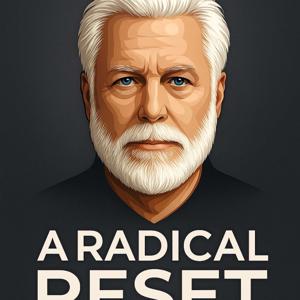
Pick up a copy of A Radical Reset, the Manifesto of Antipolitism, on Amazon in Kindle, paperback or hardcover versions to learn more about creating a republic by merit-based lottery that removes money and ambition from governance.
Support the show
Send us a text
The student debt crisis has trapped 32 million Americans in financial quicksand, fueling a dangerous rise in socialist politics across urban centers. When educated young people have no path to economic freedom, they inevitably turn to government solutions.
Herbie K explores this connection through personal stories and historical patterns, drawing parallels between economic hopelessness and political radicalization. The recent election of socialist candidates in New York isn't surprising when we understand who's voting for them—predominantly educated white voters buried under student debt with degrees that offer little financial return.
Through prison experiences and Jewish history, Herbie shares a powerful perspective on overcoming victimhood. Rather than wallowing in despair, he advocates for finding alternative paths forward: "Find a way and forget them." This approach, which helped Jewish communities survive centuries of persecution, offers wisdom for anyone facing seemingly insurmountable obstacles.
The podcast warns that America stands on an economic precipice, with student debt representing just one aspect of our financial vulnerability. Despite political victories, we must address these fundamental economic challenges before they trigger widespread collapse. Herbie proposes allowing student loan bankruptcy as a pragmatic solution—creating consequences through credit damage while offering escape from perpetual debt.
Antipolitism—a system of government based on merit and lottery rather than elections—represents Herbie's vision for breaking this cycle of political failure. His book "A Radical Reset" outlines this alternative approach for those seeking solutions beyond our current broken system.
Support the show
Send us a text
Herbie introduces his concept of anti-politism, a system where government officials are selected by merit-based lottery rather than elections, and explains how it would create lasting political reform that Trump's administration cannot achieve.
• Anti-politism converts politics from a career to a civic duty through lottery selection of qualified citizens
• Under the current system, even successful reforms will eventually "snap back like rubber" to previous dysfunction
• 80% of Americans receive more in government benefits than they pay in taxes, creating unsustainable debt
• Social Security bankruptcy timeline has moved up from 2033 to 2031, yet remains unaddressed by politicians
• Current political system resembles mob rule with both parties competing for larger pieces of the mob
• Merit-based selection would bring common sense leadership regardless of political affiliation
• Trump's accomplishments are significant but cannot fix the fundamental flaws in our political structure
Check out my book "A Radical Reset" on Amazon to learn more about anti-politism and policy solutions for a rational government.
Support the show
Send us a text
As tensions escalate in the Middle East following the U.S. and Israeli strikes against Iranian nuclear facilities, we're witnessing not the beginning of another endless war, but a carefully calculated series of moves in a geopolitical chess match. The recent Iranian missile attack on our base in Doha represents not strength but desperation – targeting America's most heavily fortified position in the region with missiles our defense systems were perfectly prepared to intercept.
Let's be clear about what prompted this action: Iran was enriching uranium to 60% – far beyond the 5-10% required for any civilian purpose. This level of refinement serves only one purpose: creating weapons of mass destruction. Despite propaganda suggesting otherwise, Iran was actively developing nuclear weapons that could kill millions if deployed against our allies or smuggled into American ports.
What happens next follows a logical progression I've mapped out in detail. The U.S. and Israeli response will likely neutralize Iran's naval capabilities to protect global shipping lanes while continuing precision strikes against the regime's leadership structure. Thanks to extensive intelligence networks established before 1979, Israel has remarkable visibility into Iranian military and government operations, explaining the surgical precision of recent strikes.
By the end of June, I predict we'll see the complete collapse of the current Iranian regime, potentially followed by the return of monarchy under Reza Pahlavi, who has a government-in-exile ready to implement. This aligns perfectly with the emerging "Trump Doctrine" that emphasizes commerce over conflict while maintaining American dominance of global trade routes. A post-theocratic Iran would likely join the Abraham Accords, transforming the Middle East from a perpetual conflict zone into a region of unprecedented economic cooperation benefiting Arabs, Jews, and Persians alike.
The stakes couldn't be higher, but understanding the strategic calculus behind these events helps cut through the noise of mainstream commentary. Want to learn more about how we can fundamentally transform our approach to politics and global affairs? Pick up a copy of A Radical Reset on Amazon and join our growing community of forward-thinking patriots.
Support the show
Send us a text
Trump is acting as the President of the United States first and foremost, not as the President of Israel, taking a measured approach to Iran while considering broader global implications. His careful deliberation demonstrates a chess player's strategic thinking rather than impulsiveness, focusing on preventing unintended consequences.
• Trump has ruled out US troops on the ground and nation-building
• "A people hire A people, but B people hire C people" - Trump has assembled an A-team cabinet
• Israel has established air superiority over Iran and is likely targeting the Ayatollah
• Iran poses an existential threat to both Israel and America with its nuclear program
• Trump is considering all scenarios, including regime collapse and regional power vacuums
• The situation connects to China's oil dependency and Russia's economic challenges
• Unlike previous administrations, Trump prioritizes strategic thinking over political grandstanding
• Trump's legacy depends on this critical decision about Iran's nuclear facilities
Remember that in complex international situations, there are no solutions—only trade-offs. Trump is carefully weighing these trade-offs to ensure American interests are protected.
Support the show
Send us a text
The looming conflict with Iran raises pressing questions about American national security, global stability, and the complex dynamics of domestic politics. Why should Americans care about Iran's nuclear ambitions? The answer transcends simple allegiances to Israel—it's about preventing a regime guided by religious extremism from acquiring weapons that could ultimately threaten American soil.
When examining Iran's capabilities, we must recognize the critical difference between their leadership and other nuclear powers. Unlike North Korea's pragmatic dictatorship, Iran's theocratic leaders embrace martyrdom as virtuous. This religious zealotry makes traditional deterrence strategies potentially ineffective. Meanwhile, disrupting Iran's oil exports creates strategic leverage against China, which depends entirely on Middle Eastern energy—revealing how Middle East policy connects directly to our competition with Beijing and broader national interests.
Against this backdrop, I explore why Jewish Americans predominantly vote Democratic despite many holding economically conservative views. The answer lies in the persistent anti-Semitism from figures like Tucker Carlson and Marjorie Taylor Greene, who perpetuate dangerous tropes about Jewish power and influence. While problematic voices exist on both sides of the political spectrum, right-wing anti-Semitism is perceived as more mainstream within Republican circles, explaining why "when push comes to shove, we value our lives far more than money." This political reality demonstrates how identity and security concerns often transcend economic interests in shaping voting patterns. As military action in the Middle East unfolds, these intersecting forces of national security, geopolitical strategy, and domestic politics will continue shaping America's response to global challenges.
Support the show
From the publisher's feed
Our Republic has been converted into a democracy which is just another name for mob rule. The mob is getting what it wants, to paraphrase H.L. Mencken, good and hard. One day soon, the entire…