
Sign up to save your podcasts
Or



Send us a text
What happens when a simple question on a first date completely changes your understanding of marriage and family? That's exactly what I experienced years ago when a woman asked me a hypothetical scenario about saving either her or my children from a sinking boat. While the date ended abruptly after my answer, it led to one of the most profound pieces of wisdom my mother ever shared with me—wisdom that transformed how I approached my second marriage and fatherhood.
Drawing from my experiences as both a divorced parent who had primary custody of my children and a man who remarried, I explore the fundamental challenges facing blended families today. The post that sparked this Father's Day reflection—"Men, why are you afraid of women with children?"—misses the deeper truth: it's not fear, but a legitimate concern about relationship priorities. When a man enters a relationship with a single mother, will he ever truly come first?
This question connects to what I believe is the root of many societal problems: the breakdown of the nuclear family through casual divorce. While there are absolutely legitimate reasons to end a marriage (physical violence and serial infidelity top the list), most divorces happen for reasons that pale in comparison to the damage they cause. Research consistently shows that children from intact families, even troubled ones, generally fare better than children from "good" single-parent homes.
When we commit to marriage and bring children into the world, our lives are no longer primarily about our personal fulfillment. The modern expectation that relationships should provide constant emotional and sexual excitement becomes destructive when it leads to families breaking apart. Remember: your children absorb and internalize your unresolved issues through your actions. By staying committed through difficulties rather than seeking greener pastures, you teach them resilience and the true meaning of love.
How might your perspective on marriage change if you embraced the imperfection of real love? What lessons are your relationship choices teaching your children about commitment? Share your thoughts and experiences about navigating these complex family dynamics.
Support the show
Send us a text
The chess game in the Middle East has reached a critical juncture as Israel launches a decisive preemptive strike against Iran's nuclear facilities. This bold military action comes exactly 60 days after a joint ultimatum issued by Israel and the United States expired, marking a definitive shift from diplomacy to direct confrontation.
Drawing on my background in military intelligence analysis, I break down why this attack represents war as the final, necessary step when diplomacy fails. The Iranian regime, operating from fundamentally different cultural and religious perspectives, continued their stalling tactics that had succeeded with previous administrations. What they failed to recognize was the strategic partnership between Trump and Netanyahu, who appear to have orchestrated a carefully planned sequence of events leading to this moment.
The military imbalance is stark – Israel has achieved complete air superiority after neutralizing Iran's anti-aircraft defenses in previous operations, while Iran's air force consists largely of outdated F-4 Phantoms from the 1970s. This explains the effectiveness of Israel's strikes and the limited nature of Iran's initial response. But the chess match continues, as US military assets, including B-2 bombers capable of carrying bunker-busting MOABs, have been strategically positioned at Diego Garcia in the Indian Ocean.
This suggests preparation for what comes next – Iran's likely retaliation against American interests throughout the region, which would provide justification for devastating American strikes against remaining Iranian nuclear infrastructure. The potential endgame could include regime change in Iran and the restoration of the pre-1979 alliance structure that once existed between Iran, the United States, and Israel.
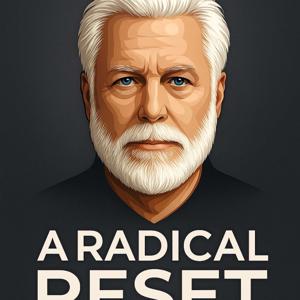
For those seeking to follow developments in real-time, I recommend Bernie News, an apolitical news aggregator focused on Middle Eastern developments. And for those interested in my political philosophy, check out "A Radical Reset," my book outlining an alternative political system based on merit-based lottery rather than traditional party politics.
Support the show
Send us a text
The immigration crisis at our southern border has become one of America's most divisive political battlegrounds—but what if both sides are missing the obvious solution? Drawing from personal experience living in Southern Arizona and working alongside immigrant communities, I break down why current approaches from both Democrats and Republicans are fundamentally flawed.
When riots break out in Los Angeles with protesters waving Mexican flags and destroying property, it's easy to understand the call for stronger enforcement. Yet the Republican fantasy of "rounding up" 20 million undocumented immigrants ignores basic reality—even the most oppressive regimes in history couldn't accomplish such a feat. Meanwhile, Democrats who dismiss legitimate security concerns or pretend illegal immigration has no negative consequences are equally disconnected from reality.
The solution? A pragmatic "orange card" program that brings undocumented immigrants who arrived before a specific date into the legal system—allowing them to work, pay taxes, and live openly—but without a path to citizenship or voting rights. This addresses Republican concerns about changing voting demographics while recognizing the demographic reality that America's aging population needs more workers to support our welfare state.
For future immigration, I propose unlimited green cards for those who meet three simple criteria: financial self-sufficiency, no criminal record, and good health. This recognizes that Latino immigrants, contrary to Republican fears, often align with conservative values due to their predominantly Catholic, pro-life beliefs.
The missing piece in this puzzle is ending the failed War on Drugs, which has cost over a trillion dollars without stopping the flow of narcotics (even into our prisons). By redirecting those resources toward catching actual violent criminals at the border, we could create a system that works for everyone.
Our immigration debate doesn't need more shouting—it needs adults willing to acknowledge reality and find practical trade-offs. Listen in as I break down why both parties need to pull their heads out of their collective posteriors and embrace solutions that actually work.
Support the show
Send us a text
A call for the Democratic Party to embrace classical liberalism as a solution to their identity crisis, with proposals for a revitalized alternative to Republican nationalism focused on smaller government and state-level welfare programs.
• Discussion of political party evolution and the potential dissolution of the Democratic Party as we know it
• Analysis of why Republicans have clear positions while Democrats appear to be simply defending a failing status quo
• Exploration of how Democrats have lost connection with young men by rejecting traditional masculine values
• Proposal for Democrats to adopt libertarian principles: socially liberal, fiscally conservative
• Warning about the impending debt crisis and the need for alternatives to both current parties
• Introduction to Antipolitism as a system to prevent democracy's historical slide into tyranny
Pick up a copy of "A Radical Reset" on Amazon to learn more about Antipolitism as an alternative to the current political system.
Support the show
Send us a text
Rage burns while anger fades. This profound distinction forms the foundation of a practical approach to managing our deepest, most entrenched negative emotions. For those who've experienced severe betrayal or abuse, traditional advice to "just forgive" can feel not only impossible but invalidating.
Drawing from personal experience with childhood trauma and the rage it produced, this episode introduces the concept of "healthy hatred" – acknowledging legitimate negative feelings while breaking free from their obsessive grip on your consciousness. Rather than forcing forgiveness when it feels unnatural, we explore how to stop destructive thought patterns through practical techniques that don't require spiritual leaps or denial of genuine harm.
The key breakthrough comes in recognizing that the repetitive conversations in our heads are fundamentally untrue. These mental loops trap us in cycles of bitterness that repel positive connections and healthy relationships. Learning to interrupt these patterns with simple practices creates freedom without requiring forgiveness.
We also tackle the challenging task of dealing with others caught in rage spirals. Whether facing an enraged customer, a political zealot, or anyone unable to be reasoned with, five magic words provide a bridge between emotional reality and practical necessity: "Be that as it may..." This phrase, coupled with the patience to let others fully express their frustration before responding, transforms seemingly impossible interactions.
Whatever emotional burdens you carry, this episode offers practical paths forward that honor your experience while preventing past wounds from determining your future. Breaking free from hatred's grip doesn't mean pretending it never happened – it means reclaiming your mental landscape from those who've harmed you.
Support the show
Send us a text
The slow death of religion in modern society has left us with a devastating moral vacuum as faith becomes increasingly difficult to maintain in our scientific age. Where once religion provided clear answers to life's mysteries, now we struggle to find common moral ground, resulting in a breakdown of rational discourse on crucial topics like immigration.
Our immigration debate perfectly exemplifies this crisis of rationality. Trapped between extremes, we've lost the ability to discuss this vital issue with clarity and pragmatism. Yet the mathematical reality is unavoidable – America's aging population and declining birthrate mean we desperately need immigrants to sustain our economy and social programs. With Social Security's worker-to-retiree ratio having plummeted from 139:1 at its inception to just 2:1 today, immigration isn't just a cultural question but an economic necessity.
What would a rational approach to immigration look like? We must acknowledge the millions already here illegally and create a conditional pathway to legal status – perhaps an "orange card" system allowing them to work legally and live without fear, though without a path to citizenship as a consequence for their illegal entry. For future immigration, we need streamlined processes for law-abiding individuals who can support themselves, with automatic green cards for international students graduating from American universities in high-demand fields. When legal immigration becomes accessible and efficient, enforcement resources can focus on genuine threats rather than desperate workers.
This approach bridges the gap between competing worldviews, offering a pragmatic solution based on our actual needs rather than ideological positions. It's the kind of rational thinking that once underpinned our public discourse but now seems increasingly rare. Perhaps by restoring reason to our immigration debate, we can begin building the shared moral framework our post-religious society so desperately needs. Join me in exploring how we might navigate these challenging waters with wisdom, justice, courage, and moderation – the four pillars of Stoicism that offer guidance even when faith proves elusive.
Support the show
Send us a text
A former NSA Russian linguist shares deep cultural insights to help listeners understand Vladimir Putin and Russia's actions in Ukraine from a historical and psychological perspective.
• Russians fundamentally differ from Americans in their worldview and expectations
• Russians experience genuine surprise when things work out well, while Americans are surprised when they don't
• Russian history is defined by suffering, invasions, and endurance rather than triumph
• Putin represents Russian cultural values as a "Slavophile" who views Russia as a holy place
• Russia's vulnerable geography has shaped its historical need for buffer states
• The invasion of Ukraine stems from centuries of Russian security paranoia
• Current Ukrainian conflict requires both pressure and incentives to reach resolution
• American weakness under Biden administration has complicated the situation significantly
• Understanding Russian psychology is essential to developing effective diplomatic strategies
Pick up a copy of my book "A Radical Reset: The Manifesto of Anti-Politism Which Will Save the Republic" available on Amazon in Kindle, paperback, or hardcover formats, and please share this podcast.
Support the show
Send us a text
The AI revolution isn't coming—it's already here, transforming our world at breakneck speed. As Tesla's humanoid Optimus robots prepare to enter homes by 2026 and self-driving vehicles reshape transportation, we're facing technological changes that will fundamentally alter how we live, work, and relate to machines.
But should we fear this transition or embrace it? Throughout history, technological revolutions have triggered waves of panic about job losses and societal collapse. Yet each time, humanity has adapted and thrived. The key difference with AI is its exponential growth and unprecedented capabilities—making this revolution potentially larger and faster than any before it.
Looking back at transformative technologies from horse-drawn carriages to automobiles, we can see clear patterns. Initial resistance and fear gradually give way to adaptation, with new opportunities emerging that couldn't have been predicted beforehand. When productivity increases, businesses typically expand rather than contract, creating different kinds of work rather than eliminating it altogether.
The growing "doom complex" around AI has created calls for preemptive government intervention through programs like Universal Basic Income. But hastily implemented solutions often create worse problems than the ones they aim to solve. Instead, a philosophical approach rooted in stoicism offers valuable perspective: courage to face change, wisdom to navigate it thoughtfully, justice in how we implement new systems, and moderation in our responses.
What makes AI fundamentally different from humans is its lack of emotional drivers like greed, envy, or ambition—the very forces that often lead us to destructive behaviors. Rather than anthropomorphizing machines with human motivations, we might better understand AI as tools that extend human capability without human flaws.
Join us as we explore both the practical realities of our AI future and the philosophical frameworks that can help us approach this transition with wisdom rather than panic. How will you prepare for a world where technology changes faster than we do?
Support the show
Send us a text
What happens when a self-described "Spiritual Agnostic" decides to tackle anti-Semitism head-on? After an unsettling encounter with anti-Semitic comments online, I felt compelled to address the questions many non-Jews have always wondered but rarely ask directly: Why are Jews constantly persecuted throughout history? Do Jewish people bear any responsibility for the stereotypes they face?
Taking you on a deeply personal journey through Jewish identity, I break down the three branches of Judaism—Orthodox, Conservative, and Reform—with candor and occasional humor. As a Reform or "Jew-ish" person myself, I offer an insider's perspective on what makes Jewish culture distinctive, from our approach to education and success to our characteristically fatalistic sense of humor (there's a reason so many comedians are Jewish!).
The podcast explores the concept of Jews as a "middleman culture"—similar to Chinese immigrants in Southeast Asia or Armenians in various regions—and how economic success often breeds resentment. Through personal anecdotes and historical insights, I address misconceptions about Jewish beliefs, including the often-misunderstood concept of "chosen people" and our relationship with religious texts.
Perhaps most poignantly, I share what economist Thomas Sowell (who isn't Jewish) said when asked what Jews could do to end anti-Semitism. His one-word answer—"fail"—reveals a profound truth about prejudice and success. This episode isn't just for those curious about Judaism; it's for anyone interested in how cultural identity shapes our experiences in a world that often misunderstands difference.
Whether you're Jewish, curious about Judaism, or simply interested in cultural understanding, this unfiltered conversation offers insights into a complex identity that has survived millennia of persecution while maintaining its distinctive character and contributions. As we navigate increasingly polarized times, perhaps understanding one another's perspectives is more important than ever.
Support the show
Send us a text
What makes intelligent people embrace utterly irrational ideas? The answer lies in understanding stupidity—not as a lack of intelligence, but as something far more dangerous: the unwillingness to question one's own beliefs.
Drawing from philosopher Dietrich Bonhoeffer's insights, this episode explores how stupidity functions as a greater societal threat than evil itself. While evil makes perpetrators uncomfortable and carries the seeds of its own destruction, stupidity remains impregnable because it always believes it's on the side of good. This explains how brilliant, educated people can simultaneously hold completely illogical positions—they've closed their minds to contrary evidence and refuse to engage with challenging perspectives.
We examine modern manifestations of mass stupidity across the political spectrum, from gender ideology to climate alarmism to drug prohibition policies. The common thread isn't intelligence level but rather the cultish inability to process opposing viewpoints. When confronted with contradictory evidence, the "stupid" person doesn't engage but retreats to slogans or becomes hostile. This pattern appears regardless of education level or political affiliation.
The solution begins with education reform focused on critical thinking skills and philosophical frameworks like Stoicism that promote courage, wisdom, justice, and moderation. Economic literacy must be prioritized to help citizens understand how systems actually function. Most importantly, we must cultivate the courage to question our own deeply-held beliefs, especially those shared by our social circles and identity groups.
If this resonates with you, check out my book "A Radical Reset," which proposes anti-politism—a merit-based lottery system designed to transform politics from a career path for the ambitious into genuine public service. Let me know your thoughts on whether we can overcome mass stupidity before it further damages our democratic institutions.
Support the show
From the publisher's feed
Our Republic has been converted into a democracy which is just another name for mob rule. The mob is getting what it wants, to paraphrase H.L. Mencken, good and hard. One day soon, the entire…