
Sign up to save your podcasts
Or



Send us a text
Staring down the barrel of a $38 trillion national debt, America faces an existential crisis that everyone sees but no one addresses. This episode challenges the sacred cow of democracy itself, arguing that mob rule may be the most immoral form of government precisely because it allows the majority to vote themselves benefits they don't pay for.
Our host takes us on a journey through historical warnings, from Alexis de Tocqueville's prescient observations about democracy's self-destructive tendencies to the folly of Woodrow Wilson's interventionism that sparked catastrophes throughout the 20th century. The uncomfortable truth emerges: when 80% of citizens receive more from government than they contribute, the mathematical certainty of economic collapse looms, yet remains willfully ignored by voters and politicians alike.
As traditional moral frameworks like organized religion lose influence in our science-driven world, we've lost the guardrails that once guided societal decisions. The resulting tribalization fractures rational discourse just when we need it most. But there's a potential solution in what the host calls "anti-politism" – a republic by meritorious lottery that removes ambition from governance while maintaining an achievement-based elite open to anyone willing to work hard.
The podcast presents a challenging but thought-provoking alternative to our current system before economic reality forces change through chaos. When the inevitable crisis arrives, will we be prepared with better options than the charismatic demagogues history teaches us to expect? This conversation couldn't be more timely as we face mounting debt and political polarization that threatens the very foundations of American governance.
Ready to explore alternatives to our failing system? Listen now and consider whether removing ambition from politics might be our last, best hope.
Support the show
Send us a text
Something profound has vanished from our society. As science advances and traditional faith recedes, we've eliminated God without replacing what religion provided: meaning, ethics, and boundaries. The resulting void doesn't stay empty—it fills with nihilism, a blind pursuit without virtue or value.
This episode explores how courage, the first pillar of Stoicism, offers us a path forward. True courage means facing reality honestly and taking complete responsibility without mitigation, regardless of personal consequences. It's about falling on your sword when you've done wrong, rather than constructing elaborate justifications or blaming others.
I examine how this principle applies to our current media landscape, particularly regarding President Biden's cognitive decline. For years, polls consistently showed that most Americans harbored serious concerns about Biden's mental fitness. Yet many mainstream outlets downplayed these concerns, creating not so much a cover-up (since the information was widely known) but rather a "gaslighting" effect—telling Americans not to believe what they could plainly see.
The media's failure wasn't being deceived by White House officials; it was abandoning their essential function as independent watchdogs. When media organizations become extensions of political parties, they sacrifice their role in a democratic republic. Their redemption must begin with courage—specifically, acknowledging mistakes without mitigation or excuse.
This same principle extends to personal redemption. My own journey taught me that genuine healing begins only when we stop trying to explain away our actions and simply take full responsibility. Courage isn't avoiding consequences; it's facing them directly.
Whether through religion or philosophy like Stoicism, we must rediscover courage as individuals and institutions. Our culture's survival depends on our willingness to speak honestly, take responsibility, and prioritize truth over comfort.
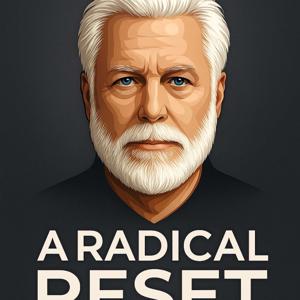
Share this episode with others if you found value in these reflections. And consider exploring my book "A Radical Reset," which outlines a system called antipolitism—a potential path forward for our republic.
Support the show
Send us a text
We explore the transformative journey from victimhood to survivorship and why it's impossible to embody both identities simultaneously. Drawing from personal experiences of childhood abuse, prison, and healing, we examine how abandoning victimhood creates freedom and quiets the mind.
• Victimhood keeps us trapped in thought loops that replay trauma and pain
• Survivors acknowledge their experiences without being defined by them
• Victim mentality constantly seeks validation, perpetuating suffering
• Prison exposure to others' traumas creates perspective and transformation
• Stoic principles help separate what we can control from what we cannot
• Collective victimhood has damaging effects on culture and personal growth
• Relationships dramatically improve when we release victim identity
• True freedom comes from acknowledging past abuse without letting it define us
Check out my book "A Radical Reset" available on Amazon in Kindle, paperback and hardcover formats to learn more about anti-politicism as an alternative to our failing systems.
Support the show
Send us a text
The bond market is screaming a warning that few want to hear. America's national debt has reached crisis levels, with interest rates pushing 6% as investors grow increasingly uncertain about our ability to repay our obligations. This isn't fearmongering—it's basic math that transcends political divides.
Currently, we're spending about 6% of our gross domestic product just to service our debt. As interest rates continue to climb, this figure will inevitably rise, crowding out essential government functions and eventually forcing draconian cuts that nobody is prepared to face. The time for honest conversation is now, before we reach the point of catastrophe.
We've been collectively lying to ourselves about entitlements like Social Security for generations. When established under Roosevelt, Social Security had 139 workers contributing for every one beneficiary. Today, that ratio has collapsed to just two workers per retiree. The math simply doesn't work, yet we cling to the comfortable fiction that we've "earned" these benefits through our contributions.
Solutions exist, but they demand political courage that seems in short supply. We need to return to pre-COVID spending levels across government programs, acknowledge that the top 20% of earners fund virtually all government operations, and consider monetizing federal assets in a responsible, regulated manner. Most importantly, we need to grow up as a nation and face uncomfortable truths with maturity.
As a practitioner of Stoic philosophy, I believe that life has no value without virtue, and there is no virtue in believing our own lies. Whether through Stoicism or religion, we need guiding principles that keep us honest with ourselves and others. Our elected officials must prioritize doing their jobs over keeping their jobs, and citizens must be willing to listen rather than plugging their ears to unpleasant realities.
America stands at a crossroads. We can continue down our current path of self-deception until crisis becomes catastrophe, or we can face facts with courage, moderation, and wisdom. The choice is ours, but time is running short.
Support the show
Send us a text
When was the last time you questioned whether good intentions actually lead to good outcomes? In this thought-provoking episode of The Spiritual Agnostic, we dive deep into the dangerous disconnect between well-meaning policies and their often devastating real-world consequences.
Drawing from Taoist wisdom that "it's better to do nothing than to be busy doing nothing," we examine how government programs with appealing names like "Aid to Families with Dependent Children" and "Project Head Start" have not only failed to achieve their stated goals but have actively damaged the communities they aimed to help. The destruction of the nuclear family, particularly in minority communities, serves as a stark example of unintended consequences from policies that sounded virtuous on paper.
The conversation takes unflinching looks at personal responsibility, compulsive behaviors, and why suffering consequences is often the only effective teacher. From Social Security's transformation from safety net to unsustainable burden to the graduated income tax's failure to meaningfully redistribute wealth, we challenge conventional thinking about government intervention. As your host explains from personal experience, sometimes hitting rock bottom—like his time in prison—becomes the wake-up call that changes everything.
Beyond criticism, we explore alternatives like anti-politism, a merit-based lottery system outlined in "A Radical Reset" that could provide more accountable governance. The episode concludes with a sobering warning: our current economic system built on fiat currency will eventually collapse like similar systems throughout history. When that happens, will we be prepared with better solutions, or will desperate times lead to desperate measures?
Whether you're a libertarian, a progressive, or somewhere in between, this episode will challenge your assumptions about how we should approach societal problems. Have we been killing our communities with kindness? Listen now and decide for yourself.
Support the show
Send us a text
The nuclear family stands as civilization's foundational pillar, yet we've watched it crumble before our eyes through decades of well-intentioned but catastrophically misguided social policies. Uncle Herbie pulls no punches in this thought-provoking exploration of how sexual ethics have collapsed in Western society and why restoring them matters more than any other political issue we face today.
Through a careful examination of four key factors – the birth control pill, no-fault divorce, modern feminism, and the welfare state – we witness how dramatically family structures have transformed since 1960. The statistics are sobering: from 80% of Black children born into two-parent families to just 20% today, with similar trends across all communities. These aren't just numbers; they represent real consequences in crime rates, addiction, homelessness, and generational poverty.
What makes this perspective uniquely valuable is that it doesn't stem from religious fundamentalism but rather from practical observation of cause and effect. As an agnostic with Stoic philosophical leanings, Uncle Herbie focuses on measurable outcomes rather than dogma. The evidence supports his central premise: children fare better in two-parent households, period.
The solutions proposed challenge conventional progressive thinking but warrant serious consideration – phasing out welfare programs that incentivize single parenthood, ending no-fault divorce when children are involved, and restoring cultural value to motherhood and family. Particularly poignant is the reminder that those adorable elderly couples still holding hands after 60 years of marriage didn't have perfect, argument-free relationships – they simply weathered life's storms together.
Ready to challenge your thinking about family, relationships, and social policy? Subscribe now and join the conversation about how we might restore what matters most before it's too late.
Support the show
Send us a text
The ethics of sex is a critical topic that reveals how our society's foundation has been eroded by three key developments: the birth control pill, no-fault divorce, and modern feminism.
• Birth control pill in 1961 removed pregnancy risk, opening floodgates to sexual revolution
• Women's virginity was previously self-protected by pregnancy risk, not by state mandate
• No-fault divorce fundamentally changed marriage from child-centered to adult-preference based
• Studies consistently show children fare better with two married parents, even in high-conflict homes
• Modern feminism encouraged women to prioritize careers over biological imperatives
• Depression rates among women have risen dramatically as traditional roles are abandoned
• The nuclear family reflects natural biological drives: women nurture, men protect and provide
• Traditional family formation (high school sweethearts, early marriage) aligned with biological realities
• Sex has lost its "specialness" in society, becoming casual rather than sacred
Check out my book "Radical Reset" on Amazon, available in Kindle, paperback, or hardcover. Support the show through the links on your podcast platform!
Support the show
Send us a text
What happens when God dies? Not literally, but culturally—when science explains away the mysteries that once required faith, and decadence fills the void left behind? This profound question forms the backbone of our latest episode exploring the tension between virtue and venality in modern society.
I frame this discussion through the lens of our current cultural divide, not to push a political agenda, but to examine the philosophical underpinnings of where we find ourselves today. The MAGA movement represents something deeper than politics—a "primal scream" from traditional America yearning for virtue in an increasingly decadent world. Meanwhile, progressivism embraces what I call venality: victimhood narratives and boundary-less living that feels good but undermines social foundations.
Drawing from Stoicism's four pillars—justice, moderation, wisdom, and courage—I propose a philosophical framework for those who can't find meaning in traditional religion but seek a virtuous path forward. The nuclear family stands at the center of this vision, where parental sacrifice replaces self-absorption, and where marriage represents commitment beyond convenience.
My personal journey from "smiling villain" to Stoic philosopher informs this conversation. Prison provided me a monastic experience to reflect deeply on virtue, helping me understand that evil always comes smiling, pressing all the right buttons until we find ourselves justifying actions we once would have condemned.
For society to flourish, we must choose virtue over venality. Whether through revitalized religion or philosophical frameworks like Stoicism, we need a moral compass that transcends political tribalism. Because history teaches us one consistent lesson: when decadence overtakes virtue, democracy itself dies.
Join me in this exploration of how we might navigate our post-religious world with meaning, purpose, and virtue intact. Your thoughts on this journey are welcome—share this episode and continue the conversation that might just help us find our way forward.
Support the show
Send us a text
Herby shares his unique perspective on racism based on his experience as a Jewish man who served time in Arizona state prisons where racial segregation was strictly enforced.
• Prison life organized by racial groups: Woods (whites), Chicanos (American-born Latinos), Paisas (foreign-born Latinos), Chiefs (Native Americans), and Kinfolk (Black inmates)
• Herby taught re-entry classes and formed connections with Black inmates by being honest about racial issues
• Using Jewish historical persecution as a comparative example to discuss different approaches to discrimination
• Challenging the narrative of Black victimhood by promoting self-determination and practical solutions
• The "Find a way and Fuck 'em" philosophy that resonated with inmates across racial divides
• How DEI programs often increase rather than decrease racial tensions
• Why focusing on building businesses, community institutions, and family structures creates more change than focusing on racism itself
Don't forget to check out Herby's book "A Radical Reset" describing Anti-politism, a republic by merit-based lottery, available on Amazon in Kindle, paperback, and hardcover formats.
Support the show
Send us a text
Have you ever wondered if there's a better way to run our democracy than through the endless cycle of campaigns, fundraising, and partisan bickering? In this eye-opening episode of The Spiritual Agnostic, I finally unveil the complete concept of "Anti-Politism" – a revolutionary governance system that could transform American politics by replacing elections with a lottery.
The concept is both radical and elegant: instead of voting for representatives, we select them through a blind lottery from the pool of Americans in the top third of income earners. This creates an "elite of the achieved" – people who have demonstrated competence in their lives and have skin in the game through their tax contributions. The selection is completely blind to race, gender, education, or connections, resulting in a naturally diverse representation based solely on demonstrated real-world competence.
What makes this system truly revolutionary is how it transforms governance. With no elections or fundraising, Congressional service becomes a civic duty rather than a career path. Representatives serve a single four-year term – one and done – then return to their regular lives. The President and Vice President are selected by Congress from among their ranks after working together for two years, ensuring leadership emerges from demonstrated ability rather than campaign skills. The entire system eliminates the need for political parties, campaign finance, and the professional political class that has become so disconnected from everyday Americans.
Could a random selection of successful Americans create better governance than our current system of career politicians? What would happen if every citizen knew they might one day serve in Congress or even as President? How would our civic culture transform if leadership positions were filled through duty rather than ambition? These are the questions that Anti-Politism forces us to consider as we imagine a government truly of, by, and for the people.
Listen now to explore this fascinating alternative to our current political system, and consider what might be possible if we returned to the republican principles upon which this nation was founded.
Support the show
From the publisher's feed
Our Republic has been converted into a democracy which is just another name for mob rule. The mob is getting what it wants, to paraphrase H.L. Mencken, good and hard. One day soon, the entire…