
Sign up to save your podcasts
Or

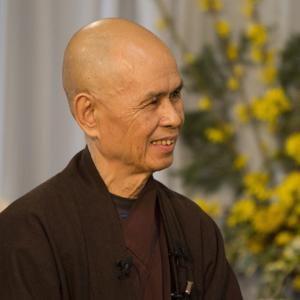

November 28, 2013. 140-minute dharma talk given by Thich Nhat Hanh from New Hamlet of Plum Village. This is the fourth talk of the 2013-2014 Winter Retreat. We begin with two chants from the monastics. The talk was given in Vietnamese and this is an English translation by Sr. Tue Nghiem.
Today we continue studying the Five Universal Mental Formations – they happen in a split of a second. It is everywhere, anytime. This is why they are universal. The first is contact – we spend most of the teaching on this mental formation. It’s a vibration in our sense organs. It’s a modification of the organ when it comes together with the object and consciousness and prepares for the arrival of feeling. This is the traditional definition. Contact is the base for feeling or impression. How can consciousness occur without organs?
The second universal is attention. There is appropriate and inappropriate attention. This is followed by feeling, perception. What is the function of perception? What are the options in terms of volition? Grasp, chase after, run away, fight, or to punish. The example in traditional texts is the magnet. What is appropriate attention? How does this relate to contact?
We can bring in mindfulness – this is one of the five particular mental formations. Mindfulness is the third of the five particular. Stephen Levine defined it as memory; to recall a past experience. Mindfulness is not forgetting. Definitions of mindfulness.
Where there is mindfulness, we can recognize the five universals and not go down the path of suffering. How do we react when we have a feeling or a perception? We can interfere, by pausing and creating a new pathway, with mindfulness and this is a very important practice.
A teaching on the eight consciousnesses, in particular mind and manas and how they are different than the first five sense consciousnesses.
Seeds. Characteristics of a seed. We cannot separate the cause and the effect. There are two, but they are really one. Subject and object cannot be separated.
 View all episodes
 By Kenley Neufeld

4.6
480480 ratings
November 28, 2013. 140-minute dharma talk given by Thich Nhat Hanh from New Hamlet of Plum Village. This is the fourth talk of the 2013-2014 Winter Retreat. We begin with two chants from the monastics. The talk was given in Vietnamese and this is an English translation by Sr. Tue Nghiem.
Today we continue studying the Five Universal Mental Formations – they happen in a split of a second. It is everywhere, anytime. This is why they are universal. The first is contact – we spend most of the teaching on this mental formation. It’s a vibration in our sense organs. It’s a modification of the organ when it comes together with the object and consciousness and prepares for the arrival of feeling. This is the traditional definition. Contact is the base for feeling or impression. How can consciousness occur without organs?
The second universal is attention. There is appropriate and inappropriate attention. This is followed by feeling, perception. What is the function of perception? What are the options in terms of volition? Grasp, chase after, run away, fight, or to punish. The example in traditional texts is the magnet. What is appropriate attention? How does this relate to contact?
We can bring in mindfulness – this is one of the five particular mental formations. Mindfulness is the third of the five particular. Stephen Levine defined it as memory; to recall a past experience. Mindfulness is not forgetting. Definitions of mindfulness.
Where there is mindfulness, we can recognize the five universals and not go down the path of suffering. How do we react when we have a feeling or a perception? We can interfere, by pausing and creating a new pathway, with mindfulness and this is a very important practice.
A teaching on the eight consciousnesses, in particular mind and manas and how they are different than the first five sense consciousnesses.
Seeds. Characteristics of a seed. We cannot separate the cause and the effect. There are two, but they are really one. Subject and object cannot be separated.

10,522 Listeners
2,626 Listeners
373 Listeners
2,633 Listeners

1,470 Listeners

695 Listeners

948 Listeners
868 Listeners

263 Listeners
3,729 Listeners
223 Listeners

813 Listeners

1,362 Listeners

61 Listeners
102 Listeners