
Sign up to save your podcasts
Or

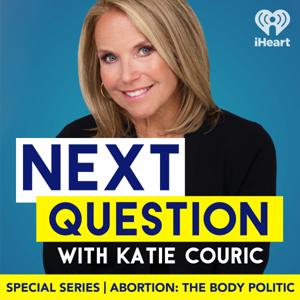


Katie’s special series, Abortion: The Body Politic, has wrapped, but we wanted to give the very last word to a special group of people — people who have had abortions. These first-person stories reveal the lengths people have always had to go through to get an abortion — enduring unnecessary waiting periods, lengthy travel, parental consent needs, manipulative partners, unsupportive family members, shame, guilt, and more. These abortion stories span decades, cultures, race, faiths and gender. They reveal how common abortion is and yet how consistently stigmatized. This episode is dedicated to abortion storytellers everywhere whose voices and personal experience help normalize abortion for all. This episode includes stories from Busy Philipps, Gloria Steinem, Rep. Pramila Jayapal, and more.
More about the organizations mentioned in this podcast:
Action items:
See omnystudio.com/listener for privacy information.
Abortion: The Body Politic started on the ground, visiting two abortion clinics 15 minutes away from each other in two very different states: Missouri and Illinois. On this last episode, we check back in with someone who works in those two clinics to understand the immediate impact the Supreme Court decision had on their patients. Then we consider, what now? Katie interviews Rep. Jayapal (D-WA) who has been a legislative leader in the fight for reproductive rights to understand what lawmakers can do to protect abortion now and in the future. Finally, we hear from a new generation of activists, actors (like Busy Phlipps), musicians (like MILCK and Amanda Shires), and TikTokers about how they are using their platforms, social media and art to not only normalize abortion but also share information (when that information could be criminalized), and, perhaps, change hearts and mind one person at a time.
More information on this episode’s guests and resources:
Action items:
Books and more:
See omnystudio.com/listener for privacy information.
In Part 5 of Abortion: The Body Politic, Katie looks abroad for models of progress — and regress — when it comes to reproductive rights and abortion access. What are the trends and how does the U.S. now compare? We check in with the Center for Reproductive Rights to find out. Perhaps no region has seen more progress than Latin America. Human Rights lawyer and one of the founders of the Green Wave movement, Paula Ávila-Guillén, shares her experiences on the front lines of the decades-long fight for reproductive justice and what Americans can learn from our sisters to the South. We also hear from an activist in Mexico who is helping people across the border access abortion care they can no longer get in the United States. And academic, Lina-Maria Murillo gives us context for the unique relationship the United States and Mexico share when it comes to abortion access. There’s no denying the fact that many of the countries we are highlighting are largely conservative and Catholic. What does the progress these Catholic countries have made say about our own complicated assumptions about religion and abortion. We hear from several leaders of faith from a Jewish Rabbi to a Baptist Reverend and leaders from organizations like, Catholics for Choice and SACRED, about how they have worked reproductive rights and abortion access into their faith practice.
More information on this episode’s guests and resources
Books and more:
Guests include:
See omnystudio.com/listener for privacy information.
In Part 4 of Abortion: The Body Politic, Katie examines how abortion is explored and reflected in popular culture and Hollywood. Because whether we realize it or not, the movies we have loved and the TV shows we watch represent the collective imagination of our culture at particular moments in time. And for much of the past 50 years, that collective imagination was riddled with problematic abortion tropes that perpetuates stereotypes about the procedure and the people who seek it out. But the good news is that in the past decade, more showrunners and filmmakers — and even studios — telling more abortion stories and even taking some risks. Katie takes listeners to the front row of a new comedy show about abortion, aptly named, “Oh God A Show About Abortion,” from comedian Alison Leiby. Filmmakers Gillian Robespierre (“Obvious Child,” 2014), Rachel Lee Goldenberg (“Unpregnant,” 2020), and Dawn Porter (“Trapped,” 2016) share the origin stories of their narrative-busting movies and what more Hollywood and creatives need to do in the long fight toward reproductive rights.
More information on this episode’s guests and resources:
TV Shows, movies and more:
See omnystudio.com/listener for privacy information.
On Part 3 of Abortion: The Body Politic focuses on Roe and its unraveling. The last living Roe prosecutor, Linda Coffee, shares her recollections of that historic Supreme Court case and how she found out she had won. We learn of the immediate failings of Roe, especially for Black women, and the birth of the Reproductive Justice movement. Experts trace the politicization of abortion, the belated moral-issue grab by evangelicals, the violence that hit abortion doctors and clinics in the 1990s, and the anti-abortion strategy that forever altered American politics. We hear first-person experiences of long-time abortion doctors as well as fresh medical students who share why they felt inspired to join the cause. We also hear from two abortion storytellers about their experiences navigating a convoluted system that can be particularly apathetic to the needs of those seeking later abortions.
More information on this episode’s guests and resources:
Books and more
See omnystudio.com/listener for privacy information.
In Part 2 of Abortion: The Body Politic, we step into the past, long before Roe, and trace the roots of today’s abortion’s debate to understand — if abortions have always happened and the majority of Americans have always believed they should be legally accessible — why is abortion such a contentious, even volatile, issue in this country. In this journey, a new narrative of reproductive resistance comes to the surface. Women, particularly Black, brown and indigenous, have always made choices that are best for their bodies, families, and lives — no matter the obstacles men have placed before them. In these stories of resistance we also hear first-hand accounts of surprising allies in underground abortion access, courage in the face of limited reproductive choices, and a relentless push for bodily autonomy. The illegal period before Roe is a mirror to our impending, post-Roe future. It’s vital that we pay attention.
More information on this episode’s guests and resources:
Books and more:
See omnystudio.com/listener for privacy information.
In Part 1 of Abortion: The Body Politic, we explore the current state of abortion access. Katie Couric visits who abortion clinics that straddle the Missouri-Illinois border. They are only 15 minutes but — because of Missouri’s state-imposed restrictions — worlds apart. We also find out what types of abortion are available today, how people access them, and what it is like to get an abortion in today’s charged climate. We hear from abortion fund organizers, doctors in restrictive and progressive states, and people from all over the country, many of whom are already living in a post-Roe world. We also find out what is at stake for the upcoming Supreme Court decision that is expected to reverse the landmark 1973 decision that guaranteed the right to a safe and legal abortion.
More information on this episode’s guests and resources:
Organizations:
Books and more:
See omnystudio.com/listener for privacy information.
Forty-nine years ago, the landmark Roe v Wade decision guaranteed women the right to a safe, legal abortion. This June, the Supreme Court is expected to gut that historic ruling, triggering restrictive abortion laws in at least 23 states. While the United States is on the precipice of stepping back this women’s health right, the rest of the world has seen a trend of liberalizing abortion laws over the past 25 years. In this limited, narrative series from Next Question with Katie Couric, we explore the history — and future — of abortion in this country. In this 6-episode series, Katie takes listeners inside abortion clinics, front row at an abortion comedy show, and shares intimate, first-person experiences of people — from the illegal period to now — who have had abortions and the stories of those who have cared for them. There’s never been a more urgent time to understand how we got here and how reproductive rights can apply to everyone.
See omnystudio.com/listener for privacy information.
This series began in the past, to better understand the origin and history of our ongoing fight for voting rights. And as Turnout comes to a close, we consider its future. Where do we go from here? What lessons can we take with us, and what impact might this election have on our ongoing push for a more inclusive democracy and a more perfect union. In this last episode of Turnout with Katie Couric, we hear from some of our previous guests — including Wendy Weiser, Gilda Daniels, and Tyler Okeke — about the biggest takeaways from the 2020 election and their impact on our democracy. But first, an interview with someone whose job it is to lay a civics foundation for the next generation of voters. Greg Cruey is a middle school social studies teacher in War, West Virginia — a one-time coal mining center that is now one of the poorest areas in the country. Because Mr. Cruey explains our voting system, our elections, and our democracy to his 6th, 7th, and 8th graders each year, we wanted to hear how he might put our 2020 experience into context.
Read more about the people and organizations mentioned in this episode:
What it’s like to teach children about the election, and its results, in deep-red Trump country, by Hanna Natanson (Washington Post)
Wendy Weiser is the Vice President for Democracy at the Brennan Center for Justice at New York University Law School
Gilda Daniels is an associate professor at the University of Baltimore School of Law, as well as litigation director at Advancement Project national office and author of ‘Uncounted: The Crisis of Voter Suppression in America.’
Tyler Okeke is a Vote at 16 Youth Organizer with Power California and a second-year student at the University of Chicago.
Learn more about your ad-choices at https://www.iheartpodcastnetwork.com
See omnystudio.com/listener for privacy information.
You’ve no doubt heard that the 2020 election welcomed historic turnout. But what do those high numbers of voters mean for our democracy, for future elections, and for the warring political parties as they conduct their post-mortems? On this episode of Turnout with Katie Couric, we hear from a data journalist who is starting to comb through the numbers. Neal Rothschild, director of audience and political data reporter for Axios, shares the four big takeaways that help explain the 2020 election. Then, Katie talks with her friend, the best-selling author Mitch Albom about the state of our divisiveness, the media’s problem, how we can find ways to reconnect and start to move forward as a country together.
More about the episodes and guests featured in this episode:
Four demographic trends that explain Biden’s victory (Axios)
Read more from Neal Rothschild or find him on Twitter
Mitch Albom: The election will be meaningless if we don’t change our ways (Detroit Free Press)
Find more about Mitch Albom’s books at his website.
Learn more about your ad-choices at https://www.iheartpodcastnetwork.com
See omnystudio.com/listener for privacy information.
From the publisher's feed
Welcome to Katie Couric's special series podcast feed, home to Katie's deep dives into the big issues of the day. The most recent iteration is Abortion: The Body Politic, a 6-part narrative series…

3,344 Listeners

4,667 Listeners

244 Listeners

8 Listeners

8 Listeners

352 Listeners

63 Listeners

249 Listeners

142 Listeners

1,550 Listeners

839 Listeners

750 Listeners

63 Listeners

276 Listeners

159 Listeners

1,035 Listeners

19,148 Listeners

18 Listeners

189 Listeners

59 Listeners

34 Listeners

26 Listeners