
Sign up to save your podcasts
Or

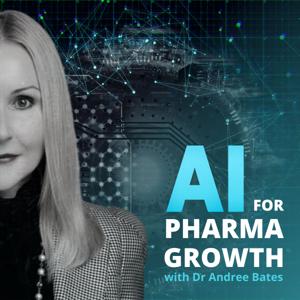


In this solo episode of AI For Pharma Growth, Dr Andree Bates explores why many pharma teams do not have an AI problem at all. They have a capability problem.
Dr Andree starts with a simple question: when was your team last properly trained on AI for their specific role? Not when they were given access to tools, licences or a generic use policy, but when they were trained to use AI effectively, safely and compliantly in their actual workflow.
The episode challenges the usual explanations for disappointing AI results: the model was not good enough, the vendor was wrong, the data was not ready, or the organisation resisted change. In many cases, the tools work, the pilots are useful and the training lands. But the working knowledge needed to use AI well is uneven, fragile and decays over time.
Dr Andree explains why this matters so much in pharma. High-value AI work is often judgement-led: medical information responses, payer materials, safety narratives, regulatory documents and MLR-compatible content. AI can support these tasks, but only when users can tell the difference between a strong draft and a merely plausible one.
She also discusses the research behind skill decay, including why cognitive and accuracy-dependent skills fade faster than simple speed-based or physical skills. That is especially important in pharma, where the cost of a confident but wrong output can become a compliance, regulatory or patient safety issue.
The key message is clear: AI capability is not something you achieve once. It has to be maintained. The functions that lead in AI will not simply be the ones with the most licences or training events. They will be the ones that treat capability as something with a rate of decay and build systems to keep it current.
Topics Covered
Why AI underperformance is often a capability problem
The difference between access, policy and real training
Why confident AI use varies across teams
AI in judgement-led pharma workflows
Skill decay and why 90 days matters
Why high-value AI workflows are often forgotten fastest
The risk of outdated working knowledge
Why training is ignition, not maintenance
The limits of AI champions and internal portals
Three questions to ask your function this week
Eularis helps pharma and biotech leaders turn AI activity into board-defensible governed strategy and measurable commercial outcomes.
If your CFO asked tomorrow for the projected return of each major AI initiative - by year, across three years, with explicit adoption, operating cost and redeployment assumptions - could you produce an answer that survives scrutiny?
And if you could: would you know which of those initiatives most moves the company toward the outcomes it's exposed on over the next three years? Those are two different questions, and most organisations can't answer either. A strong initiative-level ROI tells you a project is defensible. It doesn't tell you it belongs among your top five. Capital spent on a second-order opportunity is capital no longer available for a first-order one — and no amount of downstream rigour recovers value that was never strategically prioritised.
The Eularis AI Strategic Blueprint models both levels: a financial case for every prioritised initiative, and a rigorously modelled ranking of which ones create the most material value against your commercial objectives — then sequences them by dependency rather than enthusiasm, with governance designed for pharma's regulatory reality. See what a board-defensible AI strategy contains → eularis.com/ai-strategic-blueprint-for-pharma
About the Podcast
AI For Pharma Growth is the podcast from Dr Andree Bates, helping pharma, biotech and healthcare organisations understand how AI-based technologies can save time, grow brands and improve company results. The show demystifies AI for biopharma leaders, from start-up biotech through to Big Pharma.
Dr. Andree Bates LinkedIn | Facebook | X
In this episode of AI For Pharma Growth, Dr Andree Bates speaks with Nijat Ahmadov, CEO of Nucs AI, about molecular imaging as one of pharma’s most underused data assets.
Nijat explains why PET, CT and other molecular imaging data remain largely “untouched”: clinically valuable and created at scale, but still too often trapped in qualitative reads rather than structured, standardised data that can support decision making. As radioligand therapies expand in oncology, that gap becomes harder to ignore.
The conversation explores how AI can help turn molecular imaging into computable, decision-grade data for patient selection, response monitoring and companion diagnostic strategy. Nijat argues that AI is no longer a nice-to-have in this space. Without it, pharma risks losing confidence in the outcomes that affect adoption, reimbursement and commercial success.
They also discuss what it will take for AI-derived imaging biomarkers to become regulatory grade: analytical validation, reproducibility, diverse data sets, clinical validation and evidence that endpoints are meaningful, not just technically impressive.
The key message is that imaging is not only diagnostic. Once structured properly, it can reveal predictive signals about disease behaviour and treatment response, making it a powerful asset for pharma teams building the next generation of oncology trials.
Topics Covered
Why molecular imaging is still underused
Turning PET and CT scans into structured data
Radioligand therapy and patient selection
Moving beyond eligible vs not eligible
AI-derived imaging biomarkers
Clinical validation and regulatory trust
Imaging data as a competitive moat
Why prediction matters more than diagnosis
Eularis helps pharma and biotech leaders turn AI activity into board-defensible governed strategy and measurable commercial outcomes.
If your CFO asked tomorrow for the projected return of each major AI initiative - by year, across three years, with explicit adoption, operating cost and redeployment assumptions - could you produce an answer that survives scrutiny?
And if you could: would you know which of those initiatives most moves the company toward the outcomes it's exposed on over the next three years? Those are two different questions, and most organisations can't answer either. A strong initiative-level ROI tells you a project is defensible. It doesn't tell you it belongs among your top five. Capital spent on a second-order opportunity is capital no longer available for a first-order one — and no amount of downstream rigour recovers value that was never strategically prioritised.
The Eularis AI Strategic Blueprint models both levels: a financial case for every prioritised initiative, and a rigorously modelled ranking of which ones create the most material value against your commercial objectives — then sequences them by dependency rather than enthusiasm, with governance designed for pharma's regulatory reality. See what a board-defensible AI strategy contains → eularis.com/ai-strategic-blueprint-for-pharma
About the Podcast
AI For Pharma Growth is the podcast from Dr Andree Bates, helping pharma, biotech and healthcare organisations understand how AI-based technologies can save time, grow brands and improve company results. The show demystifies AI for biopharma leaders, from start-up biotech through to Big Pharma.
Dr. Andree Bates LinkedIn | Facebook | X
In this episode of AI For Pharma Growth, Dr Andree Bates speaks with Jitesh Halai, founder and CEO of OneSC, about what the Qualified Person role should look like in a more proactive, digitally connected pharmaceutical supply chain.
Jitesh explains how many QPs are still forced into reactive work: chasing documents, checking versions, searching inboxes, reconciling batch data across disconnected systems and trying to work out what is holding up release. In virtual pharma environments, where much of the supply chain is outsourced, that burden becomes even heavier.
The conversation explores how platforms like OneSC can create a single source of truth across supply chain partners, giving QPs live visibility of batch status, documentation, review progress and quality signals. Instead of waiting weeks for all documents to arrive before spotting a packaging, leaflet or batch data issue, automated checks can flag risks much earlier.
Jitesh also discusses how AI, OCR and automation can reduce repetitive administrative work, without replacing human judgement. The aim is not to remove the QP from the process, but to give them more time for the work they were trained to do: critical review, risk assessment and patient safety decisions.
The key message is clear: the future QP should not be fighting their mailbox. They should have consolidated batch information, automated signals and the confidence to move from reactive release management to proactive quality oversight.
Topics Covered
Why QPs are stuck in reactive work
Batch review, release and document chasing
The burden of disconnected systems
Creating a single source of truth
Automated checks for earlier risk detection
AI, OCR and automation in quality workflows
Reducing cognitive burden for QPs
Why human judgement still matters
How real-time auditing may evolve
Eularis helps pharma and biotech leaders turn AI activity into board-defensible governed strategy and measurable commercial outcomes.
If your CFO asked tomorrow for the projected return of each major AI initiative - by year, across three years, with explicit adoption, operating cost and redeployment assumptions - could you produce an answer that survives scrutiny?
And if you could: would you know which of those initiatives most moves the company toward the outcomes it's exposed on over the next three years? Those are two different questions, and most organisations can't answer either. A strong initiative-level ROI tells you a project is defensible. It doesn't tell you it belongs among your top five. Capital spent on a second-order opportunity is capital no longer available for a first-order one — and no amount of downstream rigour recovers value that was never strategically prioritised.
The Eularis AI Strategic Blueprint models both levels: a financial case for every prioritised initiative, and a rigorously modelled ranking of which ones create the most material value against your commercial objectives — then sequences them by dependency rather than enthusiasm, with governance designed for pharma's regulatory reality. See what a board-defensible AI strategy contains → eularis.com/ai-strategic-blueprint-for-pharma
About the Podcast
AI For Pharma Growth is the podcast from pioneering Pharma Artificial Intelligence entrepreneur Dr Andree Bates, created to help pharma, biotech and healthcare organisations understand how AI-based technologies can save time, grow brands, and improve company results. This show blends deep sector experience with practical conversations that demystify AI for biopharma leaders, from start-up biotech right through to Big Pharma.
Dr. Andree Bates LinkedIn | Facebook | X
In this solo episode of AI For Pharma Growth, Dr Andree Bates explains why “we’re doing AI” is not a credible board answer, and why activity, pilots and steering committees are not the same as strategy.
Dr Andree breaks down two common answers leadership teams give when asked about AI strategy.
The episode explores why crowdsourced use cases often become “use case copying” rather than genuine internal innovation. A pain point may be real, and a pilot may work, but that does not mean it is one of the highest-value AI opportunities for the organisation. Without financial modelling, business-unit submissions are only inputs, not prioritisation.
Dr Andree also outlines four structural conditions that explain why AI investment often fails to realise value: the value prioritisation gap, the decision rights gap, the data ownership conflict, and incentive misalignment. These issues are connected, and if they are diagnosed in the wrong order, the strategy usually fails at the next layer.
The core message is clear: boards do not need a list of AI activity. They need a strategy they can govern, with clear priorities, financial assumptions, sequencing, ownership and metrics that can be tested over time.
Topics Covered
Why “we’re doing AI” is not a board answer
Activity, demand and value: the difference that matters
Why business-unit use cases are not strategy
Use case copying and internal innovation theatre
The value prioritisation gap
Decision rights between pilot and production
Data ownership and access conflicts
Incentives, adoption and rational resistance
What finance needs to see before funding AI
What a real board-level AI answer sounds like
Eularis helps pharma and biotech leaders turn AI activity into board-defensible governed strategy and measurable commercial outcomes.
If your CFO asked tomorrow for the projected return of each major AI initiative - by year, across three years, with explicit adoption, operating cost and redeployment assumptions - could you produce an answer that survives scrutiny?
And if you could: would you know which of those initiatives most moves the company toward the outcomes it's exposed on over the next three years? Those are two different questions, and most organisations can't answer either. A strong initiative-level ROI tells you a project is defensible. It doesn't tell you it belongs among your top five. Capital spent on a second-order opportunity is capital no longer available for a first-order one — and no amount of downstream rigour recovers value that was never strategically prioritised.
The Eularis AI Strategic Blueprint models both levels: a financial case for every prioritised initiative, and a rigorously modelled ranking of which ones create the most material value against your commercial objectives — then sequences them by dependency rather than enthusiasm, with governance designed for pharma's regulatory reality. See what a board-defensible AI strategy contains → eularis.com/ai-strategic-blueprint-for-pharma
About the Podcast
AI For Pharma Growth is the podcast from pioneering Pharma Artificial Intelligence entrepreneur Dr Andree Bates, created to help pharma, biotech and healthcare organisations understand how AI-based technologies can save time, grow brands, and improve company results.This show blends deep sector experience with practical conversations that demystify AI for biopharma leaders, from start-up biotech right through to Big Pharma. Each episode features experts building AI-powered tools that are driving real-world results across discovery, R&D, clinical trials, medical affairs, market access, regulatory, insights, sales, marketing, and more.
Dr. Andree Bates LinkedIn | Facebook | X
In this episode of AI For Pharma Growth, Dr Andree Bates speaks with Bret Bostwick from Breyer Capital about the rare path from genetics, clinical medicine and drug development into venture capital, and what that perspective reveals about the future of healthcare innovation.
Bret shares how the release of the Human Genome Project first pulled him into genetics, and how clinical work with patients made the science deeply practical. As a medical geneticist, he saw families finally receive a diagnosis, but often without a treatment option. That experience led him towards programmable therapeutics, RNA-based medicines and the translational work required to move from biological insight into human trials.
The conversation explores what makes a therapeutic company investable beyond the science alone. Bret explains why breakthroughs often fail not just because of technical risk, but because the right people, culture, operating experience and business model are not around the table. For him, one of the first questions is not simply “does the science work?” but “what problem is this company really solving, and is this the most elegant solution?”
They also discuss where AI is overhyped and underestimated in medicine. Bret is sceptical of claims that AI can compress a 12-year clinical development journey into two years, because biology still requires time to evaluate safety and efficacy. But he sees enormous potential in agentic AI across the full healthcare and pharma stack, from discovery and preclinical design to manufacturing, commercialisation and patient finding.
The key message is that the future of healthcare will belong to people and companies that can bridge disciplines: genetics, computation, medicine, product development and investment. The biggest opportunities may sit at the intersections, where scientific insight, platform thinking and practical translation come together.
Topics Covered
Moving from genetics and clinical medicine into venture capital
Lessons from RNA therapeutics and translational medicine
Why target genetics matters in drug development
What investors look for beyond the science
Why the right team and culture are critical
Platform companies vs single-asset thinking
Where AI can and cannot compress drug development
Agentic AI across pharma and healthcare workflows
Founder mistakes when pitching healthcare investors
Eularis helps pharma and biotech leaders turn AI activity into board-defensible strategy and measurable commercial outcomes.If your organisation has plenty of AI in motion but very little that moves the commercial needle in a way the board can see, start with our 10-Day AI Diagnostic Sprint. It’s a focused diagnostic that surfaces what’s actually broken and what’s blocking results, before you invest in a larger strategy effort.
The Sprint diagnoses the problem. The AI Strategic Blueprint that follows is where we build the board-defensible strategy and plan.Details at eularis.com.
AI platforms and tools solve specific problems. Strategy makes sure you’re solving the right ones, in the right order. If you want help mapping priorities as you evaluate what to roll out next, send me a LinkedIn DM starting with ‘PRIORITIES’ and two lines: what’s already in flight, and the decision you’re trying to make next.
About the Podcast
AI For Pharma Growth is the podcast from pioneering Pharma Artificial Intelligence entrepreneur Dr Andree Bates, created to help pharma, biotech and healthcare organisations understand how AI-based technologies can save time, grow brands, and improve company results.This show blends deep sector experience with practical conversations that demystify AI for biopharma leaders, from start-up biotech right through to Big Pharma. Each episode features experts building AI-powered tools that are driving real-world results across discovery, R&D, clinical trials, medical affairs, market access, regulatory, insights, sales, marketing, and more.
Dr. Andree Bates LinkedIn | Facebook | X
In this episode of AI For Pharma Growth, Dr Andree Bates speaks with Smbat Rafayelyan, founder and CEO of Bioneex, about how AI is reshaping biopharma business development, deal scouting and asset evaluation.
Business development has traditionally relied heavily on relationships, conferences, databases, analyst reports and manual search. But as therapeutic pipelines, publications, patent filings and global biotech activity expand, that old model is becoming harder to sustain. Smbat explains why teams that only rely on their network risk missing valuable assets before they even know they were available.
The conversation explores how AI can act as a deal scout, helping biopharma and VC teams identify, structure and evaluate opportunities faster. Smbat explains how Bioneex allows biotech companies to submit non-confidential asset information, while AI extracts, validates and compares that data against external sources, curated databases and market intelligence.
They also discuss where AI is most useful in the BD process. The aim is not to replace human judgement, but to reduce the overwhelming search space. If AI can narrow thousands of potential assets down to a small, relevant shortlist, expert teams can spend their time on the work that matters: diligence, strategic fit, deal judgement and human relationships.
Smbat also warns that AI is not magic. General-purpose language models are not enough for serious deal sourcing. Effective AI scouting requires structured data, validation, multiple specialised models, human review and infrastructure built specifically for biopharma business development.
Topics Covered
Why traditional deal scouting is too slow
The limits of relationship-led deal flow
How AI supports asset search and evaluation
Matching biotech assets with pharma and VC priorities
Why structured and validated data matters
AI use cases beyond drug discovery
Narrowing thousands of assets into focused shortlists
Failure modes of general-purpose AI in BD
How BD teams may change over the next few years
Why human judgement still matters in due diligence
Eularis helps pharma and biotech leaders turn AI activity into board-defensible strategy and measurable commercial outcomes.
If your organisation has plenty of AI in motion but very little that moves the commercial needle in a way the board can see, start with our 10-Day AI Diagnostic Sprint. It’s a focused diagnostic that surfaces what’s actually broken and what’s blocking results, before you invest in a larger strategy effort.
The Sprint diagnoses the problem. The AI Strategic Blueprint that follows is where we build the board-defensible strategy and plan.
Details at eularis.com.
AI platforms and tools solve specific problems. Strategy makes sure you’re solving the right ones, in the right order. If you want help mapping priorities as you evaluate what to roll out next, send me a LinkedIn DM starting with ‘PRIORITIES’ and two lines: what’s already in flight, and the decision you’re trying to make next.
About the Podcast
AI For Pharma Growth is the podcast from pioneering Pharma Artificial Intelligence entrepreneur Dr Andree Bates, created to help pharma, biotech and healthcare organisations understand how AI-based technologies can save time, grow brands, and improve company results.This show blends deep sector experience with practical conversations that demystify AI for biopharma leaders, from start-up biotech right through to Big Pharma. Each episode features experts building AI-powered tools that are driving real-world results across discovery, R&D, clinical trials, medical affairs, market access, regulatory, insights, sales, marketing, and more.
Dr. Andree Bates LinkedIn | Facebook | X
In this episode of AI For Pharma Growth, Dr Andree Bates speaks with Nuno Valério, Head of Innovation, R&D Quality at Merck Healthcare, about the part of AI governance most organisations rarely talk about: the operational 80% that decides whether AI survives a pharma audit.
Nuno explains why governance cannot stop at policies, committees, risk frameworks and model registers. Those visible elements matter, but they are only the start. In a GxP environment, auditors will want to reconstruct how a decision was made, which data was used, which model version was involved, what validation evidence exists, and where the human decision trail sits.
The discussion explores how AI governance is moving from strategy decks into implementation. Pharma teams are under pressure to turn AI into value, but in regulated environments the margin for error is close to zero. That means adoption, trust, validation, traceability and operational discipline all matter just as much as the model itself.
Nuno also shares a practical way to pressure test readiness: take an AI tool already in production, pick a decision from a few months ago, and try to fully reconstruct the inputs, model version, validation status, review trail and evidence. If that takes more than 48 hours, the system is probably not audit ready.
The key message is that AI governance is not just a compliance function. Done properly, it becomes a competitive capability, helping organisations deploy AI faster, safer and with greater trust.
Topics Covered
Why AI governance is more than frameworks and policies
The visible 20% vs the operational 80%
What auditors actually want to reconstruct
GxP expectations for AI systems
Validation, traceability and change control
Human oversight and decision accountability
Why governance must include how people use AI
Vendor selection and audit-ready AI
Why trust by design could become competitive advantage
Eularis helps pharma and biotech leaders turn AI activity into board-defensible strategy and measurable commercial outcomes.If your organisation has plenty of AI in motion but very little that moves the commercial needle in a way the board can see, start with our 10-Day AI Diagnostic Sprint. It’s a focused diagnostic that surfaces what’s actually broken and what’s blocking results, before you invest in a larger strategy effort.
The Sprint diagnoses the problem. The AI Strategic Blueprint that follows is where we build the board-defensible strategy and plan.
Details at eularis.com.
AI platforms and tools solve specific problems. Strategy makes sure you’re solving the right ones, in the right order. If you want help mapping priorities as you evaluate what to roll out next, send me a LinkedIn DM starting with ‘PRIORITIES’ and two lines: what’s already in flight, and the decision you’re trying to make next.
About the Podcast
AI For Pharma Growth is the podcast from pioneering Pharma Artificial Intelligence entrepreneur Dr Andree Bates, created to help pharma, biotech and healthcare organisations understand how AI-based technologies can save time, grow brands, and improve company results.This show blends deep sector experience with practical conversations that demystify AI for biopharma leaders, from start-up biotech right through to Big Pharma. Each episode features experts building AI-powered tools that are driving real-world results across discovery, R&D, clinical trials, medical affairs, market access, regulatory, insights, sales, marketing, and more.
Dr. Andree Bates LinkedIn | Facebook | X
In this solo episode of AI For Pharma Growth, Dr Andree Bates tackles one of the biggest reasons pharma AI strategies stall: they are not presented in the financial language a CFO can approve.
Dr Andree argues that the issue is rarely whether AI has value. The issue is that most organisations cannot quantify that value in a way that connects to business outcomes, baselines, investment priorities, timelines and return. Too often, teams arrive with pilots, use cases, vendor proposals and enthusiasm, but no financial model that can survive board-level scrutiny.
With the patent cliff putting hundreds of billions in revenue at risk, AI is being positioned as a strategic lever across R&D, commercial, medical, regulatory and market access. But activity is not strategy. A use case that looks impressive in isolation may not be the one that moves the business most.
This episode explains what a credible AI financial case needs to include: initiative-level modelling, realistic cost assumptions, adoption scenarios, redeployment of time and talent, technology cost changes, the cost of inaction, and sequencing. Dr Andree also explains why implementation order can change return, because some initiatives create the data, governance and organisational readiness needed for others to work.
The core message is clear: AI strategy must be treated as a financial discipline, not just a technology ambition. If you cannot explain which AI initiatives matter most, why they come first, what return they should generate and when, you do not yet have the case your CFO needs.
Topics Covered
Why AI business cases often fail with CFOs
The difference between AI activity and AI strategy
Why pilot ROI is not enough
Patent cliff pressure and financial rigour
Comparing AI initiatives against business priorities
Redeployment and real financial return
Technology cost modelling
The cost of not acting
Why sequencing changes AI ROI
Eularis helps pharma and biotech leaders turn AI activity into board-defensible strategy and measurable commercial outcomes. If your organisation has plenty of AI in motion but very little that moves the commercial needle in a way the board can see, start with our 10-Day AI Diagnostic Sprint. It’s a focused diagnostic that surfaces what’s actually broken and what’s blocking results, before you invest in a larger strategy effort.
The Sprint diagnoses the problem. The AI Strategic Blueprint that follows is where we build the board-defensible strategy and plan.
Details at eularis.com
If this episode described your situation, send me a LinkedIn DM starting with ‘SENSECHECK’ and two things: the question you’re trying to answer internally, and what’s currently in flight. I’ll reply with what I’d need to see to turn that activity into a defensible plan, and the next step.
About the Podcast
AI For Pharma Growth is the podcast from pioneering Pharma Artificial Intelligence entrepreneur Dr Andree Bates, created to help pharma, biotech and healthcare organisations understand how AI-based technologies can save time, grow brands, and improve company results.This show blends deep sector experience with practical conversations that demystify AI for biopharma leaders, from start-up biotech right through to Big Pharma. Each episode features experts building AI-powered tools that are driving real-world results across discovery, R&D, clinical trials, medical affairs, market access, regulatory, insights, sales, marketing, and more.
Dr. Andree Bates LinkedIn | Facebook | X
For most of modern medicine, biological data has been built around population averages: what people like you might experience, rather than what you personally will. In this episode, Dr Andree Bates speaks with Ken Clark, co-founder and CEO of Enigma Genetics, about moving from population models to personal intelligence, and what it could mean for patients, pharma and the future of biological data.
Ken shares the personal medical experience that led him into this work. After multiple surgeries and a persistent infection, he found that the data needed to understand what had changed in his own biology simply wasn’t available in a useful way. That sparked the idea of creating a personal biological “version history”, a healthy baseline that can be compared against future changes as science and computation improve.
The conversation explores Enigma Genetics’ vision for an AI that lives within a personal health profile, continuously aggregating genetic data, medical records, imaging, wearables and other health information to help build the most comprehensive picture possible for the individual and their doctor. The goal is not to replace medical judgement, but to give clinicians a richer, more personalised foundation for diagnosis and decision making.
Ken also discusses why consent, identity and data ownership need to be rethought. Instead of medical and genetic data being locked inside institutions, Enigma’s model imagines a system where individuals control access, grant or revoke consent, and become active participants in how their data is used.
The key message is that precision medicine cannot fully mature if it is still built on population-level thinking. To unlock the next stage, biological intelligence may need to become more personal, consented, longitudinal and controlled by the individual.
Topics Covered
Why population models fall short for individual biology
Creating a personal biological “version history”
Personal AI profiles for health data and clinical support
Genetic data, imaging, medical records and wearables
Consent, identity, access control and data ownership
Real world evidence and individual-level consent
Clinical trials, rare disease data and patient participation
The future of personalised biological intelligence
Eularis helps pharma and biotech leaders turn AI activity into board-defensible strategy and measurable commercial outcomes.
If your organisation has plenty of AI in motion but very little that moves the commercial needle in a way the board can see, start with our 10-Day AI Diagnostic Sprint. It’s a focused diagnostic that surfaces what’s actually broken and what’s blocking results, before you invest in a larger strategy effort.
The Sprint diagnoses the problem. The AI Strategic Blueprint that follows is where we build the board-defensible strategy and plan.
Details at eularis.com.
AI platforms and tools solve specific problems. Strategy makes sure you’re solving the right ones, in the right order. If you want help mapping priorities as you evaluate what to roll out next, send me a LinkedIn DM starting with ‘PRIORITIES’ and two lines: what’s already in flight, and the decision you’re trying to make next.
About the Podcast
AI For Pharma Growth is the podcast from pioneering Pharma Artificial Intelligence entrepreneur Dr Andree Bates, created to help pharma, biotech and healthcare organisations understand how AI-based technologies can save time, grow brands, and improve company results.This show blends deep sector experience with practical conversations that demystify AI for biopharma leaders, from start-up biotech right through to Big Pharma. Each episode features experts building AI-powered tools that are driving real-world results across discovery, R&D, clinical trials, medical affairs, market access, regulatory, insights, sales, marketing, and more.
Dr. Andree Bates LinkedIn | Facebook | X
Most pharma companies are racing to apply AI across drug discovery, development and commercialisation, but many of those efforts will fail for one simple reason: the data underneath is not good enough. In this episode, Dr Andree Bates speaks with Lisa Downey, CEO of DrugBank, about why trusted, structured biomedical intelligence is the foundation pharma AI cannot succeed without.
Lisa explains how DrugBank has spent 20 years building and continuously curating a biomedical knowledge layer across drugs, targets, diseases and trials. With more than 156 million structured data points and over 60,000 academic citations, DrugBank is not just another dataset. It is a continuously maintained reference system designed so AI can reason over biomedical knowledge with traceability and trust.
The conversation explores why most pharma AI projects fall short. Lisa argues the blocker is rarely the model. Instead, teams hit the wall because internal data lakes are not harmonised, licensed third-party data may not be AI-ready, and public data sources are incomplete or not maintained for enterprise use. Brilliant ML teams then spend most of their time cleaning and reconciling data instead of creating real scientific or commercial value.
Lisa also breaks down what pharma buyers should test before trusting any AI vendor: interoperability, harmonisation, evidence lineage and continuous validation. She explains why human pharmaceutical expertise still matters, introducing DrugBank’s “human over the loop” approach, where experts set scientific boundaries, validation criteria and judgement so AI can scale inside trusted guardrails.
Topics Covered
Why most pharma AI projects fail before they scale
Data quality as the foundation of trustworthy AI
DrugBank’s 20 years of curated biomedical intelligence
Internal data lakes, third-party data and public data limitations
Why hallucinations often start upstream of the model
How to evaluate data quality: interoperability, harmonisation, lineage and validation
Human over the loop vs human in the loop
Why defensible AI needs traceable sourced facts
The difference between confident AI and grounded AI
Why proprietary context matters more than raw data
Eularis helps pharma and biotech leaders turn AI activity into board-defensible strategy and measurable commercial outcomes.If your organisation has plenty of AI in motion but very little that moves the commercial needle in a way the board can see, start with our 10-Day AI Diagnostic Sprint. It’s a focused diagnostic that surfaces what’s actually broken and what’s blocking results, before you invest in a larger strategy effort.
The Sprint diagnoses the problem. The AI Strategic Blueprint that follows is where we build the board-defensible strategy and plan.Details at eularis.com.
AI platforms and tools solve specific problems. Strategy makes sure you’re solving the right ones, in the right order. If you want help mapping priorities as you evaluate what to roll out next, send me a LinkedIn DM starting with ‘PRIORITIES’ and two lines: what’s already in flight, and the decision you’re trying to make next.
About the Podcast
AI For Pharma Growth is the podcast from pioneering Pharma Artificial Intelligence entrepreneur Dr Andree Bates, created to help pharma, biotech and healthcare organisations understand how AI-based technologies can save time, grow brands, and improve company results.This show blends deep sector experience with practical conversations that demystify AI for biopharma leaders, from start-up biotech right through to Big Pharma. Each episode features experts building AI-powered tools that are driving real-world results across discovery, R&D, clinical trials, medical affairs, market access, regulatory, insights, sales, marketing, and more.
Dr. Andree Bates LinkedIn | Facebook | X
From the publisher's feed

772 Listeners

303 Listeners

431 Listeners

964 Listeners
1,835 Listeners

10,102 Listeners