
Sign up to save your podcasts
Or


A memorandum of understanding (MOU) between Alberta and the Canadian federal government was signed on November 27, 2025. It declared a shared goal of making Canada a global energy superpower by building one or more privately financed oil pipelines, co-owned with Indigenous Peoples, to ship at least 1 million barrels per day of low-emission Alberta bitumen, prioritizing routes to Asian markets, and submitting an application to the Major Projects Office by July 1.
Building the pipeline requires building the large-scale oil sands Pathways carbon capture and storage (CCS) project. Alberta and the federal government will also engage with the Government of British Columbia on the pipeline initiative.
Among other commitments, the MOU pledges to suspend the Canadian Electricity Regulations (CER) as they apply to Alberta and to scrap the proposed nationwide oil and gas emissions cap for producers. Further details are expected to be finalized by April 1.
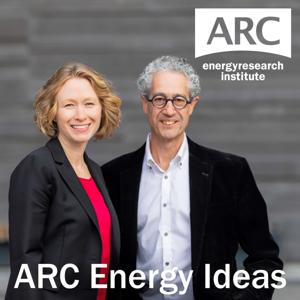
To unpack this tectonic shift in Alberta–Ottawa relations—along with the first wave of media coverage and the deal’s potential benefits for Canada —Peter and Jackie are joined by guest Deborah Yedlin, President and CEO of the Calgary Chamber of Commerce.
Content referenced in this podcast:
Please review our disclaimer at: https://www.arcenergyinstitute.com/disclaimer/
Check us out on social media:
X (Twitter): @arcenergyinst
LinkedIn: @ARC Energy Research Institute
Subscribe to ARC Energy Ideas Podcast
Apple Podcasts
Amazon Music
Spotify
 View all episodes
 By ARC ENERGY RESEARCH INSTITUTE

4.4
1919 ratings
A memorandum of understanding (MOU) between Alberta and the Canadian federal government was signed on November 27, 2025. It declared a shared goal of making Canada a global energy superpower by building one or more privately financed oil pipelines, co-owned with Indigenous Peoples, to ship at least 1 million barrels per day of low-emission Alberta bitumen, prioritizing routes to Asian markets, and submitting an application to the Major Projects Office by July 1.
Building the pipeline requires building the large-scale oil sands Pathways carbon capture and storage (CCS) project. Alberta and the federal government will also engage with the Government of British Columbia on the pipeline initiative.
Among other commitments, the MOU pledges to suspend the Canadian Electricity Regulations (CER) as they apply to Alberta and to scrap the proposed nationwide oil and gas emissions cap for producers. Further details are expected to be finalized by April 1.
To unpack this tectonic shift in Alberta–Ottawa relations—along with the first wave of media coverage and the deal’s potential benefits for Canada —Peter and Jackie are joined by guest Deborah Yedlin, President and CEO of the Calgary Chamber of Commerce.
Content referenced in this podcast:
Please review our disclaimer at: https://www.arcenergyinstitute.com/disclaimer/
Check us out on social media:
X (Twitter): @arcenergyinst
LinkedIn: @ARC Energy Research Institute
Subscribe to ARC Energy Ideas Podcast
Apple Podcasts
Amazon Music
Spotify
1,252 Listeners
399 Listeners

40 Listeners
76 Listeners
112 Listeners

458 Listeners

46 Listeners

32 Listeners
12 Listeners
25 Listeners

82 Listeners

116 Listeners
39 Listeners

10 Listeners

20 Listeners