
Sign up to save your podcasts
Or



Based on Podcast App listening data
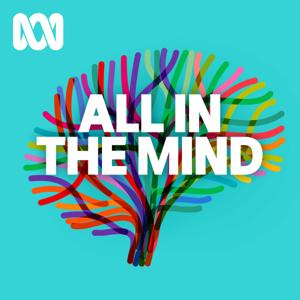
The corpus callosum links one side of our brain to the other. It’s not essential for survival, but in some people it’s missing or malformed, causing quite mild to extreme disabilities. The good news is that research is now revealing that it holds intriguing secrets about brain plasticity.
This program was first broadcast in May 2016.
Most people tend to think of autism as a male disorder, and the character in the film Rain Man often comes to mind. But emerging research shows that girls often have different symptoms which cause them to slip through the net.
This program was originally broadcast in June 2015,
Warning: some listeners may find aspects of this program confronting.
The compelling account of a woman who lived with dissociative identity disorder—and how she eventually became integrated.
If you were given a date from the last five years could you say what day of the week it was? One young woman in Australia can remember every single day of her life since she was born. We hear about her life and the research she’s involved with—as a single participant.
Turn on, tune in and drop out … that was the catch cry of U.S. psychologist Timothy Leary in the 1960s. By 1966 psychedelics were demonised and banned, but now—in controlled scientific settings—there's a psychedelic 'renaissance' in mental health therapy. Early research on the use of ecstasy in the treatment of stress disorders looks promising.
Being a parent can be very rewarding, but if you are managing your own mental health you may not be able to be the parent you’d like to be. It can be sad and confusing for kids too—and they often take on a caring role.
For some people the number six is red and music evokes a range of colours and shapes. Seeing sounds and hearing colours is one type of synesthesia—where the senses are crossed. Meet an 11-year-old girl who was surprised to find out that not everyone sees colourful auras around people, and who feels that numbers have colours and personalities.
Anxiety is an essential human emotion—it kicks in to protect us from threats—but sometimes those threats are only perceived. When worries start to become overwhelming, approximately 25 per cent of us experience clinical anxiety. But it is highly treatable. A ten-year-old girl and a 30-year-old man share their anxious thoughts and their strategies to manage them.
At the age of 12 Martin Pistorius developed a mysterious neurological illness. He fell into a coma and was unable to move or communicate. It was assumed he had no awareness but a couple of years later he began to wake up—yet no-one knew. He was trapped inside his body for almost 10 years until he found a way to communicate. Using computer-generated voice technology he tells us about how he coped with this terrifying ordeal, and how he found the love of his life.
Scientists and philosophers have been perplexed by our sense of the self for millennia. Now, by investigating neurological conditions which disrupt the self—such as body identity disorder, schizophrenia, and the doppelganger effect—neuroscience is finding new clues.
From the publisher's feed
Ranked by our users in the last 21 days
100 Listeners
63 Listeners
119 Listeners
63 Listeners

1,737 Listeners
770 Listeners
132 Listeners
62 Listeners
61 Listeners
64 Listeners

311 Listeners
318 Listeners
1,119 Listeners

150 Listeners
10 Listeners

194 Listeners
114 Listeners
235 Listeners

1,007 Listeners
45 Listeners
115 Listeners