
Sign up to save your podcasts
Or



Based on Podcast App listening data
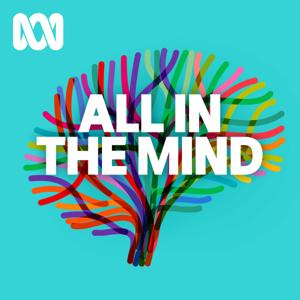
The corpus callosum links one side of our brain to the other. It’s not essential for survival, but in some people it’s missing or malformed, causing quite mild to extreme disabilities. The good news is that research is now revealing that it holds intriguing secrets about brain plasticity.
When a professor of artificial intelligence had disturbing brain injury symptoms as a result of a concussion, he lost his former self—but encouraged by the potential of brain plasticity he changed the course of his life.
Almost everywhere you turn you hear of the benefits of mindfulness. Long-term Buddhist meditators and neuroscientists are now getting together to share the experience and the science of meditation.
Hopefully you haven’t heard of the psychiatric disorder CDHD—because it describes the brain of a zombie. For All In The Mind, neuroscientists and zombie movie nerds unite in the quest for a better understanding of neuroscience—via the zombie brain.
Can problems in your brain make you commit a crime? And if so, how much responsibility is yours? These are the complex questions being raised by the emerging field of neurolaw.
In Australia 700,000 people are living with an acquired brain injury—often as a result of a traffic accident, fall, or contact sport. The injuries range in severity, but new research is emerging that even concussions after one or two knocks to the head should be taken seriously.
Researchers, therapists and neurologists are using music to treat people with brain injuries, and disorders such as Alzheimer’s, dementia and depression. Listening to and performing music can help manage anxiety, aggression, and improve quality of life for these patients.
Placebos, virtual reality gaming, Pavlov’s-dog-style conditioning, and just plain care are some of the proven ways that our minds can treat and heal our bodies. There’s a growing body of scientific evidence confirming what we may already suspect about how mental states can affect health—but what are the limits of mind-body medicine?
Do you, or does someone you know, live with chronic pain? At least 1 in 5 Australians do, and very often the cause of their pain is not evident—it makes treatment particularly challenging. Scientists are now realising that the brain plays a crucial role in how pain is experienced, and it’s opening the way for some innovative treatments.
From the publisher's feed
Ranked by our users in the last 21 days

98 Listeners
62 Listeners
118 Listeners
66 Listeners

1,737 Listeners
779 Listeners

131 Listeners
64 Listeners
60 Listeners
64 Listeners

310 Listeners

315 Listeners

1,120 Listeners

149 Listeners

10 Listeners

194 Listeners
114 Listeners
238 Listeners
1,007 Listeners
46 Listeners
112 Listeners