
Sign up to save your podcasts
Or



For survivors leaving abusive situations, bringing a beloved pet with them can be an important part of reaching safety.
In this episode, host Hillary Leblanc speaks with Carol Latchford, Executive Director of North York Women’s Shelter and a longtime leader in the gender-based violence and family homelessness shelter sector who has spent more than three decades advocating for safer, more inclusive support.
They talk about why being able to bring a pet to the shelter can make a meaningful difference for survivors seeking safety, what it takes to create truly pet-inclusive shelters, and why support needs to consider the whole family.
Carol also shares what she’s learned about building services around dignity, lived experience, and the individual needs of the people and animals who rely on them.
What happens when the way you experience the world changes, but your drive to keep moving forward doesn't?
Today, Hillary is joined by Victoria Nolan, a blind world champion rower, Paralympian, author, executive leader, and motivational speaker. Victoria's story is about much more than elite sport.
They get into what it means to adapt when life changes dramatically, what trust and communication can make or break a team, and what high performance sport taught her about leadership and relying on other people. Victoria also talk about the assumptions people make about disability and what becomes possible when we rethink what someone is capable of.
Women's sport in Canada is growing fast, but does that mean women, girls and gender-diverse people now have equal opportunities?
Today Hillary is joined by Allison Sandmeyer-Graves, CEO of Canadian Women and Sport and a leading voice for gender equity in sport. In our conversation, Allison shares how sports shaped her own sense of belonging, confidence and leadership, and why those opportunities still aren't equally available to every woman, girl and gender-diverse person.
We talk about the systemic barriers built into sport, the growing momentum behind women's professional leagues, and why real progress requires more than simply getting women, girls, and gender-diverse people through the door.
Together, we explore what it will take to build a more inclusive system and how all of us can play a role in making that change happen.
Accessibility shapes how we move through the world, but how often do we actually notice it?
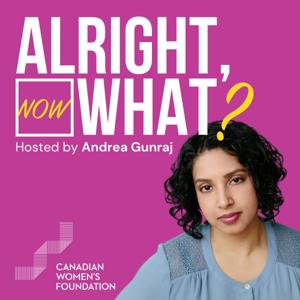
Hi, I'm Hillary LeBlanc, your host for season 9 of the Canadian Women's Foundation podcast, Alright, Now What? Today I'm speaking with Taylor Lindsay Noel, an accessibility advocate, entrepreneur, speaker, and content creator.
Taylor Lindsay-Noel is a Toronto-based entrepreneur, motivational speaker, disability advocate, and content creator. A former Canadian national gymnast, Taylor sustained a life-changing spinal cord injury in 2008 that left her paralyzed from the neck down. Since then, she has built a career centred on entrepreneurship, advocacy, storytelling, and creating greater awareness around disability and accessibility.
We talk about the everyday barriers people with disability continue to face, why lived experience matters when creating accessible spaces, and Taylor's return to competitive sport through para-boccia, with the Paralympics now in her sights.
On today’s episode, we’re joined by Elia Lauzon from Kuujjuaq, Nunavik, whose work and experiences reflect the power of community and intergenerational leadership.
In our conversation, Elia speaks with Alyssa Carpenter from the Canadian Women’s Foundation about growing up in a remote northern community and how youth leadership opportunities helped expand her sense of what was possible for her future.
We’ll also hear how the women and community leaders who came before her helped create pathways for the next generation, and why building stronger communities requires showing up for one another, sharing knowledge, and creating opportunities collectively.
Libby Ward is a writer, speaker, and advocate redefining the motherhood narrative. Through her social media platforms, Libby is known to connect and empower women with honesty, humor, and her relatable voice. She has been featured on the BBC, Good Morning America, and is a member of Reese Witherspoon’s inaugural Hello Sunshine Collective. She lives in Ontario, Canada with her husband and two children.
Jenna Barnable is an award-winning, Disabled changemaker from Newfoundland and Labrador, now based in Nova Scotia. As a disability inclusion advocate and anti-ableism educator, she calls for Disabled, chronically ill and neurodivergent women, girls and gender-diverse people to be protected, respected and empowered. She’s passionate about advancing disability and gender justice by amplifying authentic Disabled representation in leadership and media.
A compelling storyteller with an approachable East Coast touch, Jenna aims for every conversation, podcast interview, digital content series and learning session to empower Disabled self-advocates and supportive community allies. She creates critical anti-ableist, feminist content from her podcast and social media series, to speaking events and free community educational resources. Her work spotlights how interlinked systems of oppression (like colonialism, capitalism, patriarchy, racism and ableism) directly harm Disabled women, girls and gender-diverse people.
Jenna’s combined Disabled lived experience, feminism and expertise in business, communications and DEI offers a unique perspective often sought by Canadian organizations, post-secondary institutes, governments and media. She mentors Disabled youth and peers, particularly in rural and remote places where disability and gender justice support is crucial for change.
With ancestral roots in post-colonial Punjab and Kashmir, Somia Sadiq is a leading Planner who has developed a pioneering practice in engagement, conflict transformation, and negotiating space for those whose voices are often unheard or ignored. Rooted in the work of impact assessment, Somia founded Narratives, an award-winning planning and design firm that emphasizes human-centric, trauma-informed story work, lived experience, and creating space for celebration of ancestral identity. Somia is also the founder of Kahanee and Ravayat, a non-profit organization that amplifies storytelling and dialogue for peacebuilding.
Somia began her professional planning career undertaking impact assessment with a focus on resource, energy, and infrastructure projects. Her Doctorate focuses on understanding the role of Identity, Othering, and Trauma in conflict transformation. She is a writer and a keynote speaker, offering insights on trauma-informed leadership, and fostering resilience in a rapidly changing environment. Recognized for her contributions to the Planning practice in Canada and internationally, Somia was recently inducted into the Canadian Institute of Planners' esteemed College of Fellows, the highest honour for a planner in Canada. Gajarah, her debut novel, is a powerful testament to the power of storytelling in fostering resilience rooted in identity and ancestral strength.
Today, we're joined by mental health leader, storyteller, and executive director of Unsinkable, Hailey Hechtman. Hailey is a passionate advocate for person-centered, lived experience-driven programming.
With over a decade of leadership in the nonprofit sector, Hailey has dedicated her career to building more connected, compassionate systems of care. She founded the Yukon Distress & Support Line in 2014, led interagency disability inclusion efforts across Northern Canada, and championed inclusive employment initiatives rooted in dignity and accessibility.
As the Executive Director of Unsinkable, a national mental health storytelling organization founded by Olympian Silken Laumann, Hailey leads the evolution of a unified, scalable storytelling model that centers lived experience as a driver of connection, insight, and change. Through guided storytelling, amplification, and community engagement, Unsinkable supports individuals and organizations to engage with mental health in more human, relational ways. Hailey began her journey with Unsinkable as a storyteller, sharing her own experience before stepping into leadership.
She is committed to elevating underrepresented voices, nurturing sector collaboration, and creating safe, stigma-free spaces for reflection and healing. Hailey’s work is grounded in the belief that when stories are heard with intention, transformation becomes possible, for individuals, communities, and systems alike.
Today, we’re revisiting a powerful episode from our Signal for Help podcast, a special series we produced with award-winning women journalists, Media Girlfriends.
In this episode, we hear from Bernadette, a survivor of long-term intimate partner violence who now works as a court advocate supporting women leaving abusive relationships. Through her story, she reflects on the lasting impact of emotional, verbal, and physical abuse, and how those experiences shaped both her journey and her work today.
This conversation also explores something many of us don’t often think about, the role we play as responders. Bernadette shares why language matters, how minimizing or dismissive reactions can cause harm, and what it truly looks like to support someone with empathy and care.
As we mark Sexual Assault Awareness Month in April, we invite you to listen with intention, reflect on how we show up for others, and continue learning how to support survivors in meaningful ways.
Please listen, subscribe, rate, and review this podcast and share it with others. If you appreciate this content, if you want to get in on the efforts to build a gender equal Canada, please donate at canadianwomen.org and consider becoming a monthly donor.
Facebook: Canadian Women’s Foundation
LinkedIn: The Canadian Women’s Foundation
Instagram: @canadianwomensfoundation
TikTok: @cdnwomenfdn
From the publisher's feed

1,453 Listeners
117 Listeners

4,749 Listeners
739 Listeners

422 Listeners
30 Listeners

5,367 Listeners
24 Listeners

9,345 Listeners

12,501 Listeners