
Sign up to save your podcasts
Or

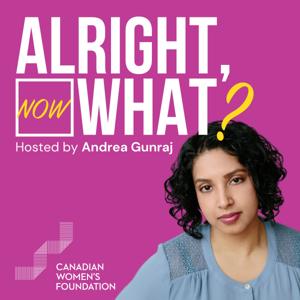


With Molly Hayes, national reporter with The Globe and Mail. Women and equity-seeking journalists investigate under-told stories. We need them to give voice to gender justice matters that otherwise go unheard. Think about the most stunning contemporary stories you’ve seen on gender and equality issues. Chances are that women and equity-seeking journalists were behind them.
Every year, the Canadian Women’s Foundation presents The Landsberg Award in partnership with The Canadian Journalism Foundation to acknowledge and inspire feminist journalism. It's named after iconic journalist and author, Michele Landsberg. Journalist and activist Gloria Steinem said, “Those who make a revolution and those who write about it are usually two different people. Michele Landsberg is one of the few on earth who is trusted and effective at both.” Past winners of The Landsberg Award include such journalists as Connie Walker, Robyn Doolittle, Christina Frangou, and more.
Today we’re joined by Molly Hayes, who won the 2023 Landsberg Award alongside Tavia Grant and Elizabeth Renzetti for their series on intimate partner violence and femicide in Canada. She is a national reporter with The Globe and Mail. She joined the Globe in 2017 as the inaugural recipient of the Canadian Journalism Foundation’s investigative journalism fellowship, and today reports on crime and social justice issues, including violence against women.
Relevant links: Gender Gap in Digital News Access
Episode Transcripts
Please listen, subscribe, rate, and review this podcast and share it with others. If you appreciate this content, if you want to get in on the efforts to build a gender equal Canada, please donate at canadianwomen.org and consider becoming a monthly donor.
Facebook: Canadian Women’s Foundation
Twitter: @cdnwomenfdn
LinkedIn: The Canadian Women’s Foundation
Instagram: @canadianwomensfoundation
With Simone Saunders, founder of The Cognitive Corner. Family violence refers to many kinds of abuse and neglect in families. Umbrella terms like this can be challenging. They cover a range of experiences, but they can obscure gender and power dynamics in their broadness. Women, girls, and Two Spirit, trans, and non-binary people face family violence at disproportionate rates that are only on the rise in Canada today.
Umbrella terms can also make it hard to envision how different people experience things differently depending on who they are. For example, survivors with disabilities have shared how abuse perpetrated by family caregivers tends to get ignored because, in popular imagination, we don’t always see how those who take care of us can also hurt us. 2SLBTQIA+ survivors have shared how a family member’s threats of outing them to other family members can be used as a form of control.
These nuances of abuse are sometimes treated as mere add-ons. What if the devil is in the details? What if exploring nuances can unlock solutions that make millions of people safer?
Simone Saunders joins us to address family violence in racialized families. Simone is a graduate level Registered Social Worker and therapist in Calgary, Alberta. She is the founder of The Cognitive Corner—a group psychological practice that focuses on providing trauma-informed and culturally responsive psychological care and psychoeducation to Albertans and Ontarians. In the future, The Cognitive Corner seeks to provide accessible and affordable mental health services to racialized communities, due to the current lack of resources. Simone specializes in the treatment of early childhood trauma, racial trauma, and attachment-based issues, using a mixture of somatic-based modalities and critical theory to address societal/structural inequities. In addition, she is a mental health creator and advocate on Instagram and TikTok, where she aims to normalize mental health struggles and provide accessible psychoeducation.
A note about content: this episode includes discussion of family and gender-based violence.
Please listen, subscribe, rate, and review this podcast and share it with others. If you appreciate this content, if you want to get in on the efforts to build a gender equal Canada, please donate at canadianwomen.org and consider becoming a monthly donor.
Episode Transcripts
Facebook: Canadian Women’s Foundation
Twitter: @cdnwomenfdn
LinkedIn: The Canadian Women’s Foundation
Instagram: @canadianwomensfoundation
With Hazel T. Biana at DLSU College of Liberal Arts, Paola Ricaurte at Harvard University, Paulette Senior at the Canadian Women’s Foundation, and Benjamin Prud'homme at Mila - Quebec Artificial Intelligence Institute. Artificial intelligence (AI) is moving at breakneck speed. What are its possible benefits for women and equity-seeking people? Can we implement AI in a way that doesn’t contribute to gender inequalities, harms, and injustices? How do we ensure no one is left out of decisions and implementation of this technology?
Canadian Women’s Foundation President and CEO Paulette Senior joined in a fascinating panel on AI and Reducing Gender Based Inequalities at the June Conference of Montreal organized by the International Economic Forum of the Americas. You’ll hear clips of her and international experts speaking to benefits and pitfalls we have to act on if we want to achieve gender justice and avoid harms women and gender-diverse people are at risk of around the world in this massive technological tidal shift.
We start with Hazel T. Biana, Associate Professor at the Department of Philosophy at DLSU College of Liberal Arts. Then we move to Paola Ricaurte, Co-founder of Tierra Común, Associate Professor at Tecnológico de Monterrey and Faculty Associate at Berkman Klein Center for Internet & Society at Harvard University. Next is Paulette herself, followed by Benjamin Prud'homme, Executive Director of AI for Humanity at Mila - Quebec Artificial Intelligence Institute.
The panel itself was moderated by Naser Faruqui, Director of Education and Science at International Development Research Centre.
Relevant links: AI and Reducing Gender Based Inequalities panel on YouTube
Please listen, subscribe, rate, and review this podcast and share it with others. If you appreciate this content, if you want to get in on the efforts to build a gender equal Canada, please donate at canadianwomen.org and consider becoming a monthly donor.
Episode Transcripts
Facebook: Canadian Women’s Foundation
Twitter: @cdnwomenfdn
LinkedIn: The Canadian Women’s Foundation
Instagram: @canadianwomensfoundation
With Dr. Barbara Vanderhyden, Corinne Boyer Chair in Ovarian Cancer Research at the University of Ottawa. Like many things related to sexual and reproductive health, there’s elevated stigma about gynecological cancers. Like many health issues for women, girls, and gender-diverse people, there are serious gaps in knowledge and treatment, too. The gaps are bigger for those who face discrimination based on factors like race, ability, and income.
It’s ironic that modern biological research is based on cells taken from a woman named Henreitta Lacks in 1951 at Johns Hopkins Hospital. Lacks was a Black woman diagnosed with cervical cancer. Her cells were taken without her consent and cultivated into the HeLa cell line, the most commonly used cell line in scientific research today.
Those most marginalized, dealing with the poorest treatment and outcomes and most stigmatized and understudied health issues are the ones we’ve built our medical practices on.
Since May 28, International Day of Action for Women's Health, we’ve focused on gender and health matters we may know bits and pieces of but probably need to learn more about. As we wrap up this mini-series, we can’t help but take a long view of equality, justice, and rights in medicine. We’re thankful to the amazing medical scientists trying to turn the tide today.
Our guest Dr. Barbara Vanderhyden is one of those people. She’s the inaugural Corinne Boyer Chair in Ovarian Cancer Research at the University of Ottawa and a Senior Scientist in the Cancer Therapeutics Program at the Ottawa Hospital Research Institute. She loves talking about her research, which focuses on how risk factors affect the incidence of ovarian cancer, and how good models of ovarian cancer can shed light on cancer susceptibility, tumour progression and response to treatment. Dr. Vanderhyden teaches about science, academic integrity, and science communication.
Relevant links: Ovarian Cancer Canada
Please listen, subscribe, rate, and review this podcast and share it with others. If you appreciate this content, if you want to get in on the efforts to build a gender equal Canada, please donate at canadianwomen.org and consider becoming a monthly donor.
Episode Transcripts
Facebook: Canadian Women’s Foundation
Twitter: @cdnwomenfdn
LinkedIn: The Canadian Women’s Foundation
Instagram: @canadianwomensfoundation
With Dr. Shafeena Premji, physician and Director of Mahogany Medical Clinic and The Village Medical, and Janet Ko, President of The Menopause Foundation of Canada. It’s interesting how Western medicine has framed women’s sexual and reproductive health. It has a history of presuming normalness means youth and reproduction, so ageing and not reproducing means “abnormal”. Take the term “menopause”, sometimes described as estrogen deficiency, a diminishment of ovarian activity, and a failure of endometrial development.
No wonder we aren’t eager to talk about menopause. Of course, this ties to our cultural fear and loathing of getting older and the lack of medical research that accompanies it. It's particularly intense for women and gender-diverse people, who face ignorance and invisibility as they get older.
Dr. Shafeena Premji and Janet Ko join us to dig into menopause – before, during, and after – and the gaps those who go through it contend with.
Janet Ko is President and Co-Founder of The Menopause Foundation of Canada. Her personal journey to get support convinced her that menopause was an urgent gender equity issue. Janet has held numerous senior leadership positions and is an award-winning communicator. She’s dedicated to helping women thrive through their menopausal years as a passionate speaker and advocate.
Dr. Shafeena Premji is a family physician and founder and director of Mahogany Medical Clinic and The Village Medical, where she offers prenatal care, women's health consultations, and a menopause clinic. Dr. Premji serves on Board of the Canadian Menopause Society and the Medical Advisory Board of the Menopause Foundation of Canada. She’s dedicated to supporting women through their menopausal transition and supporting her colleagues in identifying helpful menopausal treatments.
Relevant links: The Menopause Foundation of Canada
Please listen, subscribe, rate, and review this podcast and share it with others. If you appreciate this content, if you want to get in on the efforts to build a gender equal Canada, please donate at canadianwomen.org and consider becoming a monthly donor.
Episode Transcripts
Facebook: Canadian Women’s Foundation
Twitter: @cdnwomenfdn
LinkedIn: The Canadian Women’s Foundation
Instagram: @canadianwomensfoundation
With Natalie Philbert, Manager of Women’s Programs and Services at Hemophilia Ontario, and Dr. Meghan Pike, pediatrician and clinical fellow in Pediatric-Hematology Oncology at Dalhousie University/IWK Health Centre.
We don’t always have the language to speak about our periods – let alone menstrual bleeding disorders. What are the signs and symptoms? What are the gaps in care and diagnosis? And how does it connect with gendered inequities?
May 28 was International Day of Action for Women's Health, so for the next few episodes, we’re focusing on gender and health matters we may know bits and pieces of but probably need to learn more about. Today, we focus on menstrual bleeding disorders.
Natalie Philbert is a PhD candidate focusing on delay in diagnosis for menstruators with bleeding disorders. Natalie brings a professional and personal passion to the bleeding disorder community given her own diagnosis of Von Willebrand disease Type 1. She co-created a website called heroixx.ca, specifically designed for menstruators with bleeding disorders.
Dr. Meghan Pike launched the WeThrive App that can identify adolescents with heavy menstrual bleeding. She is an advocate for free access to menstrual products. Her research interests include patient-reported outcome measures, impacts of cancer treatment on reproductive and menstrual health, and advocacy for menstruators.
Relevant links: heroixx.ca, WeThrive App (Apple App Store | Google Play)
Please listen, subscribe, rate, and review this podcast and share it with others. If you appreciate this content, if you want to get in on the efforts to build a gender equal Canada, please donate at canadianwomen.org and consider becoming a monthly donor.
Episode Transcripts
Facebook: Canadian Women’s Foundation
Twitter: @cdnwomenfdn
LinkedIn: The Canadian Women’s Foundation
Instagram: @canadianwomensfoundation
With Dr. Tara Sedlak, the only certified Women’s Heart Health Cardiologist in Canada. The link between discrimination and your health and wellness is undeniable. It's all about the social determinants of health. The World Health Organization describes them as “non-medical factors that influence health outcomes”, the “conditions in which people are born, grow, work, live, and age, and the wider set of forces and systems shaping the conditions of daily life.”
Discrimination based on gender and other connected factors like our race and ability impacts our health in so many ways. For example, we get treated differently based on our gender in healthcare settings. Our access to relevant health services and options differs wildly depending on our gender. Even the medical research that gets funded and acted on depends on our gender.
May 28 is International Day of Action for Women's Health, so for the next few episodes, we’ll focus on pressing gender and health matters we may know bits and pieces of but probably need to learn more about.
Dr. Tara Sedlak joins us today to talk about women and heart health. She grew up in Kelowna, British Columbia, receiving her Bachelor’s degree with Honours from the University of Alberta and her Doctor of Medicine degree from the University of British Columbia. She was awarded the Gold Medal for top graduate from the Doctor of Medicine Program. She completed two specialist residencies at the University of British Columbia, where she twice served as Chief Medical Resident. Dr. Sedlak also completed a fellowship at Cedar Sinai Medical Centre with Dr. Bairey Merz, the world’s leading expert in women’s heart health. Dr. Sedlak is the only certified Women’s Heart Health Cardiologist in Canada and she also practices General Cardiology.
Please listen, subscribe, rate, and review this podcast and share it with others. If you appreciate this content, if you want to get in on the efforts to build a gender equal Canada, please donate at canadianwomen.org and consider becoming a monthly donor.
Episode Transcripts
Facebook: Canadian Women’s Foundation
Twitter: @cdnwomenfdn
LinkedIn: The Canadian Women’s Foundation
Instagram: @canadianwomensfoundation
With Dr. Lee Airton, Assistant Professor of Gender and Sexuality Studies in Education at Queen's University. International Day Against Homophobia, Biphobia and Transphobia is coming up on May 17.
The UN says that only one out of three countries legally protect people from discrimination based on sexual orientation. Only one out of 10 protect people based on gender identity, and only a handful based on sex characteristics.
We can’t end gender injustice without ending discrimination widely faced by 2SLGBTQIA+ communities. A 2023 Global News story reports that, “Canadian LGBTQ2 community members and advocates say the past year has been difficult and scary amid a notable rise in hate crimes, threats and protests against drag queens and transgender people in particular.” This tracks with a rise in police-reported hate crimes based on sexuality and gender identity, which rose nearly 60 per cent between 2019 and 2021 to the highest level in five years.
Dr. Lee Airton (they/them) brings clarity in these tough times. Their research explores how Canadian K-12 education and teacher education are responding to gender identity and gender expression protections in human rights legislation. In 2012, Dr. Airton founded They Is My Pronoun, the first Q+A-based blog about gender-neutral pronoun usage and user support with over 30,000 visitors in 2017 alone. In 2016, Dr. Airton founded the No Big Deal Campaign, a national social media initiative that helps people show support for transgender peoples' right to have their pronouns used. In 2021, Dr. Airton and their research team launched gegi.ca, the first bilingual self-advocacy resource for K-12 students experiencing gender expression and gender identity discrimination at school. Dr. Airton's first book, Gender: Your Guide, offers practical steps for welcoming gender diversity in everyday life, and has been adopted as a key professional development text in teacher education programs, school districts, public sector and private sector organizations. With Dr. Susan Woolley, they recently edited Teaching About Gender Diversity: Teacher-Tested Lesson Plans for K-12 Classrooms.
Relevant links: www.leeairton.com
Please listen, subscribe, rate, and review this podcast and share it with others. If you appreciate this content, if you want to get in on the efforts to build a gender equal Canada, please donate at canadianwomen.org and consider becoming a monthly donor.
Episode Transcripts
Facebook: Canadian Women’s Foundation
Twitter: @cdnwomenfdn
LinkedIn: The Canadian Women’s Foundation
Instagram: @canadianwomensfoundation
With Sabrina Cruz of Answer in Progress. Disinformation is false information intended to mislead. Misinformation is false information shared without intention of misleading. In this digital world, false information and the conspiracy theories, fake news, and downright lies attached to it seem to spread like wildfire.
A poll found that people in Canada consider the online disinformation epidemic and climate change as the most serious threats of the modern age. The Government of Canada’s Online Disinformation webpage says it well: “Even if you don’t believe it, false information causes doubt and confusion. It makes it harder to find factual content you can trust. It also may cause you to delay taking an important decision that could affect your wellbeing. False information can also continue to influence your beliefs even after you find out it’s not true ... This effect is known as the continued influence effect and it is another way that disinformation can cause harm.”
There’s a lot of false information out there when it comes to gender equality and justice issues. We see it all the time, on all kinds of issues: the gender pay gap, why we have to unflinchingly confront racism and white supremacy, why ending transphobia and homophobia is a core part of our work, the scope of gender-based violence, misconceptions about trafficking, you name it.
Sometimes, misinformation leads to genuine questions. Sometimes, misinformation leads to accusations and attacks. It’s not about the evidence, it’s about making a point. And that point may be grounded in discrimination and disempowering marginalized people.
What happens when you’re faced with some kind of misinformation, no matter how or why it comes? How can you apply your curiosity as a useful tool?
Sabrina Cruz is our guest, co-founder of Answer in Progress, a media production company that encourages people to explore their curiosity and shares every stumble and success along the way. Their YouTube channel is over 1 million subscribers strong and covers a wide range of topics, from Teaching an AI to Solve the Trolley Problem to Getting Good Last Minute Gifts. They've collaborated with Google and HISTORY. They want to reignite a love of learning in themselves and their audience.
Relevant Links: Answer in Progress
Please listen, subscribe, rate, and review this podcast and share it with others. If you appreciate this content, if you want to get in on the efforts to build a gender equal Canada, please donate at canadianwomen.org and consider becoming a monthly donor.
Episode Transcripts
Facebook: Canadian Women’s Foundation
Twitter: @cdnwomenfdn
LinkedIn: The Canadian Women’s Foundation
Instagram: @canadianwomensfoundation
With Dr. Hadiya Roderique, writer of Black on Bay Street and other articles, cultural critic, lawyer, researcher, speaker, and consultant.
Equal Pay Day is symbolic of how far into the next year the average woman works to have earned what the average man earned the previous year. In Canada, women make 88 cents for every dollar men make. But there’s more than one gender pay gap because those who face gender inequalities are a diverse population. Racialized women make 67 cents to the dollar for racialized men, Indigenous women make 65 cents to the dollar for Indigenous men, newcomer women make 71 cents to the dollar for newcomer men, and women with disabilities also have lower average incomes compared to men with disabilities.
We would be wise to think of it as gender pay gaps, plural.
Canada has had pay equity laws since the 1970s. But pay gaps and unfairness in pay persist. Girls face a summer job gender pay gap of almost $3.00 per hour. Women post-secondary students leave school with lesser means to pay off student loans. And the gendered pension gap means that women retire with about 80% of the pension men retire with.
Dr. Hadiya Roderique joins us to address gender pay gaps, their impacts on Black and equity-seeking women, how bias plays out in workplaces, what we need to do about it. Hadiya is a researcher, writer, speaker, consultant, and recovering Bay Street lawyer. She is currently an Assistant Professor of Journalism at the University of Toronto’s Scarborough campus, where her research focuses on racist discourse in how journalists write about race in Canadian media. She holds a J.D. and M.A. in Criminology from the University of Toronto, and completed her Ph.D. in Organizational Behaviour at the Rotman School of Management. She is an award-winning writer, probably best known for her piece Black on Bay Street, which set Corporate Canada ablaze, and earned her recognition as one of Canada’s Top 25 most influential lawyers by Canadian Lawyer’s magazine in 2018. She sits on the Board of the Women’s Legal Education and Action Fund and on the Equity Diversity and Inclusion committee of Ultimate Canada.
Relevant Links: Equal Pay Day and Gender Pay Gaps: Infographic
Please listen, subscribe, rate, and review this podcast and share it with others. If you appreciate this content, if you want to get in on the efforts to build a gender equal Canada, please donate at canadianwomen.org and consider becoming a monthly donor.
Episode Transcripts
Facebook: Canadian Women’s Foundation
Twitter: @cdnwomenfdn
LinkedIn: The Canadian Women’s Foundation
Instagram: @canadianwomensfoundation
From the publisher's feed

1,462 Listeners

112 Listeners

4,768 Listeners
743 Listeners

439 Listeners

27 Listeners

5,361 Listeners

22 Listeners

9,401 Listeners

12,462 Listeners