
Sign up to save your podcasts
Or

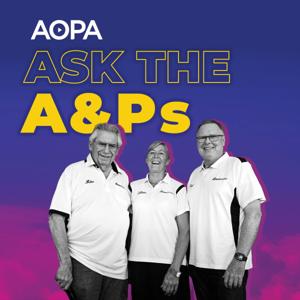

Avoiding maintenance can be a good thing when what's recommended is unnecessary.
Email [email protected] for a chance to get on the show.
Join the world's largest aviation community at aopa.org/join
Full notes below:
Vas has an RV-10 and the Lycoming IO-540 has been acting up. During some flight training in the airplane, he noticed oil consumption went up, metal was in the filter, and he ended up overhauling the engine. He's wondering if he should have just pulled a cylinder instead. He was flying 140 hours a year, and he's wondering why he would get corrosion. Higher oil consumption isn't a corrosion problem, but the cam and lifter spalding do indicate it. These were unrelated problems, according to Mike. Paul thinks it's possible the damage was already in place when there was a previous IRAN. They settle on it being a lifter hardening issue, meaning poorly manufactured parts.
Jim has a Mooney M20K and an instructor showed him a leaning procedure while in cruise at 9,000 feet. They set the manifold pressure to 30 inches, the RPM at 2300, and then pulled the fuel back to 11 gph. That's how he's been leaning ever since. CHTs are in the 360/370-degree range. He trails the cowl flaps to try and cool the CHTs if it's a hot summer day. If the TIT gets too high he'll enrichen it just a touch. Paul said if he adds more fuel and the TIT goes down, he's running rich of peak.
Peter found some residue on the top of his intake valves on the engine on his 172N. He typically flies with autogas. He's wondering if can or should get rid of it, and if so, how to do it. Paul said people talk about it, but he's never done it. They suppose it's not carbon, but probably coked oil. They suggest a wobble test if he's really worried, but generally they think he can leave it alone.
 View all episodes
 By AOPA

4.9
265265 ratings
Avoiding maintenance can be a good thing when what's recommended is unnecessary.
Email [email protected] for a chance to get on the show.
Join the world's largest aviation community at aopa.org/join
Full notes below:
Vas has an RV-10 and the Lycoming IO-540 has been acting up. During some flight training in the airplane, he noticed oil consumption went up, metal was in the filter, and he ended up overhauling the engine. He's wondering if he should have just pulled a cylinder instead. He was flying 140 hours a year, and he's wondering why he would get corrosion. Higher oil consumption isn't a corrosion problem, but the cam and lifter spalding do indicate it. These were unrelated problems, according to Mike. Paul thinks it's possible the damage was already in place when there was a previous IRAN. They settle on it being a lifter hardening issue, meaning poorly manufactured parts.
Jim has a Mooney M20K and an instructor showed him a leaning procedure while in cruise at 9,000 feet. They set the manifold pressure to 30 inches, the RPM at 2300, and then pulled the fuel back to 11 gph. That's how he's been leaning ever since. CHTs are in the 360/370-degree range. He trails the cowl flaps to try and cool the CHTs if it's a hot summer day. If the TIT gets too high he'll enrichen it just a touch. Paul said if he adds more fuel and the TIT goes down, he's running rich of peak.
Peter found some residue on the top of his intake valves on the engine on his 172N. He typically flies with autogas. He's wondering if can or should get rid of it, and if so, how to do it. Paul said people talk about it, but he's never done it. They suppose it's not carbon, but probably coked oil. They suggest a wobble test if he's really worried, but generally they think he can leave it alone.

380 Listeners

401 Listeners
231 Listeners
134 Listeners

110 Listeners

949 Listeners

229 Listeners
774 Listeners

307 Listeners
931 Listeners
132 Listeners

209 Listeners

163 Listeners
145 Listeners

10 Listeners